
The 1973 Yom Kippur War, also known as the October War, is one of the most significant military conflicts in the Middle East. This article aims to shed light on the initial events, the plans of the belligerents, the response of Israel, and the war’s enduring legacy.
On October 6, 1973, on the holiest day in the Jewish calendar – Yom Kippur – a coalition led by Egypt and Syria launched a surprise attack against Israel. The date was strategically chosen because of its religious significance, and Israel’s military preparedness was expected to be at its lowest.
Egypt attacked the Israeli Bar-Lev Line on the Suez Canal, while Syria aimed its assault at the Golan Heights, a strategic plateau overlooking Israeli territory. These areas had been captured by Israel during the Six-Day War in 1967.
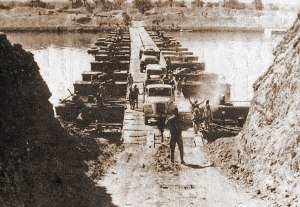
Public Domain
Egypt’s strategy was built around crossing the Suez Canal, breaching the Bar-Lev Line, and establishing a foothold in the Sinai Peninsula. They used water cannons to breach the sand walls of the Israeli defenses and deployed specially trained units to quickly establish bridgeheads. Their primary goal was not necessarily to reclaim the entire Sinai, but to demonstrate military competence and thus force favorable peace terms.
Syria, on the other hand, aimed to recapture the Golan Heights. They initiated a massive armored assault, hoping to quickly overrun the limited Israeli defenses and push deep into Israeli territory. Both the Egyptians and Syrians, bolstered by Soviet equipment and training, wanted to regain lost territories and pride, and more importantly, alter the post-1967 status quo.
Caught off guard by the coordinated assaults, Israel scrambled to defend its territories. The Israelis had significantly fewer troops stationed at the borders due to the holiday. The reserves, vital to the Israeli defense strategy, were mobilized but would take time to reach the fronts.
In the Golan Heights, Israeli defenders faced a significant Syrian armor advantage but used the terrain and superior training to inflict heavy losses on Syrian tanks. Despite initial setbacks, they held the line long enough for reinforcements to arrive.
In the south, the Bar-Lev Line initially fell to the Egyptians. However, a series of counterattacks and defensive operations, often at great cost, managed to prevent a complete rout and stabilized the front.
The Legacy of the Yom Kippur War
1. Strategic Reassessment: The Yom Kippur War exposed critical vulnerabilities in Israel’s military intelligence and defense strategy. The subsequent investigations and critiques led to significant reforms in the Israeli military and intelligence apparatus.
2. Diplomatic Shift: The war paved the way for the Camp David Accords and the peace treaty between Egypt and Israel in 1979. Egypt’s President Anwar Sadat realized that peace through diplomatic means was more beneficial than perpetual warfare.
3. Superpower Dynamics: The conflict brought the Cold War to the Middle East, with the U.S. supporting Israel and the USSR backing Egypt and Syria. The risk of the war expanding outside of the Middle East was a significant concern.
4. Arab Solidarity: The war momentarily united the Arab world against a common enemy, but this solidarity was fleeting. The aftermath and geopolitical realignments, especially Egypt’s peace treaty with Israel, led to inter-Arab tensions.
5. Military Modernization: Both sides recognized the need for modernizing their military tactics, technology, and doctrines. The war had showcased the value of anti-tank and anti-aircraft missiles, prompting significant changes in military procurement and strategy.
In conclusion, the 1973 Yom Kippur War was not only a conflict of military might but also of will, strategy, and geopolitics. Its legacy is still felt today, influencing the policies, strategies, and relations of the countries involved and the broader Middle East.
Upon the day most holy to our creed,
The sounds of war did drown the prayers we said,
The Golan’s peak and Sinai’s sands did bleed,
With many sons of Zion left for dead.
From Suez’s shores to Golan’s towering height,
Brave Israel stood ‘gainst surging tide and storm,
Though taken unawares, they’d fight the fight,
Yet paid the price so grievous and forlorn.
A lament for the souls lost in the fray,
For every mother, child, and wife in tears,
In sacred land, their bodies now do lay,
Their memories echoing through the years.
Yet from such pain, a hope does still arise,
For peace to dawn ‘neath Middle Eastern skies.




 DAVE DOES HISTORY
Leave a comment