
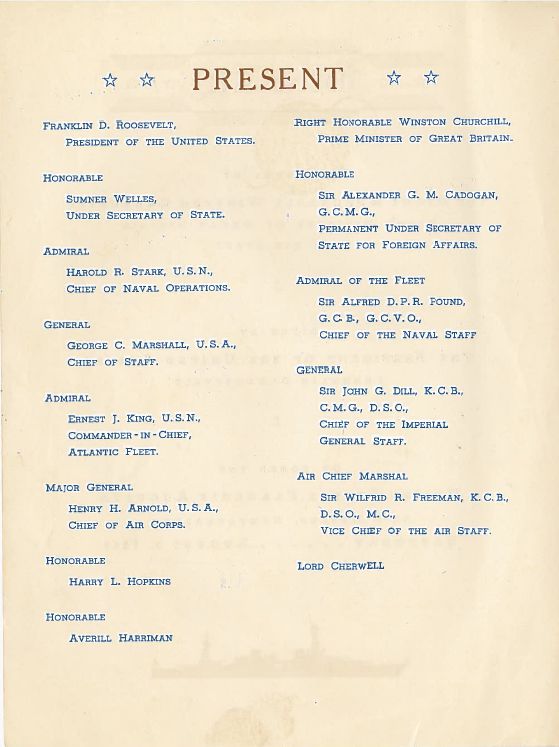
The Atlantic Charter was a pivotal policy statement that outlined the Allied goals for the post-World War II world. It was issued on August 14, 1941, following a series of meetings between the leaders of the United States and the United Kingdom. Specifically, these meetings involved U.S. President Franklin D. Roosevelt and British Prime Minister Winston Churchill.
US Navy Official
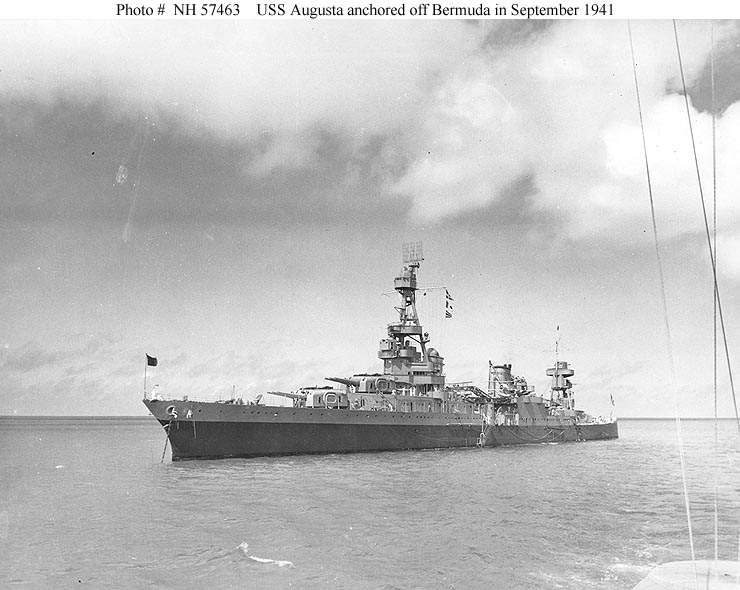
The meetings took place in Placentia Bay, Newfoundland, from August 9 to 12, 1941. Churchill and Roosevelt met secretly aboard their respective naval ships, the HMS Prince of Wales and the USS Augusta, marking the first meeting between the two leaders.
Key Points of the Atlantic Charter
1. **No Territorial Gains**: The United States and the United Kingdom made it clear they sought no territorial aggrandizement, neither for themselves nor for others.
2. **Territorial Changes**: Any changes in the boundaries of nations would be done with the consent of the people living there.
3. **Right to Self-Determination**: All people had the right to self-determination, meaning they could choose their form of government.
4. **Trade Barriers**: Both nations aimed to lower trade barriers and ensure global economic cooperation.
5. **Economic Advancement**: They hoped to improve the economic conditions of all nations, ensuring improved labor standards, economic progress, and social security.
6. **Peace and Security**: The charter called for a post-war world that ensured lasting peace, where people could live free from fear and want.
7. **Freedom of the Seas**: Both nations emphasized the importance of the freedom of the seas, a crucial point for the island nation of the UK and for the global trade interests of the US.
8. **Disarmament**: The charter recognized the need for disarmament and the establishment of a global system of security.
US Navy
While the Atlantic Charter was not a formal treaty, its principles shaped the policies of the Allies during World War II and influenced the formation of the United Nations. At the time, it was a powerful statement of Allied war aims, serving both as a rebuff to Nazi ideology and as a beacon of hope for a better post-war world. Notably, the United States had not yet entered the war, but the Charter underscored the deepening cooperation and alignment of the UK and the US.
In January 1942, the principles of the Atlantic Charter were endorsed by the twenty-six nations that signed the “Declaration by United Nations”, which formed the basis for the modern United Nations. The principles of the Charter also echoed in subsequent international agreements and events, like the Dumbarton Oaks Conference and the establishment of the United Nations Charter.




 DAVE DOES HISTORY
Leave a comment