

(NASA)
The Apollo 11 mission stands as one of humanity’s greatest achievements and a defining moment in human history. On July 16, 1969, NASA launched Apollo 11, its fifth manned mission in the Apollo program, with the audacious goal of landing astronauts on the Moon and safely returning them to Earth. Led by Commander Neil Armstrong, Lunar Module Pilot Edwin “Buzz” Aldrin, and Command Module Pilot Michael Collins, Apollo 11 would prove to be a feat of human ingenuity, courage, and perseverance.
The primary objective of Apollo 11 was to achieve the first manned Moon landing. The mission aimed to demonstrate NASA’s capabilities to navigate the complexities of lunar rendezvous, lunar module landing, and re-entry into Earth’s atmosphere. It also aimed to gather scientific data from the lunar surface and return astronauts safely to Earth.
Crew of Apollo 11:
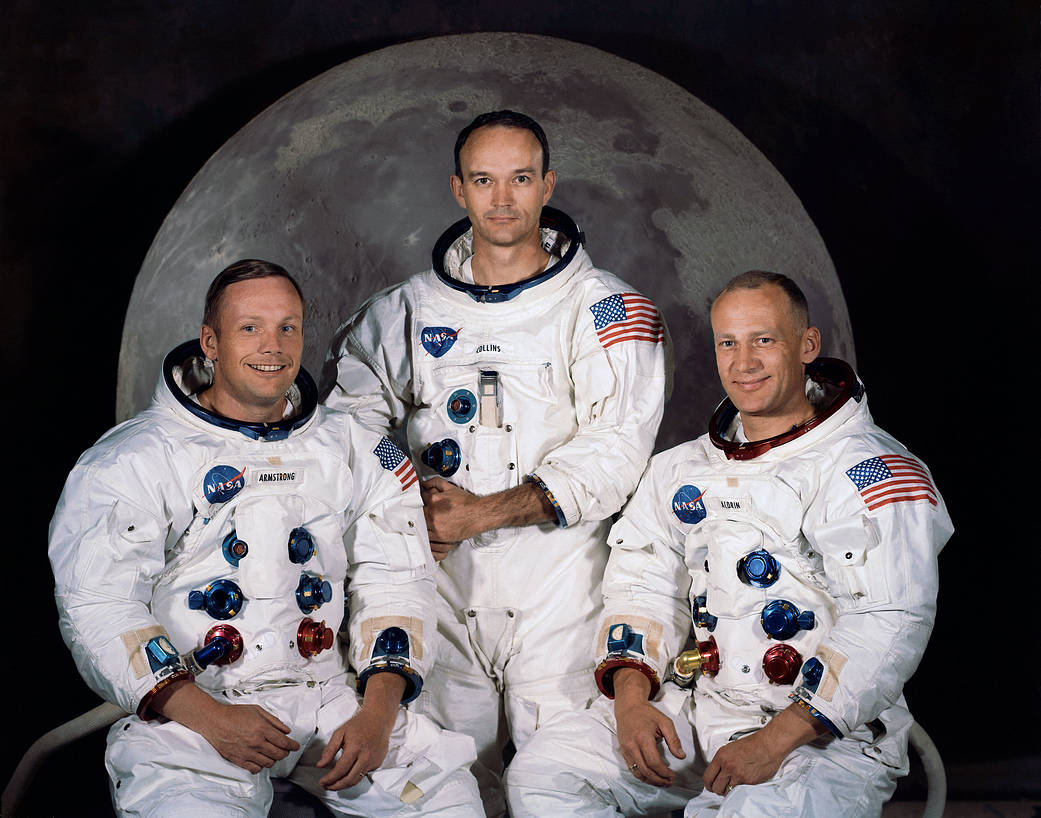
1. Neil Armstrong (Commander): A veteran astronaut with experience in both Gemini and X-15 rocket-powered aircraft missions. Armstrong was chosen to command Apollo 11 due to his calm demeanor and exceptional piloting skills.
2. Edwin “Buzz” Aldrin (Lunar Module Pilot): An experienced astronaut and engineer, Aldrin was selected to be the Lunar Module Pilot, responsible for piloting the Lunar Module to the lunar surface and back to the Command Module in lunar orbit.
3. Michael Collins (Command Module Pilot): A seasoned astronaut with extensive experience in spaceflight, Collins played a critical role as the Command Module Pilot, remaining in orbit around the Moon while Armstrong and Aldrin descended to the lunar surface.
Apollo 11 was launched on July 16, 1969, atop the powerful Saturn V rocket from Kennedy Space Center in Florida. After reaching Earth’s orbit, the spacecraft traveled toward the Moon, a journey lasting approximately three days. The crew executed a series of crucial mid-course corrections to fine-tune their trajectory and ensure the correct path to the Moon.
Life aboard the spacecraft involved meticulously coordinated activities, including navigation, communications with mission control, scientific experiments, and astronaut rest periods. The voyage to the Moon demanded precision and teamwork, requiring the astronauts to be in top physical and mental condition throughout the mission.
On July 19, 1969, Apollo 11 entered lunar orbit, circling the Moon at an altitude of approximately 60 miles (96 kilometers). Once in lunar orbit, Armstrong and Aldrin transferred to the Lunar Module, named “Eagle,” and separated from the Command Module, where Collins remained in orbit.
As the Lunar Module descended to the Moon’s surface, Armstrong and Aldrin carefully monitored their trajectory, using onboard instruments and visual references to ensure a safe landing. The Eagle’s landing site, known as the Sea of Tranquility, was chosen for its relative flatness and safety.
On July 20, 1969, at 20:17 UTC, the world held its breath as the Lunar Module made its final approach to the Moon’s surface. As mission control and people around the globe watched in anticipation, Neil Armstrong radioed the iconic words, “Houston, Tranquility Base here. The Eagle has landed.” The successful landing marked a historic milestone, and humanity had finally reached the Moon.
Approximately six hours later, Neil Armstrong descended the Lunar Module’s ladder and set foot on the lunar surface, becoming the first human to do so. As he stepped onto the Moon, Armstrong uttered the immortal words, “That’s one small step for man, one giant leap for mankind.” This momentous event reverberated around the world, inspiring awe, wonder, and a shared sense of accomplishment among people from all walks of life.

Buzz Aldrin joined Armstrong on the lunar surface moments later, and together, they conducted scientific experiments, collected lunar samples, and unfurled the American flag. The two astronauts spent about two and a half hours on the Moon’s surface, making history and demonstrating humanity’s ability to venture beyond Earth’s boundaries.
After completing their lunar activities, Armstrong and Aldrin returned to the Lunar Module and rejoined Michael Collins in lunar orbit. They performed the rendezvous and docking maneuvers, a critical aspect of the mission that showcased NASA’s precision and technical prowess. The three astronauts were reunited in the Command Module, and the Lunar Module was jettisoned before re-entry.
On July 24, 1969, Apollo 11 re-entered Earth’s atmosphere, with the Command Module safely splashing down in the Pacific Ocean. The crew was swiftly retrieved by the USS Hornet aircraft carrier, where they underwent medical evaluations and were placed in quarantine to prevent any potential lunar pathogens from affecting Earth’s ecosystem.
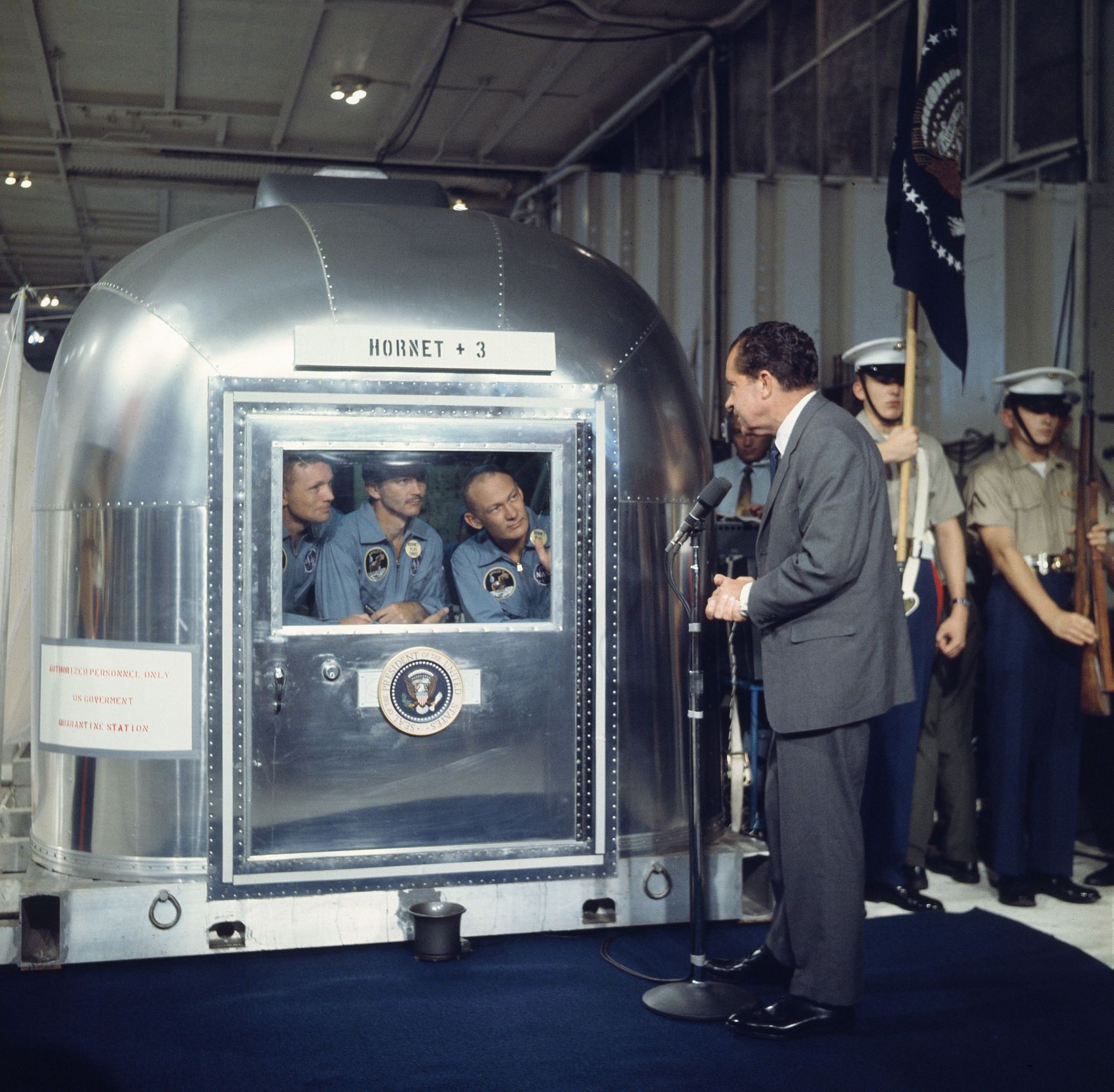
The Apollo 11 mission had a profound impact on science and technology, driving advancements in numerous fields:
1. Space Exploration: Apollo 11’s success proved that manned space exploration was not only feasible but also opened the door to further lunar missions and the eventual exploration of other planets.
2. Materials Science: The lunar samples collected by Apollo 11 and subsequent missions provided valuable insights into the Moon’s geology and the formation of celestial bodies, contributing to advancements in materials science.
3. Communications: The mission necessitated significant advancements in telecommunications, leading to more sophisticated tracking and communication systems between Earth and spacecraft.
4. Computers: Apollo 11’s guidance and navigation systems relied heavily on onboard computers, propelling advancements in computer technology and integrated circuits.
5. Global Collaboration: The Apollo 11 mission was a testament to international collaboration and cooperation, inspiring nations worldwide to embrace space exploration.
Apollo 11’s legacy extends far beyond the confines of space exploration. The mission sparked a renewed sense of wonder and curiosity about the universe and our place in it. It symbolized humanity’s capacity for innovation, determination, and collaboration, transcending national borders and uniting people across the globe.
Moreover, Apollo 11 inspired generations of scientists, engineers, and explorers, catalyzing advancements in technology, medicine, and science. The legacy of the Moon landing continues to inspire space agencies and private companies to pursue ambitious missions to explore distant planets and celestial bodies, furthering our understanding of the cosmos and our place in it.
The Apollo 11 mission was a triumph of human achievement, courage, and ingenuity. It exemplified the power of vision, dedication, and collaboration in overcoming seemingly insurmountable challenges. Neil Armstrong, Buzz Aldrin, and Michael Collins, along with the countless engineers, scientists, and support personnel, etched their names in history as the architects of humanity’s giant leap onto the Moon.
Apollo 11’s success was a defining moment that transcended national boundaries and united people worldwide in celebration of human potential. It demonstrated that, when driven by purpose and a shared vision, humanity can accomplish extraordinary feats. Apollo 11’s impact on science, technology, and global collaboration endures as a testament to the indomitable spirit of exploration and our collective quest to reach for the stars.




 DAVE DOES HISTORY
Leave a comment