
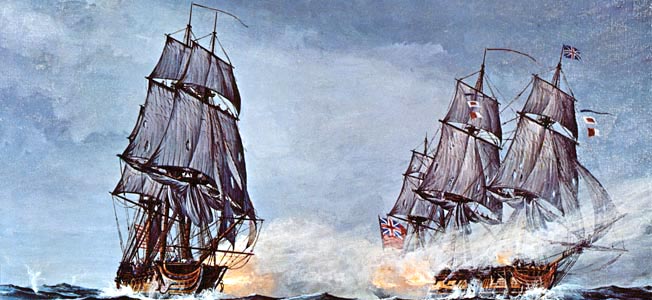
As the Revolutionary War was coming to an end, financial problems came to the forefront: to name a few, the country’s debts to France, Spain, and Holland, the payment of war reparations, the establishment of public credit, the states’ inability to meet their financial requisitions, and the most immanent, back pay to the disbanding Continental Army’s officers and soldiers.
Payment to the officers and soldiers had been problematic for the entire war. Loans from European nations were slow in materializing, states’ revenue payments were inconsistent at best, the five percent impost was a failure, and devaluation of states’ currencies, as well as the Continental dollar, left the Congress groping for money constantly. There were only two times when payment in any form was extended to the officers or soldiers: September 1781, when a month’s pay was provided to that part of the main army participating in the Yorktown campaign; and February 1782, when a supply of clothing was sent to officers in lieu of pay. Washington warned Alexander Hamilton that disbanding the army without granting their back pay would produce “Civil commotion and end in blood.”[1] It was only following the Newburgh Affair and the “address and petition” presented by a delegation of army officers to the Grand Committee of the Continental Congress that the situation was given serious consideration.
On January 13, 1783, a subcommittee made up of Alexander Hamilton, James Madison, and John Rutledge was appointed “to report arrangements in concert with the Superintendent of Finance for their consideration.” [2] The subcommittee listened to the officers’ grievances; they included not only back pay but also unpaid allowances for rations, forage, and clothing, and the promised half-pay pensions for the officers. The subcommittee quickly realized that immediate action was necessary to prevent a rebellion in the ranks. The superintendent of finance, Robert Morris, however, maintained that it was “imprudent to give any assurances with respect to future pay until certain funds should be previously established.” To further support his position, the next day, he presented to the subcommittee the projected cost of one month’s back pay ($253,232).[3]He did, though, confide in them that he had taken some measures to provide pay “which depended on events not within our command . . . [and had] communicated these measures in cipher to Genl Washington under an injunction of Secrecy.”[4]
Source: The Sea Battle that Paid Off for the Continental Army – Journal of the American Revolution



 DAVE DOES HISTORY
Leave a comment