
By mid-August 1945, Japan was a nation hollowed out by war, but not yet entirely resigned to defeat. Hiroshima lay in ruins from the atomic blast of August 6, Nagasaki followed three days later, and the Soviet Union had hurled its armies into Manchuria. Even so, powerful voices in Tokyo argued for fighting on, convinced that more sacrifice might force the Allies to grant kinder terms. The country’s leaders, the so-called Big Six, were split between those who saw surrender as the only path to survival and those who considered it a disgrace worse than annihilation. For centuries, no foreign invader had conquered Japan. In the minds of many officers, that record should not be broken.
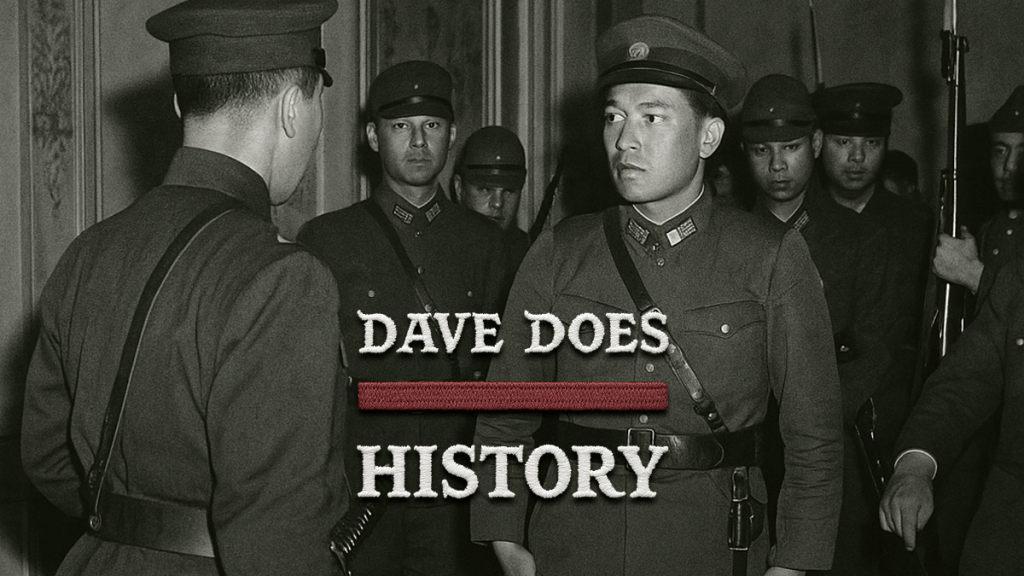
Emperor Hirohito was not supposed to rule, only reign, but on August 14 he broke with tradition. The arguments had gone in circles long enough. He told his ministers to accept the Potsdam Declaration, the Allied demand for unconditional surrender. In language that was formal, layered, and far from plain, he approved the Imperial Rescript that would announce the decision to his people. The words would be recorded and broadcast nationwide the following day. That recording became more than a piece of wax with sound grooves. To a determined group of army officers, it was the one thing standing between Japan and a fight to the death.
Major Kenji Hatanaka was the kind of officer who could not imagine laying down arms while an enemy still stood. Along with Jirō Shiizaki and others in the War Ministry, he hatched a plan to seize control before the broadcast could be heard. The plot was bold but perilous: occupy the Imperial Palace, cut off loyal officials from the Emperor, place Hirohito under what they called “protective custody,” and destroy the surrender recording. Masao Inaba, another participant, later described a meeting on August 13 where they discussed exactly how to use the Imperial Guard and Eastern Army to carry it out. Their condition for success was simple in theory but difficult in practice. Senior commanders had to agree. Without them, the coup would collapse before it began.
As the sun set on August 14, the conspirators moved. Hatanaka and his men went to the palace, carrying a forged order sealed with the official stamp of Lt. Gen. Takeshi Mori, commander of the First Imperial Guards Division. Mori was no rebel. When he refused to join them, he was shot dead in his office. The forged order, they hoped, would convince the Guards to seal off the palace and cut all outside communication. Darkness, a blackout, and the confusing maze of the palace’s underground passages worked against them. They searched for the recording, interrogating staff at gunpoint, but the discs had been hidden in a bundle of documents. They never found them.
Elsewhere in Tokyo, other plotters tried to widen the revolt. The Prime Minister, Kantarō Suzuki, was nearly killed before he slipped away to safety. Radio stations were targeted in hopes of intercepting or delaying the broadcast. The rebels believed that if Hirohito’s words went out over the airwaves, there would be no turning back. But support from above never came. Admiral Onishi, who had once urged fighting to the last man, prepared for suicide instead of rebellion. General Shizuichi Tanaka, commander of the Eastern Army, made it plain that he would crush the uprising. By morning, loyal troops surrounded the palace.
At that point, Hatanaka and Shiizaki knew the cause was lost. They asked for ten minutes on the radio to explain themselves, were denied, and spent their last hours handing out leaflets around Tokyo. Just before noon on August 15, with the broadcast only minutes away, both men took their own lives.
That same day, people across Japan gathered by their radios. The streets grew still, broken only by the whir of cicadas. Hirohito’s voice came through faint and formal, speaking in a classical style many listeners could barely follow. He never said the word “surrender,” but the meaning was clear enough to those who understood the context. Afterward, an announcer explained plainly that Japan would lay down its arms. In homes and workplaces, people sat in silence, absorbing the reality that the war was over.
The Kyūjō Incident was the final spasm of resistance to that reality. It failed because enough senior officers obeyed the Emperor’s will, even if they disagreed with it. Had it succeeded, Japan might have faced not only an Allied invasion but the very real prospect of Soviet occupation in the north. The bloodshed would have been staggering, and the nation’s future far darker than what followed. Instead, August 15 became the day when Hirohito’s voice crossed the airwaves, and a nation at last began the uneasy work of peace.



 DAVE DOES HISTORY
Leave a comment