
Pat Garrett was a man born too early for Washington and too late for Dodge. At six-foot-five and sharp as a tack, he stood out even in the towering landscape of the American West. He’s known, almost exclusively, as the man who killed Billy the Kid. Maybe that’s the way legends work. You do one big thing, the world remembers, and the rest fades like gun smoke over the desert. But Pat Garrett’s life was more complicated than one midnight shot in a darkened room. His story is one of ambition, violence, politics, poverty, and pride. In short, it is a very American story.
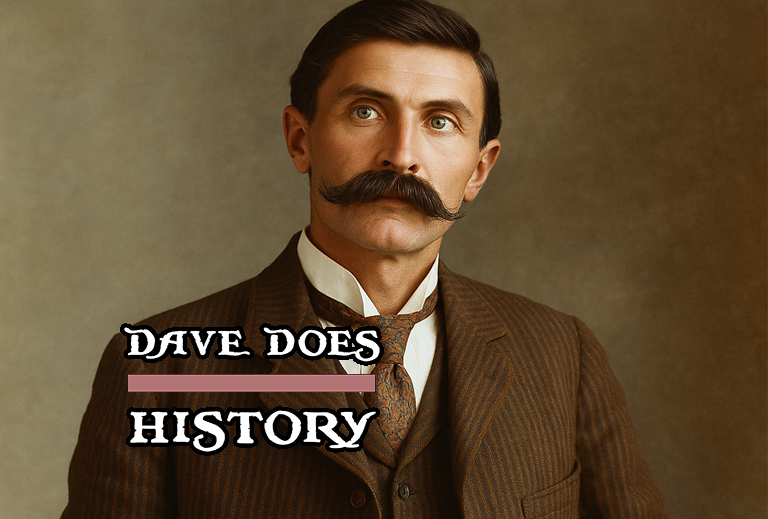
Born on June 5, 1850, in Chambers County, Alabama, Patrick Floyd Jarvis Garrett didn’t exactly win the birth lottery. The Civil War ruined his family’s finances, and by the time he was 18, both his parents were dead. With nothing left but debt and memories of a once-prosperous Louisiana plantation, Garrett took the only path open to a young man with no future back home. He went west. In 1869, he packed up and headed into the great American unknown, just like so many other fatherless sons left behind by war.
He tried buffalo hunting in Texas and wound up in a gunfight with another hunter named Joe Briscoe. Garrett shot and killed him. He turned himself in, but no charges were filed. That wasn’t unusual in the West. Law was more about who had the last shot than who had the first. By the mid-1870s, Garrett had drifted into New Mexico Territory and found work tending bar and riding the range. He had a natural knack for making the right friends, including a young outlaw by the name of Billy the Kid.
In 1879, Garrett tried to put down roots. He married a young woman named Juanita Martinez. She died within two weeks of the wedding, possibly from stress or illness. It was a brutal introduction to married life. Within a year, he married again, this time to Apolinaria Gutierrez. That marriage stuck. They had eight children. Garrett kept trying to live the respectable life of a rancher, but something in him pulled toward bigger fights and bigger headlines.
In 1880, Lincoln County, New Mexico, elected Garrett as sheriff. It was a job that came with a badge, a target on his back, and a single name on every wanted poster in the region. Billy the Kid had become infamous in the wake of the Lincoln County War. Garrett took office on January 1, 1881, but he wasn’t interested in waiting around. He was sworn in early as deputy and immediately hit the trail. He wasn’t just looking for Billy. He was hunting every man who rode with him.
Garrett’s pursuit was fast and brutal. He shot one of Billy’s closest friends, Tom O’Folliard, by mistake. He then cornered the Kid and his gang at a place called Stinking Springs. Another man died there. Billy was captured and brought to trial. He was sentenced to hang but broke out of jail, killing two deputies in the process. Garrett knew what had to be done.
On July 14, 1881, Garrett rode to Fort Sumner. A tip told him Billy was hiding out at Pete Maxwell’s house. Around midnight, Garrett crept into the room. Billy entered, asking in Spanish, “Who is it?” Garrett shot him in the chest. It’s not clear whether Billy died instantly or lingered, but what’s certain is that Garrett had just taken out the most notorious outlaw of his time.
That one moment cemented Garrett’s place in history. It also put a target on his back for the rest of his life. Some saw him as a hero. Others saw him as a cold-blooded killer. Garrett tried to control the narrative. He co-authored a book about the Kid, hoping to tell his version of events. It didn’t sell well at the time but became a foundational piece of the Billy the Kid legend.
After killing the Kid, Garrett didn’t run for re-election. Maybe he had seen too much. Maybe he had done enough. He moved to Texas, tried politics, and failed. He briefly joined the Texas Rangers, then drifted back to New Mexico and into a series of failed business ventures. He invested in irrigation projects that promised to turn the desert into farmland. Those dreams dried up fast.
By the mid-1890s, he was back in law enforcement. When Colonel Albert Fountain and his young son vanished near White Sands, Garrett was appointed sheriff of Doña Ana County to investigate. He arrested suspects and even got into a gunfight with them at a place called Wildy Well. One of his deputies died, and Garrett was grazed by a bullet. The suspects eventually turned themselves in, but no convictions followed. The law was always a little slippery in the Southwest.
In 1899, Garrett killed one last man, a fugitive wanted for murder in Oklahoma. That was the end of his lawman career in the field. But then came one last opportunity. In 1901, President Theodore Roosevelt appointed Garrett to be customs collector in El Paso. It was a political favor and a reward for his frontier service. Garrett put on the suit and tried his hand at federal service. It didn’t go well.
He got into a fistfight with an employee. Worse, at a Rough Riders reunion, he introduced Roosevelt to a man named Tom Powers. Garrett claimed Powers was a cattleman. He was, in fact, a saloon owner and gambler with a reputation that would make a snake blush. When Roosevelt found out, he was livid. Garrett had embarrassed the President, and that was the beginning of the end.
By 1906, Garrett was out of a job. He returned to New Mexico a broken man. His ranch was mortgaged. His belongings were auctioned off. A promised government appointment disappeared when it was discovered he had taken up with a known prostitute in El Paso. Garrett was flailing. The man who once stood tall above the frontier was now just another aging cowboy with no saddle to ride.
Then came the final insult. Garrett’s son, Dudley, had leased part of the family ranch to a man named Jesse Wayne Brazel. Brazel started running goats on the land. That was a problem. Cattlemen loathed goats. They destroyed grazing land. Garrett tried to break the lease. He discovered that Brazel’s operation was backed by another rancher named Bill Cox and possibly a few other shady characters, including the infamous gunman Jim Miller. Garrett was furious.
A meeting was arranged. Carl Adamson, a friend of the Brazel crowd, picked up Garrett in a wagon. They were to meet Brazel and finalize a deal to buy out the goat herd. Instead, Garrett ended up dead on the side of the road. Brazel claimed Garrett pulled a gun. Brazel shot in self-defense. Adamson backed him up. Brazel was arrested, stood trial, and was acquitted. Some believe Adamson killed Garrett. Others say it was Miller or Rhode or Cox. Nobody really knows.
What is known is that Pat Garrett died with more enemies than friends and more debt than dollars. His body was too long for any coffin in town, so they had one shipped from El Paso. He was buried beside his daughter in Las Cruces. His grave is still there, and so is the controversy.
Over the years, Garrett’s life has been turned into plays, movies, TV shows, and songs. Bob Dylan wrote music about him. James Coburn played him on screen. Some see him as the last real lawman of the Old West. Others see a trigger-happy opportunist who lucked into fame.
Garrett lived in the gray areas, where law and survival met in dusty crossroads. He was not a saint. He was not a villain. He was a man trying to keep his head above water in a violent and unforgiving world. He shot Billy the Kid, yes, but he also outlived his usefulness in a world that was changing fast.
The West was closing. The barbed wire was going up. The trains were running faster. The politicians were slicker. The men who knew how to handle a gun were being replaced by men who knew how to handle a pen. Garrett never made that leap.
We remember him because of one shot. But we should remember him for the long, lonely trail that led there, and the harder, darker road that followed. Pat Garrett was the kind of man America used to make. Tall, flawed, brave, and doomed. He was the man who shot Billy the Kid. But more than that, he was the man who tried to live in a world that no longer needed his kind. And for that, he deserves to be remembered.
 DAVE DOES HISTORY
Leave a comment