
In the spring of 1765, something changed in the American colonies. The British Parliament, deep in debt after the costly French and Indian War, passed the Stamp Act—a direct tax on everything from newspapers and legal documents to dice and playing cards. But this was more than just a revenue measure. To many colonists, it felt like a calculated assault on their liberty. They saw it as taxation without representation, a phrase that would soon echo across taverns, town squares, and eventually battlefields.
Enter Patrick Henry.
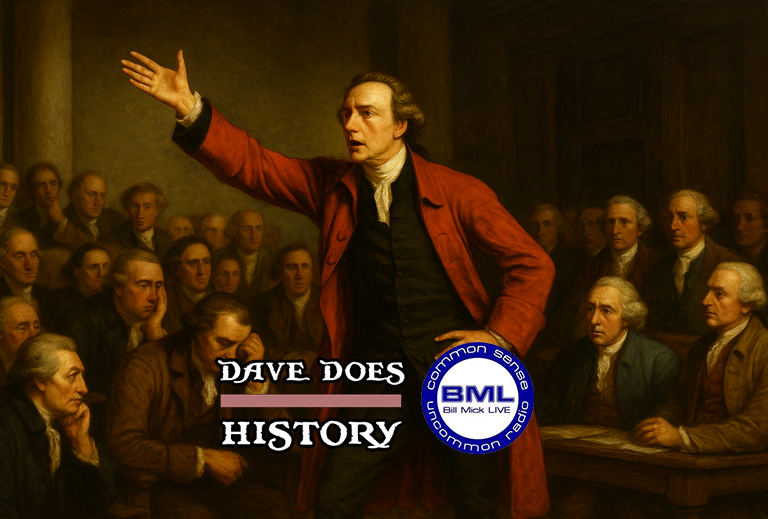
In Virginia’s House of Burgesses, a 29-year-old lawyer with a sharp tongue and a sharper sense of justice stood up and gave a speech that shook the walls of the chamber—and the foundations of British authority in America. As he warned his fellow legislators about the dangers of unchecked power, Henry’s words grew bold. Too bold, some thought. When he suggested that even King George III could become a tyrant, cries of “Treason!” erupted in the room.
Henry’s reply? Calm, clear, and immortal.
“If this be treason, make the most of it.”
This week on Dave Does History on Bill Mick Live, we dig into that moment—one of the most electrifying in the run-up to the American Revolution. But we are not stopping with Patrick Henry. This episode takes you even further back, to the Roman Republic, where men like Brutus and Cassius once faced a similar crisis: what to do when one man gathers too much power. We explore how America’s Founders, steeped in the classics and the writings of Enlightenment philosophers, viewed Julius Caesar not just as a historical figure, but as a warning.
We unpack the technical details of the Sugar Act and the Stamp Act—how they worked, why they were seen as unjust, and how they fundamentally shifted the colonial understanding of Britain’s imperial role. Then we follow the rising tide of colonial reaction, from economic boycotts to street protests and political congresses. And we shine a spotlight on Patrick Henry’s speech, not just for its fire and flair, but for its deep ideological roots in both ancient Rome and emerging American identity.
“If This Be Treason” is not just a phrase—it is a threshold. Cross it, and you are no longer asking for permission. You are demanding liberty.
So come along as we connect Caesar to King George, the Rubicon to the Rappahannock, and ancient tyranny to colonial resistance. The Founders knew history mattered. Now it is our turn to remember why.


 DAVE DOES HISTORY
Leave a comment