
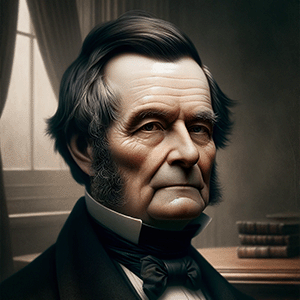
The impeachment of Andrew Johnson, the 17th President of the United States, stands as one of the most dramatic and politically charged events in American history. Taking office after the assassination of Abraham Lincoln in 1865, Johnson, a Southern Democrat, inherited a nation fractured by Civil War. His approach to Reconstruction, which involved rapid reintegration of the Southern states without protections for newly freed slaves, put him at odds with the Radical Republicans in the 39th Congress who advocated for harsher, more transformative measures.
Johnson’s presidency was marked by constant friction with Congress, particularly with the Radical Republicans who controlled it. They viewed his policies as too lenient towards the Southern states and obstructive to the civil rights of African Americans. This ideological divide set the stage for a showdown that would eventually lead to impeachment.
Central to the impeachment was the Tenure of Office Act, passed by Congress in 1867 over Johnson’s veto. The act was designed to restrict the President’s ability to remove certain officeholders without the Senate’s approval. When Johnson attempted to dismiss Secretary of War Edwin Stanton, a Radical Republican ally, he directly violated this act. Stanton’s dismissal epitomized the struggle for control of the government between Johnson and Congress.
Johnson’s move to dismiss Stanton was the catalyst for his impeachment. The House of Representatives voted 126 to 47 in favor of impeachment, charging Johnson with high crimes and misdemeanors. This marked the first time in U.S. history that a president was impeached.
Johnson faced 11 articles of impeachment. Most of these centered around his violation of the Tenure of Office Act and his attempts to undermine Congressional authority. The charges highlighted his supposed abuse of power and intentional violation of the laws.
The trial in the Senate began on March 5, 1868, and was a national spectacle. Chief Justice Salmon P. Chase presided over the proceedings. The prosecution, led by several Radical Republicans, argued that Johnson had unlawfully challenged the authority of Congress. Johnson’s defense contended that the Tenure of Office Act was unconstitutional and that he was acting within his rights as president.
The public was deeply divided. Many in the North supported the impeachment, seeing Johnson as an impediment to Reconstruction and civil rights. Others viewed the trial as a power grab by the Radical Republicans.
The climax of the trial came on May 26, 1868, when Johnson was acquitted by a single vote. The Senate fell one vote short of the two-thirds majority required to convict. Rumors swirled that some Senators were influenced by promises of political favors and patronage, reflecting the intense lobbying efforts that surrounded the trial.
The acquittal did little to enhance Johnson’s power; his influence was significantly diminished, and he was largely sidelined for the remainder of his term. The Radical Republicans continued to dominate Reconstruction, shaping its progress without his interference.
Johnson’s political career after his presidency was initially bleak. However, he later staged a comeback, winning election to the U.S. Senate in 1875, making him the only former president to do so. This was seen as a personal vindication, though his impact was limited as he died later that year.
The impeachment of Andrew Johnson set significant precedents regarding the balance of power between the presidency and Congress. It was a testament to the complexities of governance in a post-war America and highlighted the enduring tensions within the U.S. political system. The trial also underscored the evolving nature of impeachment as a political tool, a theme that has recurred throughout American history.
The Johnson impeachment remains a critical chapter in the saga of American democracy, illustrating the constitutional and political challenges that can emerge during periods of national strife and transformation.



 DAVE DOES HISTORY
Leave a comment