
Mount St. Helens, a stratovolcano located in the Pacific Northwest region of the United States, erupted catastrophically on May 18, 1980. This eruption, the most deadly and economically destructive volcanic event in U.S. history, transformed the landscape and provided valuable lessons for volcanic monitoring and disaster preparedness.
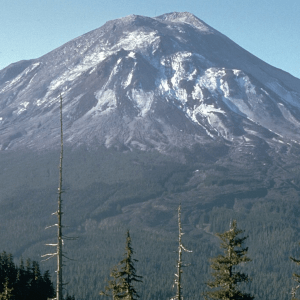
The signs of Mount St. Helens’ imminent eruption began in March 1980 with a series of small earthquakes. The activity intensified over the following weeks, leading to visible changes on the mountain. By late April, a bulge had formed on the north flank, growing at a rate of five feet per day due to the intrusion of magma.
Authorities, aware of the potential danger, established a “red zone” around the volcano, restricting access to minimize casualties. Despite these efforts, some residents and loggers remained within or near the exclusion area.
8:32 a.m. – A 5.1 magnitude earthquake struck beneath Mount St. Helens, triggering the north flank’s collapse in the largest landslide in recorded history. The landslide removed the top and north side of the volcano, releasing pressure and exposing the magma chamber.
8:33 a.m. – The lateral blast erupted from the north face at speeds of up to 670 miles per hour. This blast devastated an area of 230 square miles, flattening forests and obliterating everything in its path.
8:35 a.m. – The vertical eruption column began to rise, reaching 15 miles into the atmosphere within 15 minutes. Ash started to fall across the surrounding region, creating darkness as far away as Spokane, Washington.
9:00 a.m. – Pyroclastic flows, fast-moving currents of hot gas and volcanic matter, surged down the mountain’s slopes, incinerating everything in their path and traveling at speeds over 100 miles per hour.
9:30 a.m. – The eruption column continued to grow, reaching its peak height of 80,000 feet. Ash was carried by the wind across the United States, reaching the eastern seaboard within days.
The pyroclastic flows from Mount St. Helens were among the most deadly aspects of the eruption. These flows consisted of superheated gases, ash, and volcanic rock, which moved at incredible speeds and temperatures, destroying all forms of life and vegetation.
The eruption’s ash column was equally significant, consisting of fine volcanic ash that blanketed regions hundreds of miles away. This ash caused severe disruptions, including reduced visibility, contaminated water supplies, and widespread respiratory issues.
The immediate aftermath of the eruption was devastating. The landscape around Mount St. Helens was transformed into a barren wasteland. The once-lush forests were replaced by a gray, desolate expanse. Ash covered much of the Pacific Northwest, leading to massive cleanup efforts.
Economically, the eruption caused billions of dollars in damage, affecting forestry, agriculture, and infrastructure. The environmental impact was profound, with ecosystems severely disrupted and wildlife populations decimated.
Mount St. Helens continued to be active in the years following the 1980 eruption, with significant eruptive periods in 1981, 1982, 1984-1986, and 2004-2008. These eruptions were less explosive but continued to reshape the landscape, forming a new lava dome within the crater.
The May 18, 1980, eruption resulted in 57 confirmed deaths, with many others suffering injuries. Most of the fatalities occurred due to the lateral blast, pyroclastic flows, and ashfall. The victims included scientists, photographers, and residents who had ignored evacuation orders.
Today, Mount St. Helens stands as a living testament to the power of nature. The landscape has shown remarkable recovery, with vegetation slowly returning and wildlife populations rebounding. The crater left by the eruption is a stark reminder of the event, while the new lava dome signifies the mountain’s ongoing activity.
Scientists continue to monitor Mount St. Helens closely, using advanced technology to track seismic activity, gas emissions, and ground deformation. The mountain is expected to remain active, with the potential for future eruptions. However, improved monitoring and early warning systems aim to mitigate the risks and ensure better preparedness for any future events.
Mount St. Helens remains a symbol of natural beauty and power, its eruption serving as a powerful reminder of the dynamic and ever-changing nature of our planet.




 DAVE DOES HISTORY
Leave a comment