
The Oklahoma Land Rush of 1889 marks a pivotal event in American Westward expansion history, involving the dramatic opening of the “Unassigned Lands” in the Indian Territory for settlement. These lands, centrally located, were deemed available after being considered surplus to the requirements of local Native American tribes under pressure from the U.S. Government. This region promised prosperity and new beginnings for many Americans, driven by the ideology of Manifest Destiny and the availability of fertile land.
 Before the rush, the Indian Territory was primarily occupied by several tribes, including the Cherokee, Choctaw, Chickasaw, Creek, and Seminole. These tribes had been relocated from their ancestral lands to the Indian Territory following the Indian Removal Act of 1830. The region was seen as a permanent home for these tribes, promised by treaties that were subsequently broken or renegotiated under duress to make way for white settlers.
The “Boomer Movement” was initiated by individuals and groups advocating for the opening of the “Unassigned Lands” to non-Native settlers. David L. Payne, a leader in this movement, argued these lands were public and should be available for settlement. The movement gained momentum with the development of railroads, which not only made the territories accessible but also advertised the potential of these lands to eastern populations, stirring up significant interest and demand for homesteading.
David L. Payne, often referred to as the “Father of Oklahoma,” was instrumental in pressuring the government to open up the region for settlement. Through numerous expeditions and settlements often dispersed by the U.S. Army, Payne built a strong case for public access to the territory. His efforts laid the groundwork for the eventual authorization of the Land Rush by the federal government.
After Payne’s untimely death in 1884, his associate William L. Couch took over the leadership of the Boomer Movement. Couch, who later became the first mayor of Oklahoma City, continued Payne’s work, tirelessly advocating for the official opening of the lands. His leadership was crucial during the land rush itself, guiding many settlers in staking claims.
The Oklahoma Immigration Organization, formed by settlers and supporters of the Boomer Movement, played a significant role in organizing and managing the migration of thousands of people into the Oklahoma Territory. This organization was pivotal in coordinating with the railroads to transport settlers, providing information and resources, and helping to establish provisional governments in newly formed towns.
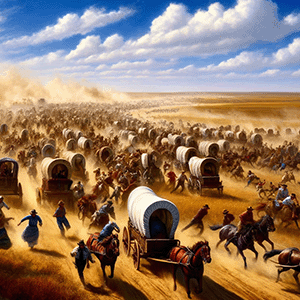
On April 22, 1889, at high noon, a cannon’s boom unleashed a frenzied race of thousands of settlers into the Unassigned Lands. This monumental event saw individuals and families rush to claim plots of land where they could establish new homes and farms. Towns like Oklahoma City and Guthrie sprang up almost overnight, growing rapidly into bustling centers of commerce and governance.
The Oklahoma Land Rush of 1889 had a profound and lasting impact on American history. It exemplified the complexities of American expansionism, highlighting the conflict between the pursuit of new opportunities for settlers and the displacement of Native American tribes. The legacy of the rush includes the rapid development of the state of Oklahoma, significant demographic changes, and the ongoing discussions around land rights and American expansion.
The event not only symbolizes the spirit of the American frontier but also the controversial policies toward Native Americans and the impact of the railroads in shaping the nation’s geographical and cultural landscapes. The echoes of the Oklahoma Land Rush continue to shape discussions on American identity and land use to this day.


 DAVE DOES HISTORY
Leave a comment