
 In the waning days of the Vietnam War, as North Vietnamese forces advanced towards Saigon, the United States embarked on a mission of mercy that would leave an indelible mark on the history of humanitarian efforts. Operation Babylift was conceived as a mass evacuation of orphans from South Vietnam to the United States and other countries, aimed at safeguarding the most vulnerable from the impending conflict. The operation, proposed in the context of the imminent fall of Saigon, required meticulous planning and coordination. The U.S. government, along with various adoption agencies and humanitarian organizations, began the detailed work of organizing the transportation and adoption processes for thousands of orphans.
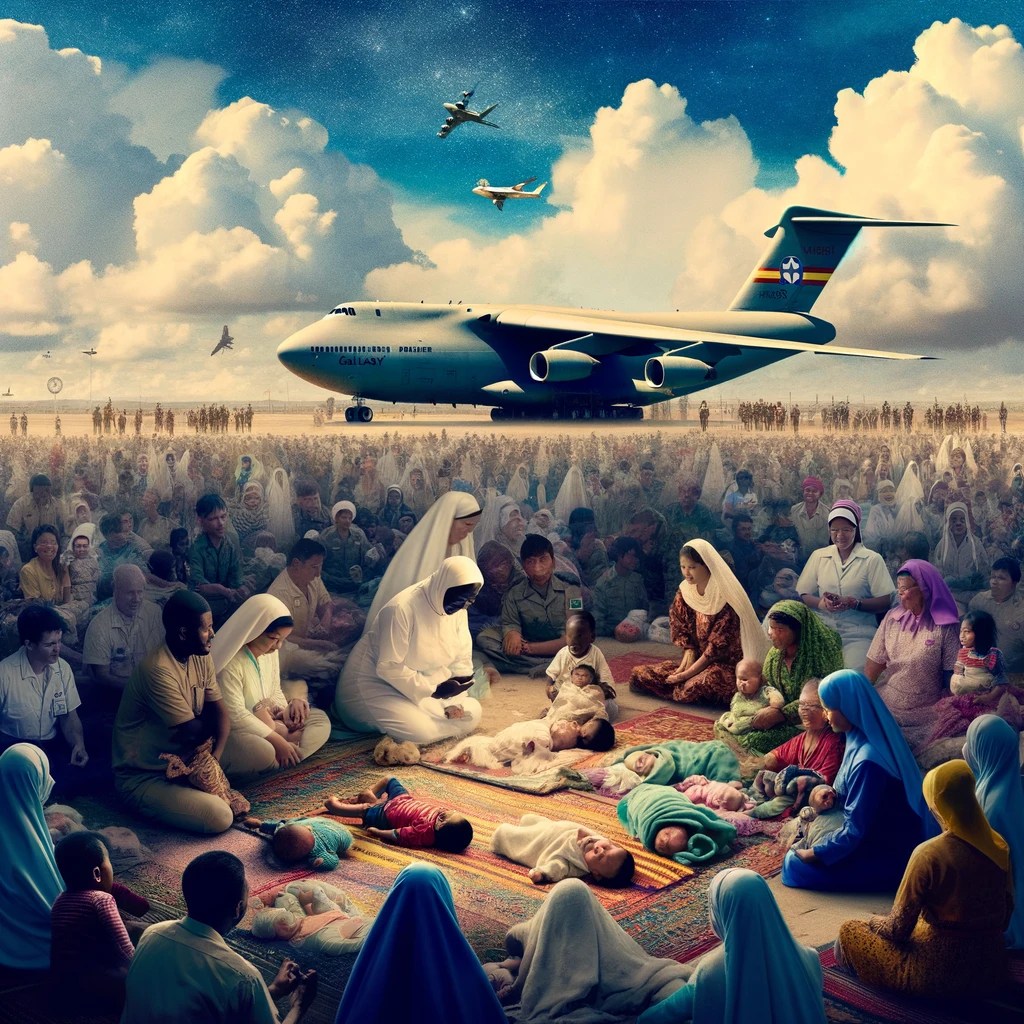
The logistical challenge of transporting a large number of infants and children across the world was formidable. Military and commercial aircraft were repurposed for the mission, equipped to carry the young passengers and their caregivers. The U.S. Air Force played a pivotal role, dedicating cargo planes like the C-5 Galaxy, which was one of the largest aircraft in the world at the time, capable of carrying hundreds of passengers along with the necessary medical equipment and supplies.
Operation Babylift officially commenced on April 3, 1975. The operation’s first flight, a C-5 Galaxy, symbolized the ambitious humanitarian effort. It was loaded with hundreds of orphans, caretakers, and medical staff, ready for the long journey from Saigon to the United States. The mission was filled with a sense of urgency and hope, as it represented a beacon of safety for the children amidst the chaos of war.
The operation caught the attention and empathy of many around the globe, including American businessman Robert Macauley. Moved by the images of the evacuation and the tragedy of a subsequent aircraft crash, Macauley took remarkable personal action. He arranged for a Boeing 747 to be chartered to expedite the evacuation process, personally securing the financing required to ensure that no time was wasted in rescuing the orphans. His decisive action and generosity underscored the widespread support for the mission among the American public and the international community.
Tragedy struck early in the operation, with the crash of the initial C-5 Galaxy flight on April 4, 1975, shortly after takeoff from Saigon. The aircraft suffered catastrophic malfunctions, leading to the loss of over 130 lives, including many children and caregivers. This heartbreaking incident highlighted the risks involved in the operation but also strengthened the resolve of those involved to continue the mission, driven by a renewed sense of urgency to save as many lives as possible.

Operation Babylift’s legacy is complex and multifaceted. Over the course of several weeks, approximately 3,300 children were evacuated from South Vietnam. While the operation faced criticism for its execution and the ethical implications of removing children from their home country, it also represented a monumental effort to protect innocent lives amidst the ravages of war. The children of Operation Babylift grew up in various countries, primarily the United States, where they contributed to their new communities while navigating the challenges of their identities and heritage.
For many, Operation Babylift remains a poignant reminder of the human capacity for both compassion and controversy in times of crisis. It underscores the importance of international cooperation and goodwill in the face of humanitarian emergencies, a lesson that continues to resonate in contemporary global affairs.




 DAVE DOES HISTORY
Leave a comment