
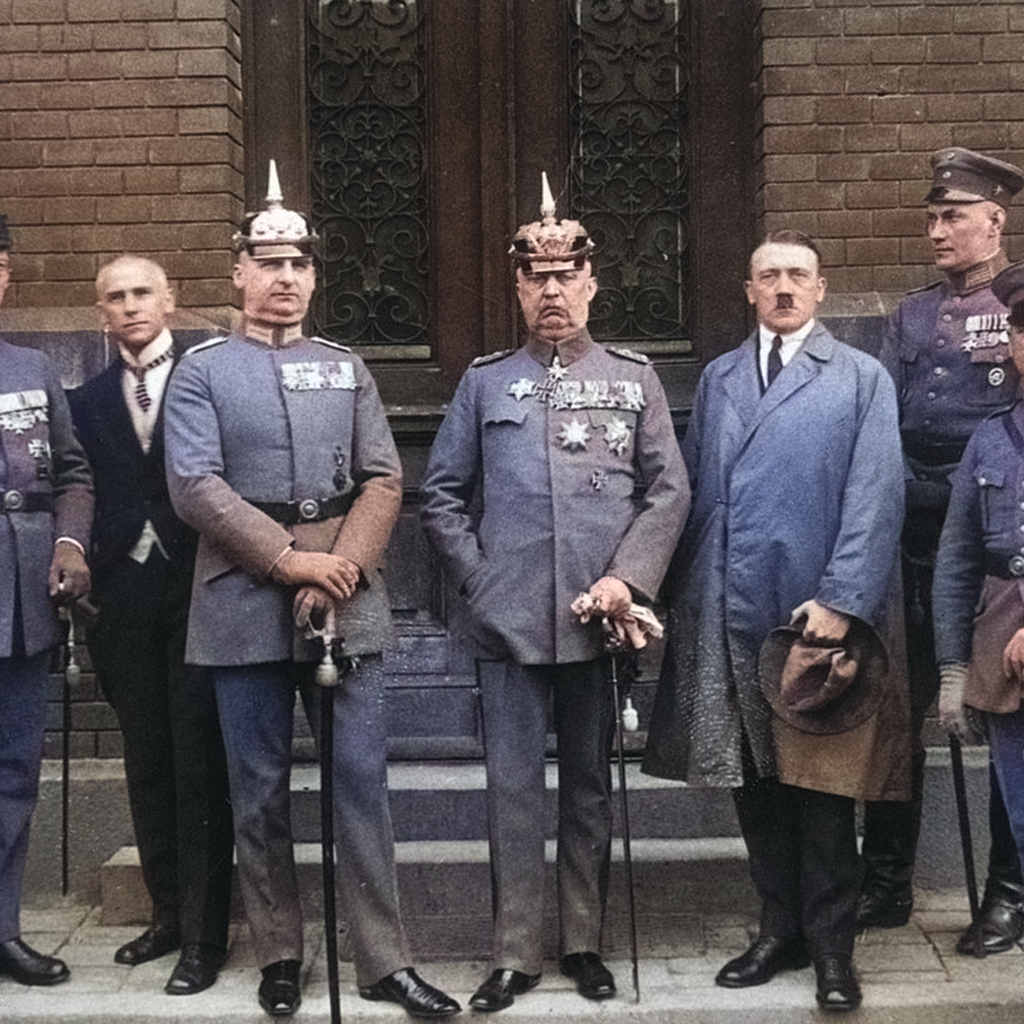
 The trial of Adolf Hitler for his role in the Munich Putsch of November 1923 is a pivotal event in the history of Germany, marking a significant moment in the rise of one of history’s most notorious figures. This article explores the events leading up to the trial, the proceedings themselves, and the broader implications for Hitler’s public career and the trajectory of the German nation.
The Munich Putsch, also known as the Beer Hall Putsch, occurred on November 8-9, 1923. Adolf Hitler, alongside Erich Ludendorff and other leaders of the National Socialist German Workers’ Party (NSDAP), attempted to overthrow the Weimar Republic. The putschists aimed to seize control of Munich and then march on Berlin. However, the coup failed miserably when the Bavarian authorities, backed by loyal military units, quashed the uprising. The event concluded with the death of 16 NSDAP members and four police officers, marking a significant setback for Hitler and his movement.
Following the putsch’s failure, Adolf Hitler was arrested on November 11, 1923. The immediate charge was high treason, a serious accusation that typically carried the death penalty. Hitler’s arrest marked the beginning of his transition from a relatively obscure political figure to a national symbol of defiance against the Weimar Republic.
The trial began on February 26, 1924, and from the outset, Hitler adopted a bold defense strategy. Instead of denying his actions or seeking leniency, Hitler used the courtroom as a stage to propagate his views. He admitted to the charge of high treason but argued that his actions were in the best interest of the German people, positioning himself as a patriot fighting against the perceived injustices of the Treaty of Versailles and the failures of the Weimar government. This audacious defense resonated with many Germans, disillusioned by their country’s post-war state.
Hitler’s charisma and oratory skills turned the trial into a public spectacle, attracting widespread media coverage. His defense tactics not only endeared him to many Germans but also embarrassed the government, revealing its weaknesses.
Despite the gravity of the charges, the outcome of the trial was astonishingly lenient. On April 1, 1924, Hitler was sentenced to five years in Landsberg prison for his role in the putsch, with the possibility of early parole. The sentence was a clear reflection of the sympathetic views some members of the judiciary held towards the nationalist cause. Indeed, Hitler served less than nine months before being released, during which he penned the first volume of “Mein Kampf,” outlining his ideology and future plans for Germany.
The trial and the subsequent sentence had profound implications for Hitler’s public career and the future of Germany. The trial effectively transformed Hitler from a failed revolutionary to a martyr and a hero in the eyes of many Germans. It provided him and the NSDAP with a platform to disseminate their ideology more widely and gather significant public support.
The leniency of the sentence, combined with Hitler’s early release, allowed him to rebuild the Nazi Party, which had been banned in the aftermath of the putsch. By exploiting the publicity and network he developed during and after the trial, Hitler was able to propel the NSDAP from a fringe group to a dominant force in German politics.
Ultimately, the trial and its aftermath played a crucial role in Hitler’s rise to power. It underscored the vulnerabilities within the Weimar Republic and the extent to which nationalist sentiments could be mobilized. The events of the Munich Putsch and the trial that followed revealed the dangerous undercurrents within German society that would, within a decade, lead to Hitler’s ascent to Chancellor and the catastrophic consequences that ensued for Germany and the world.


 DAVE DOES HISTORY
Leave a comment