
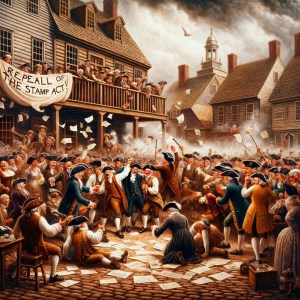
 The Stamp Act of 1765 stands as a pivotal moment in the complex history of colonial America, marking both an escalation in British attempts to extract revenue from its American colonies and a crystallization of colonial resistance that would eventually lead to the American Revolution. The passage, reception, and eventual repeal of the Stamp Act offer insights into the evolving relationship between England and its colonies, highlighting themes of governance, taxation without representation, and the seeds of burgeoning American identity.
Enacted by the British Parliament on March 22, 1765, the Stamp Act was designed to raise revenue from the American colonies by requiring the use of specially stamped paper for legal documents, newspapers, licenses, and other publications. As the first direct tax levied on the colonies, it was intended to defray the costs of keeping British troops in America following the Seven Years’ War. The Act mandated that many printed materials in the colonies carry a stamp purchased from authorized agents, a measure that affected nearly every colonist and sparked widespread indignation.
The reception of the Stamp Act in the colonies was overwhelmingly negative. Colonists viewed the tax as an egregious example of taxation without representation, arguing that only their own colonial legislatures had the legal authority to tax them. This sentiment was succinctly captured in the slogan “No taxation without representation.”
The Act triggered a variety of responses, ranging from petitions and resolutions to boycotts of British goods and outright violence. Notably, the formation of groups such as the Sons of Liberty, who organized protests and even intimidated stamp distributors, leading many to resign their commissions before the Act could be fully implemented. The widespread unrest and civil disobedience highlighted the impracticality of enforcing the Stamp Act across the vast and increasingly hostile American landscape.
In response to the growing crisis, representatives from nine of the thirteen colonies convened the Stamp Act Congress in October 1765 in New York City. This gathering was significant as the first unified colonial response to British impositions. The Congress drafted a Declaration of Rights and Grievances, which argued that only colonial assemblies had the right to tax the colonies and that the Stamp Act infringed upon their liberties. Although the British government largely ignored the Congress’s petitions, the event marked an important step in the development of a collective American identity and set a precedent for future colonial cooperation.
Back in England, the economic repercussions of colonial boycotts, coupled with lobbying by British merchants affected by the downturn in trade, pressured Parliament to reconsider the Stamp Act. On March 18, 1766, less than a full year after its enactment, Parliament voted to repeal the Stamp Act. The repeal was a significant victory for the colonies but was coupled with the passage of the Declaratory Act, which asserted Parliament’s full power to make laws binding the colonies “in all cases whatsoever,” setting the stage for future conflicts.
The repeal of the Stamp Act was celebrated throughout the colonies as a triumph of their will over British imposition. However, the accompanying Declaratory Act sowed seeds of future discontent by affirming Parliament’s theoretical authority over the colonies. In the short term, the repeal helped to temporarily ease tensions between Britain and the colonies. Yet, it also emboldened colonial resistance, proving that collective action could influence British policy.
Ultimately, the Stamp Act and its repeal highlighted the growing divide between Britain and its American colonies. While it temporarily mended relations, it also underscored the colonists’ increasing dissatisfaction with British rule and their desire for greater autonomy. This event was a crucial step on the path to the American Revolution, demonstrating the power of colonial unity and the limits of British authority in America. The legacy of the Stamp Act lives on as a testament to the complexities of colonial resistance and the fight for American independence.




 DAVE DOES HISTORY
Leave a comment