
The USS Maine, an American naval ship, met a tragic end in Havana Harbor on February 15, 1898, an event that significantly escalated tensions between the United States and Spain, leading to the Spanish-American War. This article delves into the intricate details of the Maine’s design and construction, its operational history, the catastrophic explosion that led to its sinking, subsequent investigations, and the long-standing legacy of this historical incident.

The USS Maine was designed as a pre-dreadnought battleship, marking a pivotal shift in naval architecture. Authorized in 1886, her design was a compromise between the traditional wooden ships and the newer steel warships. Constructed at the Brooklyn Navy Yard, Maine’s development faced significant delays due to ongoing debates over her design and the evolving technology of naval artillery and armor. She was not launched until 1889, three years after her keel was laid down, and was finally commissioned in 1895. The Maine was a testament to the transitional phase in naval warfare, equipped with a mix of medium-caliber guns and two 10-inch guns, embodying the shift towards more heavily armed and armored ships.
Before her fateful end, the USS Maine served primarily as a symbol of American naval power and a tool for diplomatic presence. After her commissioning, the Maine operated along the East Coast of the United States and in the Caribbean, partaking in various exercises and showing the flag in troubled regions. Her presence in Havana Harbor in early 1898 was intended as a friendly visit to protect American interests during the Cuban revolt against Spanish rule.
On the night of February 15, 1898, a massive explosion aboard the USS Maine resulted in the rapid sinking of the ship, killing 266 of the 355 crew members. The explosion occurred without warning, and the ship was lost in a matter of minutes, leaving little time for an organized evacuation or efforts to save the ship.
The initial investigation by the U.S. Navy concluded that the explosion was caused by a mine, which, in the context of the Spanish control of Cuba, led to widespread public outrage and calls for action against Spain. This conclusion was primarily based on the pattern of damage and testimonies from survivors. However, the Spanish government conducted its own investigation, which suggested that the explosion was internal, possibly caused by a spontaneous combustion in the coal bunkers or a magazine explosion.
The sinking of the USS Maine became a significant political tool for those advocating for war with Spain. The rallying cry “Remember the Maine! To hell with Spain!” exemplified the public sentiment and the press’s role in inflaming the desire for retribution. The incident provided the United States with the casus belli to declare war on Spain, leading to the Spanish-American War, which resulted in the defeat of Spain and the acquisition of its overseas territories by the United States.
The loss of the USS Maine has had a lasting impact on American military and political history. It highlighted the importance of naval power and contributed to the buildup of the U.S. Navy in the early 20th century. The sinking is often cited as a key event in the emergence of the United States as a world power.
Efforts to raise the wreck of the Maine began in 1910, culminating in the successful recovery of the remains of many of the victims, who were subsequently interred with honors. The operation served both as a closure for the families of the deceased and as a symbol of American resilience and determination.
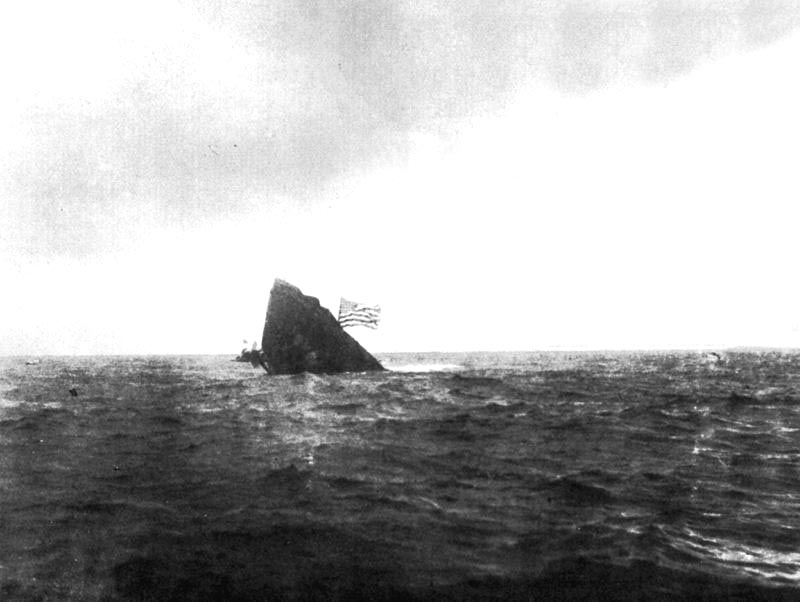
Subsequent investigations and modern forensic analyses have cast doubt on the initial conclusion that a mine caused the explosion. Studies in the 1970s and a 1999 re-examination by National Geographic suggested that the explosion was more likely internal, caused by a fire in the coal bunker adjacent to the magazine. These findings have led to a reevaluation of the events leading up to the Spanish-American War, suggesting that the tragedy might have been an accident rather than an act of sabotage.
The sinking of the USS Maine remains a subject of intrigue and speculation, embodying the complexities of turn-of-the-century geopolitics, the fervor of American imperialism, and the unpredictable nature of naval technology in an era of transition. The legacy of the Maine, encapsulated in the phrase “Remember the Maine,” continues to resonate as a poignant reminder of the cost of war and the importance of cautious diplomacy.



 DAVE DOES HISTORY
Leave a comment