
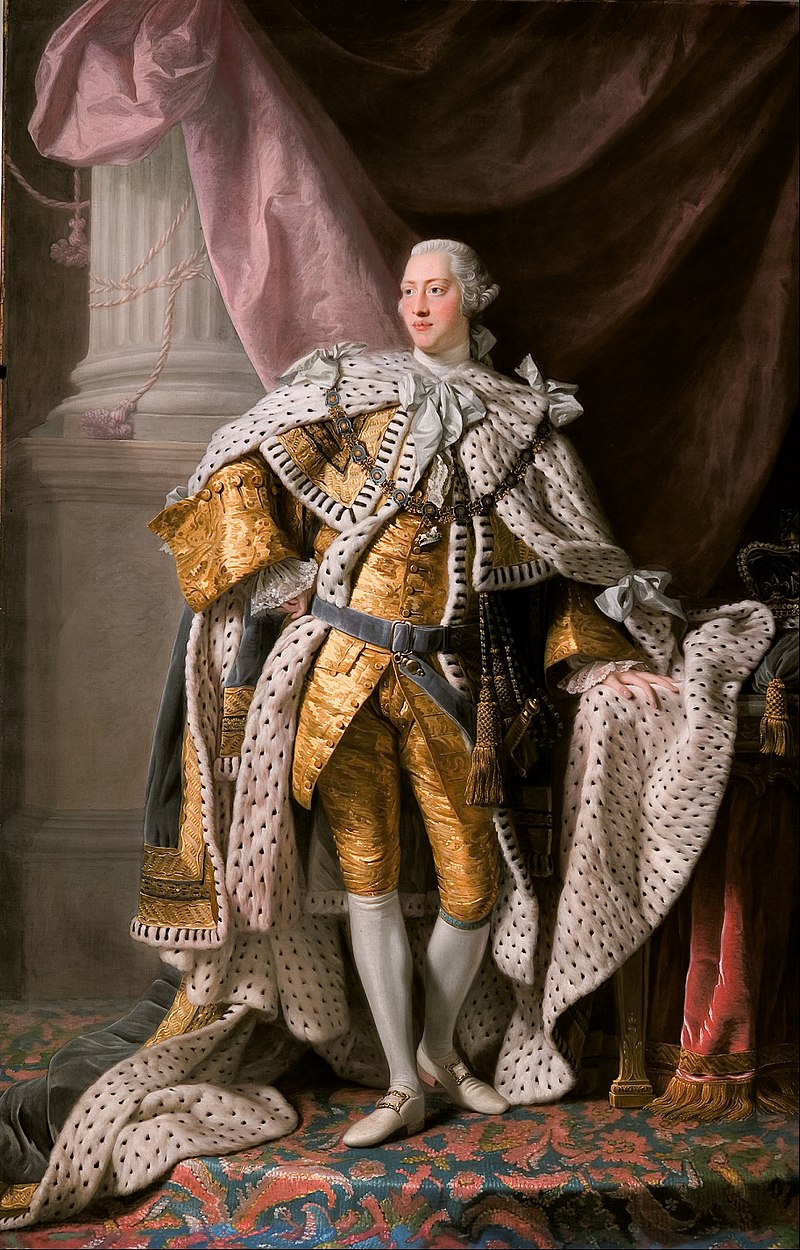
King George III, a monarch whose reign was as tumultuous as it was transformative, left an indelible mark on the tapestry of British history. Ascending to the throne in 1760, he presided over a period brimming with global conflicts, colonial expansions, and profound cultural shifts. His tenure, spanning an impressive 59 years, made him one of the longest-reigning monarchs in British history. It was a reign defined by pivotal events like the American Revolution and the Napoleonic Wars, events that reshaped the world’s political landscape. The death of King George III, therefore, marked not just the end of a significant chapter in the story of the British monarchy but also a pivotal moment of transition and reflection for a nation and its empire. His legacy, complex and multifaceted, continues to provoke debate and intrigue among historians and the public alike, illustrating the lasting impact of his rule.
King George III, born on June 4, 1738, in London, was the grandson of King George II. From his early years, he was groomed for the throne, receiving an education that emphasized the principles of the British constitutional monarchy. His father, Frederick, Prince of Wales, passed away prematurely, paving the way for George to succeed his grandfather in 1760 at the age of 22. His ascension to the throne was met with great public optimism, as he was the first Hanoverian monarch to be born and raised in England, speaking English as his first language.
King George III’s reign was marked by significant political and personal events that shaped his rule and the fate of the British Empire. Early in his reign, he sought to assert the power of the crown, leading to tensions with Parliament. His commitment to a “patriotic” monarchy, however, made him popular among his subjects.
In 1761, he married Charlotte of Mecklenburg-Strelitz, and the union produced 15 children. This large royal family became a symbol of moral and domestic stability, contrasting with the perceived decadence of previous monarchs.
Domestically, George III faced political challenges, including the Gordon Riots of 1780 and various parliamentary reforms. His personal life was also marked by tragedy and difficulty, especially concerning his recurring and eventually permanent mental illness, which later historians believe may have been a symptom of the genetic disease porphyria.
Perhaps the most defining international event of his early reign was the American Revolution (1775-1783). King George III’s stance against the American colonies’ quest for independence was inflexible, which ultimately led to the loss of these territories. This was a significant blow to British imperial ambitions and reshaped global power dynamics.
Later, his reign witnessed the Napoleonic Wars (1803-1815), where Britain emerged as a leading European power. Despite his illness, which increasingly kept him away from the affairs of state, his government, led by figures like William Pitt the Younger and later Lord Liverpool, played a pivotal role in the defeat of Napoleon, securing Britain’s dominance on the world stage.
King George III’s reign was a period of profound transformation for Britain and its empire. His early life and ascension set the stage for a reign that witnessed some of the most significant events in world history. From losing the American colonies to triumphing over Napoleonic France, his monarchy was a period of upheaval, innovation, and change. While his personal struggles and the controversies of his rule continue to be subjects of historical debate, the impact of his reign on the course of British and world history remains undeniable.
King George III of Great Britain is often remembered for two things: losing the American colonies and his bouts of madness. His mental health issues, which surfaced periodically throughout his reign, had profound implications not only on his personal life and rule but also on the perception and treatment of mental illness in the 18th and 19th centuries.
King George III’s first major episode of psychiatric illness occurred in 1788-1789, manifesting as acute mania with delirium. Subsequent relapses occurred periodically, with notable episodes in 1801, 1804, and finally a prolonged and permanent relapse beginning in 1810. His symptoms included rapid and uncontrolled speech, insomnia, physical aggression, and, in his later years, auditory and visual hallucinations.
Historians and medical experts have long debated the exact nature of his condition. Initially thought to be a result of political stress and familial pressures, it was later attributed to porphyria, a genetic metabolic disorder. This diagnosis, however, remains a topic of debate, with some modern medical opinions suggesting bipolar disorder as a more likely cause.
The king’s illness had a significant impact on the governance of the country. During his incapacitation, the Regency Act of 1811 was passed, delegating his duties to his eldest son, the future George IV. This effectively meant that the king was sidelined from governance for the last decade of his reign.
His illness also affected the public perception of the monarchy. The sight of a once robust monarch descending into madness elicited both sympathy and mockery. It highlighted the vulnerability of even the most powerful and led to a shift in how the monarchy was viewed, with increased attention to the personal lives and health of monarchs.
King George III’s illness played a significant role in shaping the contemporary understanding and treatment of mental illness. In an era when mental illness was poorly understood and often associated with moral or spiritual failings, the king’s condition challenged existing beliefs.
His treatment, which included various now-considered barbaric practices like blistering, purging, and physical restraint, reflected the primitive state of mental health care. However, his illness also spurred a more compassionate and scientific approach to mental health. It encouraged the development of early psychiatry and reforms in the care and treatment of the mentally ill.
King George III’s struggles with mental illness provide a poignant glimpse into the life of a monarch battling a condition beyond his control, in an era when understanding and treating such illnesses were in their infancy. His legacy in this regard is a reminder of the human side of monarchy and the evolving understanding of mental health, which continues to shape our approach to mental illness today. His story is not just one of political significance but also of personal tragedy and resilience, offering a unique lens through which to view the history of mental health and its treatment.
One of the most consequential aspects of King George III’s reign was his approach to colonial policy, particularly in North America. His insistence on asserting Britain’s authority over the American colonies, through measures like the Stamp Act of 1765 and the Townshend Acts of 1767, played a crucial role in escalating tensions that led to the American Revolution. The loss of the American colonies was a significant blow to British imperial ambitions and reshaped global power dynamics.
In Europe, his government’s involvement in the Napoleonic Wars helped to establish Britain as a preeminent power. The defeat of Napoleon and the subsequent Congress of Vienna in 1815, which reshaped the map of Europe, cemented Britain’s role as a leading player in European politics.
Under George III, the British Empire underwent significant expansion. Despite the loss of the American colonies, Britain consolidated and extended its influence in India, the Caribbean, and Africa. The expansion was driven partly by commercial interests and partly by a desire to extend British influence and culture around the world, a policy later known as the “White Man’s Burden.”
However, this expansion also brought challenges, including increased resistance from colonized peoples and ethical questions regarding imperialism and colonialism, issues that would continue to haunt the British Empire in the following centuries.
King George III’s reign was also notable for the evolving power dynamics between the monarchy and Parliament. Early in his reign, George sought to reassert royal authority, leading to conflicts with Parliament and contributing to the sense of crisis that culminated in the American Revolution.
However, by the end of his reign, the power of the monarchy had significantly diminished, a shift symbolized by the Regency Act of 1811, which transferred his powers to his son due to his mental incapacity. This period saw the rise of a system of government led by the Prime Minister and the Cabinet, effectively reducing the monarch to a more ceremonial role. This shift laid the groundwork for the modern constitutional monarchy in Britain.
King George III’s reign was a turning point in British history. His political decisions and policies had far-reaching effects, shaping the trajectory of the British Empire and altering the balance of power between the monarchy and Parliament. His legacy is a complex one, marked by both triumphs and failures, and continues to influence the understanding of British history and the role of monarchy in the modern world.
George III’s interest in the arts and sciences was more than a mere royal obligation; it was a genuine passion. He amassed an impressive collection of books, scientific instruments, and artworks, which later formed the core of the British Library and the Royal Collection. His enthusiasm for knowledge and culture was reflective of the broader European Enlightenment, a period marked by a profound interest in learning, science, and the arts.
Under George III’s patronage, several key cultural institutions were either founded or expanded. The King’s support was instrumental in the establishment of the Royal Academy of Arts in 1768, an institution that played a vital role in the development of British art. He also contributed to the expansion of the British Museum, which opened to the public in 1759, and supported the establishment of the Royal Society’s new home at Somerset House in 1780.
King George III’s reign saw significant advancements in science. He was particularly interested in astronomy and personally funded the building of the Royal Observatory at Kew. The observatory was equipped with state-of-the-art telescopes and became a center for astronomical research. The King’s support for astronomy reflected his broader interest in the scientific developments of his time.
Beyond institutional support, George III promoted education and intellectualism. He was a patron of numerous scholars and intellectuals, and his court was often a hub for scientific discussion and debate. His patronage extended to various fields, from botany and agriculture to engineering and mapmaking.
The King’s support for arts and sciences had a lasting impact on British cultural life. It fostered a climate of intellectual curiosity and creativity, which contributed to the advancement of British culture. The institutions he supported or helped to establish continue to play a vital role in the cultural and scientific life of Britain and the world.
King George III’s reign was not only a period of political change and personal challenges but also a time of cultural and scientific blossoming. His patronage of the arts and sciences and his support for the development of key cultural institutions laid the foundations for the rich intellectual and artistic heritage that Britain enjoys today. His legacy in this area is a testament to the enduring importance of enlightened patronage in the advancement of knowledge and culture.

King George III, a monarch who reigned over a transformative era in British history, passed away on January 29, 1820, bringing an end to a reign that lasted nearly 60 years. His death marked not only the close of a significant epoch in British monarchy but also elicited a range of reactions both within Britain and across the world.
The latter years of King George III’s life were marred by recurrent and severe mental illness, which had seen him increasingly withdrawn from public life and governance. By 1811, his son, the future George IV, was appointed as Prince Regent, effectively ruling in his stead. The King’s physical health also deteriorated, with reports of him becoming blind and suffering from rheumatism. He spent his final years in seclusion at Windsor Castle, largely forgotten by the public and government, until his death at the age of 81.
In Britain, the news of King George III’s death was met with a complex mixture of emotions. There was a sense of an end of an era, given his long reign and the significant events that had occurred during it. Many expressed sympathy for the King’s long periods of illness and the dignity with which he endured them.
Internationally, reactions were mixed. In the United States, which had gained independence from Britain during his reign, his death was noted as the passing of a key figure from a pivotal moment in their history. In other parts of the world, particularly in the colonies and territories of the British Empire, his death was a reminder of the expanding reach and impact of the British monarchy.
King George III’s funeral was held on February 16, 1820. In keeping with the somber nature of his final years, the ceremony was a relatively muted affair compared to royal funerals of the past. The King was interred in St. George’s Chapel, Windsor Castle, a traditional resting place for English and later British monarchs.
The funeral procession and ceremony were attended by various members of the royal family, nobility, and high-ranking officials. The public was also given an opportunity to pay their respects, reflecting the King’s status as a long-reigning and, at times, popular monarch.
The death of King George III on January 29, 1820, not only marked the end of an era but also initiated a significant transition in the British monarchy. The succession process, already in motion due to the King’s prolonged illness, paved the way for a new monarch and brought about notable changes in the dynamics of the royal family.
In the case of King George III, the succession process was somewhat unique due to his long period of mental illness. Since 1811, his son, George, Prince of Wales, had been serving as Prince Regent, effectively carrying out the duties of the monarch. Therefore, the transition to his becoming King George IV was somewhat seamless.
The Regency Act of 1811 had established this transfer of power, setting a precedent for handling future instances where a monarch was unable to fulfill their duties. This act was crucial in maintaining stability within the monarchy and the government during the King’s incapacity.
George IV ascended to the throne at the age of 57, bringing a markedly different style and character to the monarchy. Known for his extravagant lifestyle, love of arts, and tumultuous personal life, he had already influenced fashion and culture during his regency. His reign was marked by significant events such as the Cato Street Conspiracy, the passing of the Catholic Emancipation Act, and the beginning of the Industrial Revolution.
Unlike his father, whose reign was defined by frugality and simplicity, George IV was known for his opulence and patronage of the arts. He commissioned significant architectural projects like the refurbishment of Buckingham Palace and the construction of the Royal Pavilion in Brighton.
The ascension of George IV also heralded changes in the dynamics of the royal family. His troubled marriage to Caroline of Brunswick and their public disputes were a stark departure from the more subdued family life of his father. The new King’s strained relationships with other family members, including his daughter, Princess Charlotte, and his estranged wife, Queen Caroline, were a source of public fascination and scandal.
Moreover, the transition from George III to George IV represented a shift from the old, traditional monarchy to a more modern, visible, and culturally engaged institution. This change was reflective of the broader societal transformations happening in Britain at the time, including the rise of the middle class and the advancements in industry and technology.
Modern historiography tends to view King George III more sympathetically than past narratives. Earlier historians often portrayed him as a tyrant, especially in American historical texts, focusing on his role in the American Revolution. However, recent scholarship has highlighted his dedication to public service and his role in navigating the monarchy through a period of immense change, including the Industrial Revolution and the Napoleonic Wars.
His contributions to the arts and sciences, his patronage of cultural institutions, and his interest in agriculture and rural affairs are increasingly recognized as significant aspects of his legacy. Additionally, modern studies have brought a more nuanced understanding of his mental illness, considering it within the context of contemporary medical knowledge and attitudes towards mental health.
In British history, King George III is seen as a key figure in the transition from a traditional monarchy to the modern system of constitutional monarchy. His reign saw the shifting balance of power between the crown and Parliament, laying the groundwork for the constitutional framework that governs the United Kingdom today.
Globally, his reign is integral to the narrative of colonial expansion and the formation of the British Empire. The loss of the American colonies under his rule was a pivotal moment in world history, leading to the birth of the United States and significantly altering the course of global politics.
King George III’s legacy is undeniably complex. He is remembered both for his persistence through periods of mental illness and for his role in major historical events. His reign was marked by both achievements and failures, reflecting the challenges of governing an empire during a time of immense social, political, and economic change.
His legacy also includes the evolution of the British monarchy into a more symbolic and ceremonial institution, a transition that has continued to influence the role and perception of the monarchy in contemporary Britain.
The reign of King George III continues to influence contemporary Britain, particularly in terms of the constitutional monarchy and the cultural institutions he supported. His era’s challenges and transformations provide a historical backdrop against which current issues are often contrasted and understood.
Moreover, his personal struggles with mental illness have contributed to the ongoing conversation about mental health, both within the context of leadership and in society as a whole.
The modern reassessment of King George III offers a more balanced view of his reign, recognizing both his contributions and his shortcomings. His reign, marked by significant events and personal challenges, continues to be a subject of interest and debate, reflecting the enduring relevance of his legacy in shaping both British history and the broader global narrative. His story serves as a reminder of the complexities inherent in governance and the human aspect of monarchy.




 DAVE DOES HISTORY
Leave a comment