
 In the annals of history, few names carry as profound a legacy as that of “Pakistan,” a nation whose very name encapsulates both a dream and an identity. This name, steeped in symbolic significance and political aspiration, was first proposed on January 28, 1933, by a visionary young scholar, Choudhry Rahmat Ali Kahn. At a time when the Indian subcontinent was engulfed in the throes of colonial rule and burgeoning nationalist movements, Ali Kahn’s proposal was not merely a suggestion for a new country’s name, but a bold assertion of a separate identity for its people. His contribution laid the foundational stone for what would eventually become a separate nation, marked by its unique linguistic, cultural, and religious identity. The story of the name “Pakistan” is not just about geographical demarcation; it’s a tale of the power of ideas, the birth of a nation, and the enduring impact of a single individual’s vision.
In the early decades of the 20th century, the Indian subcontinent, then under British colonial rule, was a melting pot of diverse cultures, religions, and political aspirations. This period was marked by significant socio-political upheaval, laying the groundwork for monumental changes, including the conception of Pakistan.
British India, a jewel in the crown of the British Empire, was vast and diverse. It was home to a multitude of ethnic groups, languages, and religions, with Hindus and Muslims being the predominant religious communities. The British governed through a combination of direct colonial rule and indirect control over princely states. This period saw the implementation of policies that significantly affected the social and economic fabric of the region, often leading to discontent and unrest among its inhabitants.
The early 20th century witnessed the rise of nationalist sentiments in India. The Indian National Congress, initially formed as a forum for airing grievances against the colonial administration, gradually evolved into a major political force advocating for self-rule. Nationalism, however, was not a monolithic movement; it had many voices and many visions for India’s future.
Among the various communities in British India, Muslims constituted a significant yet diverse population. The socio-political dynamics of the time were increasingly colored by communal tensions between Hindus and Muslims. Factors such as competition for jobs, differing socio-religious practices, and British policies of divide and rule exacerbated these tensions.
Amidst this backdrop, the idea of a separate state for Muslims began to gain traction. The Muslim League, formed in 1906, emerged as the leading voice advocating for the interests of the Muslim population. Initially, the League’s demands were for greater representation and safeguards within the framework of a united India. However, the inter-communal divide widened, and the call for a separate Muslim state grew louder.
It was in this context that Choudhry Rahmat Ali Kahn, a young student at the University of Cambridge, proposed the name “Pakistan” in a pamphlet titled “Now or Never; Are We to Live or Perish Forever?” The name was not just a geographical designation but a symbol of a separate Muslim identity. Ali Kahn envisioned a nation where Muslims could live and govern according to their beliefs and practices, free from the dominance of the Hindu majority.
The proposal of Pakistan was a seminal moment in the history of the Indian subcontinent. It crystallized the aspirations of a significant segment of the Muslim population and set the stage for the political events that would eventually lead to the partition of India and the creation of Pakistan in 1947.
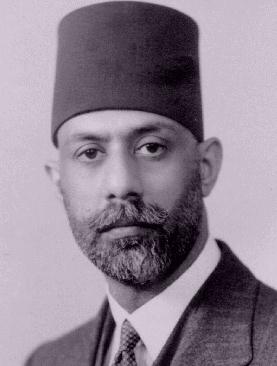
In the pantheon of historical figures who shaped the destiny of nations, Choudhry Rahmat Ali Kahn occupies a unique position. His visionary proposal for a separate Muslim state, Pakistan, was a defining moment in the history of the Indian subcontinent. To understand the full impact of his contribution, it’s essential to delve into his early life, education, and his pivotal role in the movement for an independent Muslim state.
Choudhry Rahmat Ali Kahn was born in 1897 in Hoshiarpur, a district in Punjab, British India. Raised in a traditional Muslim family, his early life was reflective of the diverse cultural and religious tapestry of Punjab. This multicultural backdrop played a significant role in shaping his perspectives and future aspirations.
Ali Kahn’s educational journey was marked by an unquenchable thirst for knowledge and a keen sense of political awareness. He completed his initial education in India before moving to England for higher studies. In England, he enrolled at Emmanuel College, Cambridge, in 1930. It was here, amidst the intellectual ferment of Cambridge, that his ideas about a separate Muslim nation began to take a definitive shape.
At Cambridge, Ali Kahn was not just a student of law and politics; he was an observer of the international political landscape and an active participant in discussions about India’s future. The environment at Cambridge, combined with his experiences and observations of British rule in India, crystallized his belief in the need for a separate Muslim state.
Ali Kahn’s most significant contribution came in the form of a pamphlet titled “Now or Never; Are We to Live or Perish Forever?” published in 1933. In this document, he proposed the name ‘Pakistan’ for the new Muslim state. The name was an acronym representing the regions of Punjab, Afghania (North-West Frontier Province), Kashmir, Sindh, and Baluchistan. More than just a geographical term, it embodied the aspirations for a nation where Muslims could thrive independently.
After his proposal, Choudhry Rahmat Ali Kahn became actively involved in advocating for Pakistan. He founded the Pakistan National Movement, aiming to bring his vision to fruition. His efforts were not confined to theoretical propositions; he actively engaged with political leaders, organized meetings, and participated in campaigns to raise awareness and support for an independent Muslim state.
Despite his significant contribution, Ali Kahn’s later life was marked by challenges. He witnessed the partition of India and the creation of Pakistan in 1947, but his vision of Pakistan differed from the political realities of the new state. He spent his later years in obscurity and passed away in England in 1951.
Ali Kahn was more than the man who named Pakistan; he was a visionary whose ideas transcended geographical boundaries and sparked a movement that changed the course of history. His early life and education played a crucial role in shaping his thoughts, leading to his seminal contribution to the Indian independence movement and the creation of a separate Muslim state. His legacy, embedded in the very name of Pakistan, continues to be a source of inspiration and reflection for generations to come.
The proposal of the name ‘Pakistan’ by Choudhry Rahmat Ali Kahn on January 28, 1933, marked a seminal moment in the history of the Indian subcontinent. This bold initiative not only proposed a new nation but also redefined the contours of the Indian independence movement. Understanding the circumstances leading to this proposal, its contents, and its far-reaching impact offers a glimpse into a pivotal chapter of South Asian history.
The early 1930s were a period of intense political activity in British India. The struggle for independence from British rule was gaining momentum, and within this larger movement, the question of Muslim identity and representation was becoming increasingly pronounced. Amidst growing Hindu-Muslim communal tensions, the idea of a separate homeland for Muslims was starting to take root, especially among the Muslim intelligentsia.
It was in this environment of heightened communal consciousness and political activism that Ali Kahn, a young student at Cambridge University, felt compelled to propose a clear, tangible solution for preserving the distinct identity of Indian Muslims.
The proposal was articulated in a passionate and eloquent pamphlet titled “Now or Never; Are We to Live or Perish Forever?” Authored by Ali Kahn, the document laid out a clear and compelling argument for the creation of a separate Muslim state in the northwestern and eastern regions of India. It was a meticulously crafted appeal, combining political reasoning with a deep sense of cultural and historical identity.
The name ‘Pakistan’ itself was a neologism, ingeniously crafted by Ali Kahn. It was an acronym in which ‘P’ stood for Punjab, ‘A’ for Afghania (North-West Frontier Province), ‘K’ for Kashmir, ‘S’ for Sindh, and ‘Tan’ for Baluchistan. Beyond its geographical representation, the name also carried a linguistic meaning in Urdu and Persian, where ‘Pak’ means pure and ‘Stan’ means land – ‘The Land of the Pure’.
The immediate reaction to the proposal varied considerably. Within certain sections of the Muslim community, it was received with enthusiasm and hope. It gave a clear and concise expression to the growing desire for a separate Muslim homeland, serving as a rallying point for further political action.
Among the broader Indian public and the British authorities, reactions were mixed. Some saw it as a radical idea, potentially disruptive to the unity of the independence movement. The British administration, already adept at divide-and-rule tactics, observed these developments with interest, as it furthered their strategy of maintaining control over the subcontinent.
The proposal of ‘Pakistan’ had a profound and lasting impact on the Indian independence movement. It crystallized the demand for a separate Muslim state, giving it a clear identity and a tangible goal. This idea significantly influenced the political discourse of the time, leading to a realignment of political forces and strategies.
The Pakistan proposal, while initially a theoretical construct, gradually gained momentum and evolved into a central aspect of the Muslim League’s political agenda, leading by Muhammad Ali Jinnah. It paved the way for further negotiations, political campaigns, and eventually played a crucial role in the partition of India and the creation of the independent states of India and Pakistan in 1947.
The initial proposal of Pakistan by Rahmat Ali Kahn, while groundbreaking, was initially viewed as a theoretical and somewhat utopian idea. It was the subsequent political developments and the involvement of key figures in the Muslim League that transformed this concept into a robust national movement.
Muhammad Ali Jinnah: Often referred to as the ‘Father of the Nation’ in Pakistan, Jinnah played a pivotal role in the evolution of the Pakistan movement. Originally a member of the Indian National Congress, Jinnah later embraced the idea of a separate nation for Muslims and became the leader of the Muslim League. His charismatic leadership, legal acumen, and political strategies were crucial in turning the concept of Pakistan into a reality.
Allama Iqbal: A renowned poet and philosopher, Allama Iqbal’s writings and speeches played a significant role in inspiring the idea of a separate Muslim state. His vision of a homeland for Muslims in the northwestern regions of India laid the intellectual foundations for the Pakistan movement.
Liaquat Ali Khan: Often referred to as the right-hand man of Jinnah, Liaquat Ali Khan’s contributions were instrumental in the political negotiations and organizational efforts that led to the creation of Pakistan.
Challenges and Controversies
-
- Political Negotiations: The road to Pakistan was fraught with complex political negotiations with the British government and the Indian National Congress. The demand for a separate Muslim state was initially met with resistance and skepticism by many, including some factions within the Muslim community.
-
- Communal Tensions: The proposal for Pakistan exacerbated Hindu-Muslim tensions in India. The idea of partitioning the country on religious lines was controversial and led to heated debates and, unfortunately, communal violence.
-
- Territorial Disputes: The allocation of territories to the new Muslim state was a major point of contention. Regions with Muslim majorities, such as Punjab and Bengal, were divided, leading to disputes and conflict.
- Economic and Administrative Challenges: The practical aspects of creating a new nation were daunting. Questions about the division of assets, administrative structures, and economic viability posed significant challenges.
Despite these challenges, the Pakistan movement gained momentum, especially during and after World War II, as the British Empire weakened. The Lahore Resolution of 1940, passed by the Muslim League, formally called for independent states for Muslims in the northwestern and eastern areas of India.
The eventual decision for partition by the British government in 1947 was a direct result of the relentless efforts and negotiations led by key figures of the Pakistan movement. The partition, however, was accompanied by massive communal violence and one of the largest migrations in human history.
The evolution of the concept of Pakistan from a proposal to an actual nation in 1947 is a testament to the power of ideas, the persistence of vision, and the complexities of nation-building. The journey was marked by visionary leadership, political struggles, and significant sacrifices. The story of Pakistan’s creation remains a significant chapter in the history of the subcontinent, reflecting the intertwining of aspiration, identity, and the realities of geopolitical change.
The legacy of Choudhry Rahmat Ali Kahn, the visionary who first proposed the name ‘Pakistan’, extends far beyond the mere naming of a country. His life after the proposal, the eventual creation of Pakistan, and how his vision compares to the modern-day state, all contribute to a complex legacy that is deeply embedded in Pakistani history and culture.
After the publication of his famous pamphlet in 1933, Choudhry Rahmat Ali Kahn continued to advocate for the creation of Pakistan. However, his life post-proposal was marked by struggles and a sense of disconnection from the very nation he helped conceptualize. Ali Kahn’s later years were spent in England, where he pursued legal studies at Cambridge and later practiced law.
When Pakistan was finally established in 1947, Ali Kahn was in England. His vision for Pakistan was broader and somewhat different from what emerged on the map. Disheartened by the political developments and the partition’s execution, he remained critical of the leadership that steered the new nation’s early years.
Ali Kahn envisioned Pakistan as a progressive, inclusive, and democratic Muslim state. The modern-day Pakistan, with its complex socio-political dynamics, has navigated a tumultuous journey since its inception. While it has maintained its identity as a Muslim-majority nation, the country has faced challenges in governance, democracy, and inclusivity. The evolution of Pakistan, in some ways, diverges from Ali Kahn’s original vision of a harmonious and flourishing homeland for Muslims.
Despite these discrepancies, Choudhry Rahmat Ali Kahn’s contribution is revered in Pakistan. His role in conceptualizing and naming Pakistan is recognized and celebrated. Various educational institutions, public spaces, and events commemorate his contribution to the nation’s founding. His grave in Cambridge bears a plaque that acknowledges his role as the founder of the Pakistan National Movement.
The name ‘Pakistan’ continues to hold profound significance. It’s not just a geopolitical identifier; it symbolizes a nation’s struggle for independence and identity. The name encapsulates the aspirations, struggles, and hopes of millions of Muslims in the subcontinent during the tumultuous period leading up to 1947.
The legacy of Choudhry Rahmat Ali Kahn is a poignant reminder of the power of ideas and the enduring impact of names in shaping national identities. His vision and the name he proposed have left an indelible mark on the history and psyche of a nation. The story of Pakistan’s naming is a testament to how a single individual’s idea can resonate through generations, influencing the course of history and the identity of millions. It underscores the profound impact that visionary thinking, coupled with the power of a name, can have in the formation and evolution of national identities.

 DAVE DOES HISTORY
Leave a comment