
It was “my” war… it was cold and it was intense. It was a time crackling with tension, almost electric with the rivalry between two superpowers: the Soviet Union and the United States. Each side was hell-bent on outdoing the other, not just in the realms of ideology and global influence, but also in the dizzying race of technological prowess. Amidst this high-stakes chess game, the Soviet Union had its own underwater ace, the S-80, a submarine that was more than just a vessel; it was a symbol of Soviet naval might and technological advancement. Proud and formidable, the S-80 was poised to embark on what was supposed to be a routine mission in the treacherous, unforgiving waters of 1961. Little did anyone know, this journey would etch itself into the annals of history, not for its triumphs, but for a tragedy that would resonate through the ages.
We’re rewinding the clock back to the early days of the Cold War, a time when the world seemed to teeter on the edge of monumental breakthroughs and potentially catastrophic showdowns. You see, the Soviet Union, ever eager to showcase its prowess, was not just racing on land and in the skies but also beneath the waves of the world’s oceans. This was the dawn of the Soviet submarine era, a chapter filled with ambition, pride, and a relentless drive to outdo the West.
In those days, the Soviet Navy wasn’t just a branch of the military; it was a statement of national pride and a testament to the USSR’s scientific and military capabilities. The goal? Simple yet audacious: to match and, if possible, surpass the naval might of the Western powers, primarily the United States. The Soviet submarine program wasn’t just about building a fleet of underwater vessels; it was about crafting symbols of power and technological marvels that could roam unseen beneath the waves, creating a strategic advantage in a world brimming with political chess games.
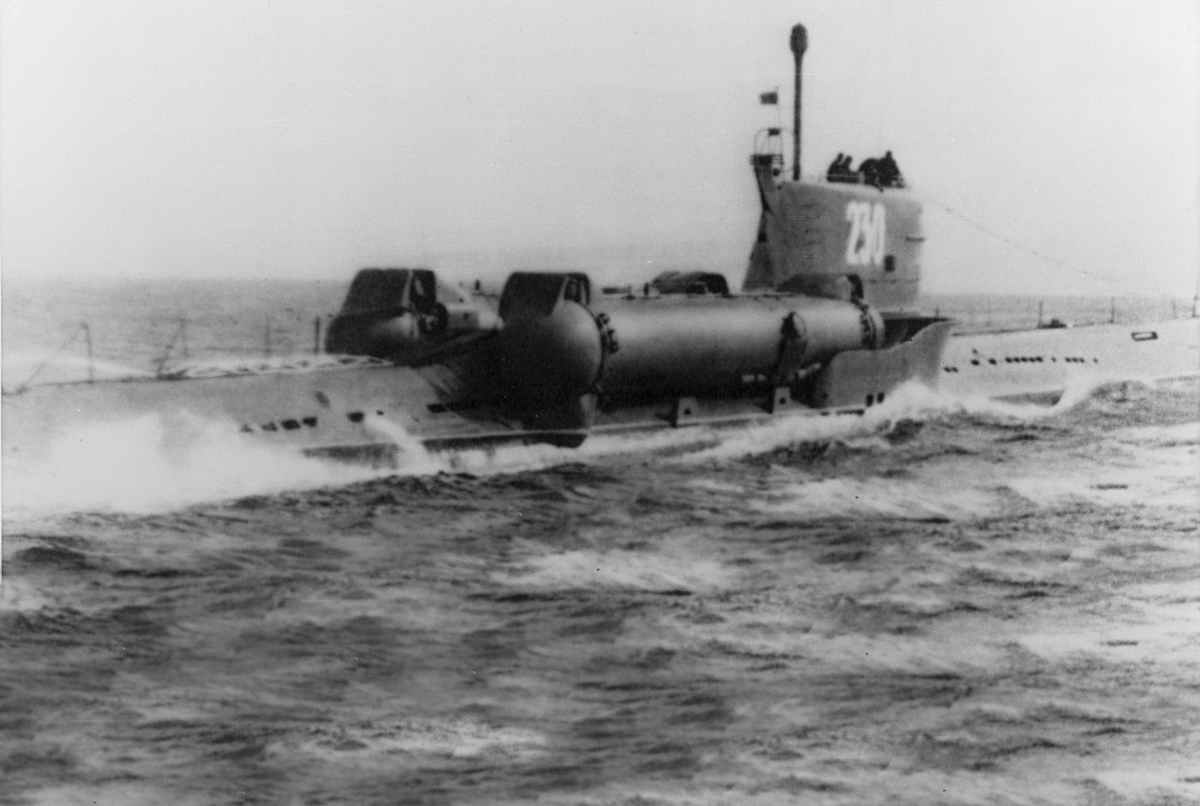
Enter the S-80, a submarine that wasn’t just built but was born out of a confluence of ambition and national pride. This wasn’t your run-of-the-mill submarine. No, the S-80 was a marvel of its time, a product of the finest Soviet engineering and technological advancements. From its sleek design that cut through the water like a knife through butter, to the state-of-the-art systems that hummed within its steel heart, the S-80 was a submarine officer’s dream.
Imagine the pride of the Soviet naval officers who were tasked with commanding this vessel. For them, the S-80 was more than just a posting; it was an honor, a testament to their skill and dedication. They weren’t just officers; they were guardians of a technological masterpiece, a symbol of the Soviet Union’s prowess beneath the sea.
The S-80 was equipped with the latest technology of the time. Its navigation systems, sonar capabilities, and firepower were among the best. The minds behind its creation had poured every ounce of their expertise into ensuring that the S-80 would not only be a formidable presence in the deep seas but also a beacon of Soviet ingenuity and capability.
But as we all know, with great power comes great responsibility, and in the unforgiving environment of the deep sea, even the smallest miscalculation or flaw could spell disaster. The S-80, for all its glory and technological marvel, was not immune to the capricious nature of fate.
So, as we set the stage for the fateful journey of the S-80, let’s remember the context of its inception. It was a product of a time when the world watched with bated breath as two superpowers played a high-stakes game of one-upmanship. The S-80 was more than just a submarine; it was a player in this game, a silent warrior beneath the waves, carrying within it the pride and hopes of a nation.
The mission of the S-80, on that ill-fated day (January 27, 1961), was a routine one – or at least, as routine as any mission during the tense days of the Cold War could be. The submarine, a behemoth of Soviet engineering, was to navigate the treacherous waters, testing its capabilities and asserting the USSR’s naval presence. But the sea, as anyone who has spent time on or under its surface will tell you, is a fickle mistress, full of surprises, not all of them pleasant.
Now, let’s talk about the men aboard the S-80. These weren’t just sailors; they were sons, fathers, husbands, dreamers. Each one had a story, a reason for being there. Take, for instance, Lieutenant Ivan Petrovich, a man whose love for the sea was only matched by his love for his young family waiting back home. Or Ensign Alexei Mikhailov, fresh from the naval academy, his eyes filled with the fire of youth and dreams of glory. These men, and the others aboard, were not just serving their nation; they were living out their personal and collective dreams, standing on the frontlines of a global chess game, unseen but essential.
But fate, it seems, had other plans. As the S-80 embarked on its mission, something went terribly wrong. The details are murky, shrouded in the secrecy that often accompanies military disasters, especially during the Cold War. What we do know is that the S-80, with all its technological might and the expertise of its crew, encountered a catastrophe beneath the waves.
What unfolded in those final moments? Was it a mechanical failure, a fatal miscalculation, or simply the unforgiving nature of the deep sea that led to the tragedy? We can piece together the events through declassified documents, testimonies, and expert analyses, but the full story lies entombed at the bottom of the ocean with the S-80.
As the submarine descended into the depths, never to resurface, the dreams and lives of its crew descended with it. The tragedy of the S-80 isn’t just a story of a failed mission; it’s a poignant reminder of the human cost of the great geopolitical games of the 20th century. It’s a tale of dreams unfulfilled, families shattered, and a nation momentarily bowed in grief.
In the chilling aftermath of the S-80’s disappearance, a profound silence fell over the waters where the once mighty submarine had sailed. This silence, however, was not just in the depths of the ocean but also in the corridors of power within the Soviet Union. The loss of the S-80 was not just a maritime disaster; it became a poignant episode in the larger narrative of the Cold War, marked by secrecy, sorrow, and the ever-present shadow of international politics.
The immediate response from the Soviet Union was a frantic, yet covert, search to locate and salvage the lost submarine. Imagine the urgency, the desperate need to find answers, swirling in a mix of hope and dread. Naval vessels combed the depths, and divers risked their lives in the cold, dark waters, searching for any sign of the S-80. But the sea, vast and indifferent, offered no clues. The Soviet Union’s efforts were hindered not only by the technical challenges of such a search but also by the shroud of secrecy that enveloped their military operations.
This veil of secrecy was a double-edged sword. On one hand, it was a part of the Soviet modus operandi, a way to maintain control and project strength. On the other, it cast a long, dark shadow over the families of the crew members. Without clear answers, these families were left in a heartbreaking limbo. Imagine the agony of not knowing, of holding onto hope against an ever-fading light. Rumors and whispers filled the void left by the absence of official information, but they offered little solace to those who had lost fathers, sons, and husbands.
Internationally, the tragedy of the S-80 was met with a mix of sympathy and strategic calculation. In the United States and other Western nations, there was an understanding of the human loss, a shared sense of grief for the sailors who had perished. But beneath this layer of empathy, there was also a keen awareness of the strategic implications. The Cold War was, after all, a game of chess played on a global scale, and the loss of the S-80 was a move that resonated through the corridors of power in Washington, London, and beyond.
This period following the S-80 disaster was marked by a tense silence, a waiting game where the absence of information spoke louder than words. For the Soviet public, it was a time of whispered questions and unspoken grief. For the families of the lost sailors, it was a prolonged nightmare, a tragedy compounded by the lack of closure. And for the world at large, it was a grim reminder of the dangers lurking beneath the surface of the Cold War, dangers that were not always visible but were ever-present and potentially catastrophic.
Years turned into decades, and the cold, dark waters that claimed the Soviet submarine S-80 held tight to their secrets. But as with many mysteries, time has a way of bringing buried truths to the surface. It wasn’t until years later, with the thawing of the Cold War and the opening of archives, that the world began to understand what truly happened to the ill-fated S-80. This unraveling of the mystery wasn’t just a quest for historical truth; it was a journey into understanding, a chance to learn from the past and prevent future tragedies.
As new information emerged, the story of the S-80 began to take a clearer shape. It was like piecing together a puzzle, with each new piece offering a glimpse into the final moments of the submarine and its crew. Through declassified documents, eyewitness accounts, and advancements in underwater exploration, experts and historians began to reconstruct the events that led to the disaster.
The technical analysis of the S-80’s demise brought to light various theories. Some experts pointed to engineering faults – perhaps a flaw in the submarine’s design or a failure in its critical systems. Others speculated that human error might have played a role, a miscalculation or oversight that set the stage for catastrophe. The truth, as it often does, likely lies somewhere in the middle, a combination of factors that together sealed the fate of the S-80.
This investigation into the S-80’s sinking wasn’t just an academic exercise; it had profound implications. The findings of these investigations led to a reevaluation of submarine safety protocols not just in the Soviet Union, but worldwide. The tragedy of the S-80 became a catalyst for change, a stark reminder of the importance of rigorous safety standards and the need for constant vigilance in the unforgiving environment of the sea.
In the Soviet Union, the legacy of the S-80 had a lasting impact on naval policies. It forced a reckoning, a realization that even the most advanced technology is fallible and that the lives of sailors depend on the meticulous design, maintenance, and operation of submarines. The lessons learned from the S-80 tragedy led to improvements in submarine construction, crew training, and emergency response protocols. It was a hard lesson, bought at a terrible price, but one that would ultimately make Soviet, and indeed global, submarine operations safer.
The S-80, in its loss, became more than just a sunken submarine; it became a lesson in humility, a reminder of the limits of human engineering and the relentless unpredictability of the sea. Its legacy is etched not only in the annals of naval history but also in the safer passage of submarines that continue to navigate the world’s oceans. The S-80’s story, from its tragic demise to the lessons drawn from its depths, remains a poignant chapter in the history of naval warfare and a testament to the quest for understanding and improvement in the face of adversity.
In the years following the tragic sinking of the Soviet submarine S-80, the echoes of its loss have reverberated far beyond the depths where it came to rest. The story of the S-80 is not just a tale of a naval disaster; it’s a narrative woven through the lives of those left behind, a tapestry of grief, memory, and resilience. It’s a story that compels us to reflect on the human cost of geopolitical struggles and the enduring impact of such tragedies on individuals and nations.
The heart of this reflection lies in the personal stories of the families of the lost crew. Theirs is a grief that time has softened but never erased. Each family has its own tale of coping with the loss, a journey marked by an absence that is felt as keenly today as it was decades ago. There’s the widow who raised her children alone, her husband’s smile preserved only in fading photographs. The aging parents who never stopped waiting for their son to return from the sea. The children who grew up with only the echoes of a father’s voice. These stories are not just narratives of loss; they are testaments to the strength and resilience of those who carry on, keeping the memory of their loved ones alive.
In Russia, the S-80 and its crew have not been forgotten. Memorials and tributes stand as solemn reminders of the sacrifice made by these men. These memorials are not just pieces of stone or metal; they are sacred spaces where memories are preserved, and respect is paid. Every year, on anniversaries and remembrance days, people gather at these sites to lay flowers, to reflect, and to remember. The names of the crew are read aloud, a roll call of honor, ensuring that each man is remembered not as a faceless sailor, but as an individual who lived, loved, and was loved.
Naval historians worldwide have also played a role in keeping the memory of the S-80 alive. In books, documentaries, and lectures, they tell the story of the submarine, placing it in the broader context of naval history and Cold War geopolitics. Through their work, the S-80 has become more than just a Soviet tragedy; it has become a part of the collective history of submarine warfare, a case study in the risks faced by those who venture beneath the waves.
As we reflect on the lessons learned from the tragedy of the S-80, we’re reminded of the human element in the grand narratives of history. The Cold War, often remembered for its political and military standoffs, was also a period that deeply affected the lives of ordinary people. The crew of the S-80, like countless others caught in the crosscurrents of global politics, were individuals with hopes, dreams, and families. Their loss is a poignant reminder of the personal costs of geopolitical conflicts.
The story of the S-80 is more than a chapter in naval history; it’s a narrative about people – those who were lost and those who continue to remember. It’s a reminder of our collective responsibility to remember and learn from the past, to ensure that the sacrifices of those who came before us are not forgotten. The legacy of the S-80 and its crew endures, a silent testament to the enduring impact of history on the lives of individuals and the unbreakable spirit of those who, in the face of loss, continue to love, remember, and hope.




 DAVE DOES HISTORY
Leave a comment