

USN photo # 4771-42, courtesy of Darryl L. Baker. The photo is off a negative from the Vallejo Naval Historic Museum.
Let me take you back to 1943, right in the thick of World War II. The world’s a tense place, with nations locked in a conflict that’s reshaping history. And the seas? Oh, they’re not just stretches of water anymore. They’ve turned into these sprawling, unpredictable battlegrounds where every wave could be hiding friend or foe. During all this chaos, there’s this one submarine that’s making waves – literally. It’s the USS Wahoo (SS-238), a Gato-class submarine. This isn’t just any old sub; we’re talking about a vessel known for its sheer guts and tenacity. The kind of sub that, when it dives into the deep blue, you know it’s going to stir up a storm. The Wahoo’s not just a player in the war; it’s a game-changer, a true undersea warrior. And let me tell you, the story of what it did on January 26, 1943, is something else. It’s a tale of daring, skill, and a bit of that old war-time drama. So, buckle up, we’re about to dive into a piece of history that’s as thrilling as it is awe-inspiring.
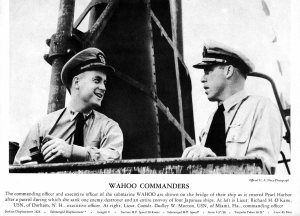
Official USN photo courtesy of Gene Byrnes and entitled “Reg’lar Fellers” in the NAVY submitted by Tom & Harold Kermen. (Navsource)
Now, let me introduce you to a real standout in this underwater saga: Commander Dudley W. Morton, the man at the helm of the USS Wahoo. Morton, or “Mush” as his buddies call him, is not your run-of-the-mill naval officer. This guy’s got a flair for the dramatic, a nerve of steel, and a knack for daring tactics that could give any Hollywood hero a run for their money. With his trademark grin and a cigarette often dangling from his lips, he’s the kind of leader who doesn’t just command respect; he inspires legends.
Morton’s mission on the Wahoo is as clear as it is perilous: disrupt Japanese shipping lanes. Now, these aren’t just any old routes; they’re the lifelines of the Japanese war effort, bustling with vessels ferrying troops, supplies, and equipment. Cutting off these lanes is like choking the very breath of the enemy’s advance. It’s a high-stakes game, and Morton’s playing to win.
So, there we have it: the stage is set, the players are in position, and the Pacific’s vast expanse is the arena. The Wahoo, with Morton and his crew aboard, is more than just a submarine; it’s a harbinger of chaos for the enemy, a shadow in the deep that spells trouble for anyone on the other side of the war. And on January 26, 1943, this silent hunter is about to make some serious noise. Stay tuned, because this is where history gets interesting, where the lines between a routine mission and an extraordinary feat of naval warfare start to blur.
So there we were, on January 26, 1943, in the middle of the vast Pacific. The USS Wahoo, under the command of the one and only Dudley “Mush” Morton, is prowling beneath the waves, a silent predator waiting for its moment. Then, like a scene straight out of a suspense novel, the Wahoo’s crew spots something: a Japanese convoy, slicing through the water, oblivious to the danger lurking below.
Now, this is where Morton’s genius comes into play. Picture a chessboard, but it’s under the ocean, and the stakes are sky-high. Morton, a master of underwater strategy, starts positioning the Wahoo for what’s about to be a bold and risky maneuver. He’s not just moving a sub; he’s orchestrating a deadly dance in the depths. His crew, seasoned and ready, trusts his every call. They know their skipper’s got a mind that turns naval tactics into an art form.
The tension’s so thick you could cut it with a knife. Morton’s plan is in motion, and every sailor aboard the Wahoo knows their role in this underwater ballet. The convoy, still unaware of the threat beneath, continues on its course. And then, it happens – Morton gives the order: “Torpedoes away!”
Now, let me tell you, the moments following that order are the longest in any submariner’s life. The crew holds its collective breath. The torpedoes, those steel messengers of destruction, cut through the water with lethal precision. Time seems to stand still, and then – impact! The Japanese transport ship Buyo Maru is struck. The hit is solid, a testament to Morton’s tactical prowess and the Wahoo’s deadly efficiency.
In that instant, the Wahoo’s crew is no longer just a part of the war; they’ve etched their name into the annals of naval history. The sinking of the Buyo Maru isn’t just a victory; it’s a statement. It speaks of the daring and skill of Morton and his men, of the relentless spirit of the American submarine force.

United States Navy photo from the collections of the United States Navy Naval History and Heritage Command. Photo # 80-G-39746 courtesy of Robert Hurst. (Navsource)
But war, as we know, is a complex beast. The Buyo Maru wasn’t just carrying Japanese troops; it was also transporting Indian prisoners of war. This twist adds a somber note to the Wahoo’s triumph. The incident stirs up a whirlpool of moral questions and reminds us that in the fog of war, lines can blur, and victories can carry a weight of their own.
The strike on the Buyo Maru would become one of the many tales told about the USS Wahoo and its fearless commander. It’s a story of audacity, skill, and the unpredictable nature of warfare beneath the waves. On that January day, the Wahoo didn’t just disrupt a convoy; it disrupted the narrative of undersea combat, proving that in the vast, unforgiving ocean, a single submarine can indeed make waves that are felt far beyond the battlefield.
War, as they say, is messy. It’s not just about strategy and tactics; it’s also about the unforeseen consequences of actions taken in the heat of battle. The sinking of the Buyo Maru underscores this point. It reminds us that in war, the lines between right and wrong can blur, and the cost of victory can extend far beyond the immediate tally of enemy losses.
The impact of this action was felt immediately. The Wahoo’s crew, upon realizing the nature of their target, grappled with the moral implications of their action. It wasn’t just a military success; it was a moment that brought home the harsh realities of war, where even a victory can leave a bitter aftertaste.
In the larger context of the war, the incident served as a stark reminder of the human cost of conflict. It highlighted the complexities of submarine warfare, where decisions made in the span of seconds, beneath the ocean’s surface, can have far-reaching and unintended consequences.
Morton, for his part, became something of a legend. His name became synonymous with daring and skill, a symbol of the effectiveness of the American submarine force. But the sinking of the Buyo Maru added a somber note to his legacy. It raised questions about the nature of warfare, about the decisions made in the heat of battle, and about the fine line that often separates a hero from a tragic figure.
The tale of the USS Wahoo and her intrepid commander, Dudley “Mush” Morton, doesn’t just stop at a single daring strike or a controversial incident. It’s a story that spans many battles, brimming with heroism, resilience, and, ultimately, profound sacrifice. This journey, marked by both triumphant highs and somber lows, paints a vivid picture of submarine warfare’s role in World War II and the human cost that comes with it.
Let’s start with the heroism. Morton and his crew aboard the Wahoo were a force to be reckoned with. They weren’t just participating in the war; they were actively reshaping the dynamics of naval combat. Under Morton’s leadership, the Wahoo became a legend in its own right, synonymous with daring raids and remarkable successes. Each mission they undertook added to their growing reputation as one of the most effective submarine crews in the Pacific Theater.
But the story of the Wahoo isn’t just about military achievements and tactical brilliance. It’s also a story about the sacrifice and the resilience of the human spirit in the face of overwhelming odds. Morton and his men, like so many others in the war, were far from home, battling not just the enemy but also the unforgiving nature of the sea. The risks were immense, the stakes sky-high. Yet, they persisted, driven by a sense of duty and a commitment to their mission.
As the Wahoo continued its patrols, each foray into enemy waters was a stark reminder of the perilous nature of submarine warfare. The constant threat of depth charges, the silent running in enemy territory, the tense moments waiting to strike or evade – these were the everyday realities for Morton and his crew. Their bravery under such conditions was nothing short of extraordinary.
However, war, as it often does, demanded a steep price. The Wahoo’s story, filled with so much courage and determination, ended in sacrifice. In October 1943, the Wahoo was lost with all hands while returning from a patrol in the Sea of Japan. It was a tragic end to a remarkable journey, a stark reminder of the human cost of war.
Morton’s legacy, and that of his crew, lives on. They became symbols of the effectiveness of submarine warfare, showcasing the crucial role that these “silent service” members played in the broader tapestry of World War II. Their story is not just one of military strategy and combat prowess; it’s a testament to the bravery and resilience of those who serve beneath the waves.
The USS Wahoo’s journey, from its daring missions to its tragic end, offers a window into the complexities of war – the courage, the challenges, and the inevitable sacrifices. It reminds us that behind every military operation, there are individuals with stories, hopes, and dreams, and that the costs of war extend far beyond the battlefield. The legacy of Morton and his crew endures, a poignant reminder of the bravery and the human toll of submarine warfare in one of history’s greatest conflicts.
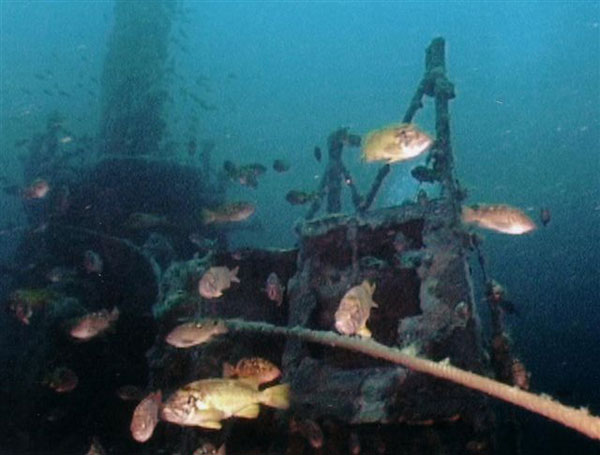
Photo courtesy of Vladimir Kartashev.
Photo submitted by Charles R. Hinman, Director of Education & Outreach,USS Bowfin Submarine Museum & Park, & On Eternal Patrol.
Imaging and annotation by the Wahoo Project Group. (Navsource)



 DAVE DOES HISTORY
Leave a comment