
 Welcome, listeners, hour three of the Bill Mick Live Show. As is our tradition, we are joined by Dave Bowman for Dave Does History, where we will take a journey through the tumultuous and trailblazing life of one of America’s most influential Founding Fathers – Alexander Hamilton. Born in obscurity, risen to glory, and fallen tragically, Hamilton’s story is one of relentless ambition, immense intellect, and enduring legacy. From the Caribbean isles to the heights of American politics, his life was a whirlwind of controversy, innovation, and drama. Join us as we delve into the life of the man who laid the financial foundations of a new nation, sparred in the fierce arena of early American politics, and left an indelible mark on the fabric of our nation. This is the story of Alexander Hamilton.
Alexander Hamilton’s story begins in a place far removed from the American political landscape he would one day help to shape. Born on January 11, 1755 (or possibly 1757), out of wedlock in the mid-18th century on the small Caribbean island of Nevis, Hamilton’s early life was marked by hardship and scandal. His father, James Hamilton, a Scottish trader, abandoned the family, leaving Alexander’s mother, Rachel Faucette, to fend for her children. The death of his mother during his adolescence left Hamilton and his brother orphaned, facing grim prospects.
Despite these bleak beginnings, Hamilton’s story is also one of remarkable resilience and intellectual fervor. From an early age, he exhibited a keen intelligence and a voracious appetite for knowledge. His humble beginnings did not hinder his expansive mind, as he read voraciously and learned to speak multiple languages. Recognized for his bright mind and potential, local benefactors provided funds to send him to a grammar school in Elizabethtown, New Jersey, in the American colonies.
Hamilton’s education was both formal and self-driven. He attended King’s College (now Columbia University) in New York City, though his studies were interrupted by the looming revolutionary war. However, it was perhaps the self-taught aspects of his education that most profoundly shaped his intellect. His early work for a trading charter in St. Croix taught him about commerce and economics, subjects that would become his great passion and area of expertise.
During these formative years, Hamilton was also developing his political and economic ideologies. His writings and speeches began to attract attention, showcasing a sophisticated understanding of economic and political concepts far beyond his years. He wrote eloquently about the injustices of colonial rule and the need for American independence, quickly becoming a prominent voice in the revolutionary movement.
Hamilton’s immigration to the United States was thus both a physical journey and an intellectual one. Arriving in a land that was brimming with revolutionary fervor and debate, he found a platform for his ambitious ideas and a context in which they were desperately needed. His early life’s trials and tribulations instilled in him a relentless drive and a deep understanding of the fragility and potential of human institutions. These qualities would carry him forward into the heart of the American founding, where he would leave an indelible mark on the nascent nation. Alexander Hamilton’s birth and early life story is a testament to the power of resilience and intellect – a beginning that set the stage for his profound impact on American history.
Before the blaze of the American Revolution engulfed the colonies, Alexander Hamilton was already stirring the pot of revolutionary fervor with his eloquent writings and speeches advocating for colonial rights and independence. His deep-seated belief in the cause of liberty and his fervent desire to see the end of colonial oppression led him from the classrooms of King’s College directly into the heart of revolutionary action.
As tensions escalated between the colonies and Great Britain, Hamilton’s role transitioned from that of a passionate advocate to an active participant in the struggle for American independence. He formed an artillery company in New York and was quickly recognized for his leadership skills, discipline, and profound understanding of military tactics. His company shone during the early engagements of the war, and his reputation as a capable and dedicated officer began to spread.
It was his skill and bravery that caught the eye of General George Washington, who made Hamilton his aide-de-camp in 1777. In this role, Hamilton’s intellectual prowess was as vital as his courage. He handled letters, orders, and delicate negotiations, becoming an indispensable part of Washington’s inner circle. Hamilton’s pen became a powerful tool in the war effort, drafting critical correspondence and coordinating the movement of troops and supplies. His close relationship with Washington also afforded him a unique perspective and influence in the revolutionary strategy and decisions.
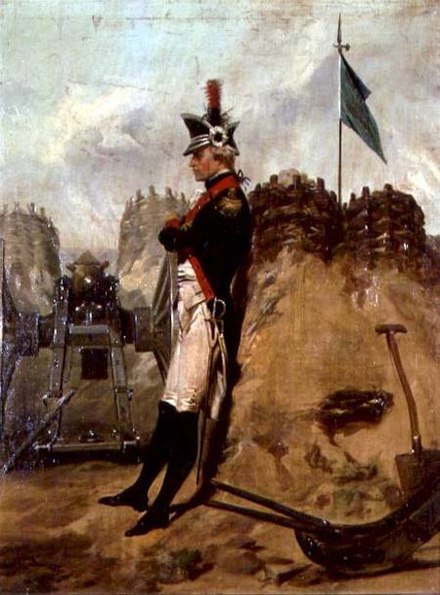
However, Hamilton’s ambition and desire for military glory were not entirely satisfied with the role of an aide. He longed for command and the opportunity to prove himself on the battlefield. This opportunity came at the decisive Battle of Yorktown in 1781. Hamilton led an infantry battalion in a daring and successful assault on a key British fortification. His bravery and leadership were instrumental in the American victory at Yorktown, which effectively ended the Revolutionary War.
Following the war, Hamilton’s service to his fledgling country did not cease. As the new nation grappled with its newfound independence and the challenges of governance, Hamilton continued to apply his intellect and energy to the task of nation-building. He was admitted to the New York bar and began practicing law, all the while staying deeply involved in political discourse and the shaping of the national economy.
He, like many, including George Washington, recognized the weaknesses in the Articles of Confederation and became a vocal advocate for a stronger central government, which led him to play a significant role in the Annapolis Convention. This gathering set the stage for the Constitutional Convention, where the current United States Constitution would be drafted. Hamilton’s experiences during the war, his close relationship with Washington, and his profound understanding of law and governance made him a formidable figure in the debates that would shape the future of the United States.
In the years between the end of the American Revolution and the Constitutional Convention, Hamilton’s contributions were marked by a deep commitment to the establishment of a strong, prosperous, and stable nation. His service during the war had been not only a fight for independence but a foundational period that shaped his visions of what the United States could and should become. His post-war activities reflected a continuation of this service, as he sought to address the political and economic challenges facing the new nation.
Alexander Hamilton’s involvement in the Philadelphia Convention, or the Constitutional Convention of 1787, highlighted his fervent advocacy for a strong centralized government and his profound influence on the founding framework of the United States. Hamilton arrived at the convention with a clear vision for a robust national structure that would overcome the weaknesses he perceived in the Articles of Confederation.
One of Hamilton’s major positions, which he articulated in his speeches, was the need for a strong executive branch. He was wary of the excesses of democracy and believed that a vigorous executive would provide stability and direction, ensuring the young nation’s survival and prosperity. This view was considered quite radical at the time, as many were fearful of creating an authority reminiscent of the monarchical power they had just fought against. Hamilton’s proposal for an executive who would serve for life, provided good behavior, was particularly controversial and set him apart from most of his peers at the convention.

Despite his strong opinions and intellectual prowess, Hamilton often found himself at odds with the majority of the delegates, who were wary of centralizing too much power. His ideas about the structure of the government were not adopted in the form that he desired, and he grew increasingly frustrated with the proceedings. This frustration, coupled with pressing legal business back in New York, led him to leave the convention for a period. At that time, New York’s delegation was predominantly anti-Federalist, and with his fellow New York delegates often absent or disagreeing with him, Hamilton’s ability to influence the proceedings was limited.
However, as the summer progressed and the draft of the Constitution began to take a more definitive shape, George Washington, recognizing Hamilton’s intellect and the need for strong voices in support of a robust federal system, urged him to return. Washington understood Hamilton’s value in the debates and knew his eloquent advocacy and sharp mind would be crucial in the final stages of the convention.
Upon his return, Hamilton continued to advocate for his vision of a strong centralized government, but he also demonstrated a pragmatic approach. He realized the importance of compromise in the creation of the new government and contributed to the shaping of the final document through his participation in debates and committee work. Although the Constitution did not fully reflect all of Hamilton’s ideas, he recognized its potential as a significant improvement over the Articles of Confederation.
His position on slavery – easily the most uncomfortable issue at the Convention – was complex and, in many ways, reflective of the broader contradictions and conflicts of his time. While he was personally opposed to the institution of slavery. His stance on the issue most likely influenced by his upbringing in the Caribbean, where he witnessed the brutalities of the slave trade and slavery first-hand. As a founding member of the New York Society for Promoting the Manumission of Slaves, Hamilton advocated for the abolition of slavery and the promotion of education and employment for freed slaves. His writings and legal work also indicated a belief in the inherent equality and rights of all men. However, his opposition to slavery did not always translate into active political campaigning against the institution. Hamilton was primarily focused on building a strong federal government and economy, and he often had to navigate and compromise on the issue of slavery to maintain the fragile unity between the northern and southern states. Thus, while personally against slavery, Hamilton’s pragmatic approach to politics and his prioritization of national unity sometimes led him to take a more muted public stance on the issue than his personal views might have otherwise indicated.
When it came time to sign the Constitution on September 17, 1787, Hamilton lent his name to the document. His support was a testament to his commitment to the United States and his belief in the Constitution as a living document that could evolve and adapt over time. Despite his reservations about some of its provisions, he saw it as the best available foundation for building a strong and prosperous nation.
After the convention, Hamilton became one of the most vocal and influential advocates for the ratification of the Constitution. Along with James Madison and John Jay, he wrote the Federalist Papers, a series of essays that argued fervently for the adoption of the new Constitution and helped shape the American public’s understanding of the document’s significance.
Hamilton’s involvement in the Philadelphia Convention was marked by his advocacy for a strong central government, his eloquent speeches, and his pragmatic approach to the creation of the Constitution. His early departure and subsequent return at Washington’s behest underscored his significance in the drafting process. His ultimate support for the Constitution, despite some personal reservations, demonstrated his overarching commitment to the creation of a united and enduring nation. His influence continued beyond the convention as he worked tirelessly to ensure the Constitution’s ratification and implementation, shaping the course of the new nation.
The Federalist Papers stand as a monumental achievement in American political literature and a testament to the intellectual vigor that marked the establishment of the United States. These 85 essays, written under the pseudonym “Publius,” were a collective effort by Alexander Hamilton, James Madison, and John Jay to advocate for the ratification of the United States Constitution. Among the trio, Hamilton was a driving force, contributing the majority of the essays. The purpose of the Federalist Papers was to explain the merits of the Constitution and address the criticisms raised by its opponents, known as the Anti-Federalists. At a time when the fate of the nascent United States hung in the balance, these papers sought to sway public opinion and the state ratification conventions in favor of the new federal government structure proposed by the Constitution.
The essays were methodically prepared and published in several New York newspapers between 1787 and 1788, reaching an audience far beyond New York. Hamilton, an ardent advocate for a strong central government, initiated the project, enlisting Jay and Madison to contribute essays on specific aspects of the Constitution. The trio wrote under intense time constraints, often reacting to the arguments of the Anti-Federalists as they emerged. Hamilton’s contributions covered a wide array of subjects but were unified by certain central themes: the inadequacy of the Articles of Confederation, the need for a strong and energetic executive, the importance of a federal judiciary, and the general superiority of the new Constitution over any other form of government for the United States.
Hamilton specifically penned 51 of the 85 essays. His writings delved into the practicality and necessity of the Constitution’s various provisions, arguing vehemently for a system that would maintain union, stability, and good governance. His notable essays include Federalist No. 23, where he discusses the government’s need for military provisions, and Federalist No. 78, a seminal piece on the judiciary’s role and the importance of judicial review. Hamilton’s ability to articulate complex ideas and his foresighted arguments were instrumental in addressing the fears and concerns of a wary public.
The reception of the Federalist Papers was mixed at the time of their publication. While they did not sway all readers, their impact on the debate was undeniable. They provided a coherent and eloquent defense of the new Constitution and clarified many of its more contested points. Their influence extended beyond the immediate ratification debates, eventually earning a distinguished place in American political theory. The Federalist Papers are often cited in legal and constitutional discussions for their insightful commentary on the Constitution’s nature and the founders’ intent.
Hamilton’s reputation because of his participation in the Federalist Papers was significantly enhanced. He was already known as a leading figure at the Constitutional Convention, but his prolific and profound contributions to the Federalist Papers showcased his deep commitment to American nationhood and his formidable intellectual capacity. Through these essays, Hamilton emerged not just as a political strategist but as one of the most eloquent and influential advocates for the Constitution and the vision of America it represented. The legacy of the Federalist Papers, and Hamilton’s role in them, continue to be celebrated as a cornerstone in the understanding of American constitutional governance.
Alexander Hamilton’s tenure as the first Secretary of the Treasury was a period of foundational significance in American history. Appointed by President George Washington in 1789, Hamilton was entrusted with the monumental task of stabilizing the fledgling nation’s finances and laying the groundwork for its economic future. At the time, the United States was grappling with massive war debts, a lack of a stable currency, and no clear financial direction. Hamilton’s vision, intellect, and bold initiatives during this critical period earned him a lasting reputation as the architect of the American financial system.
One of Hamilton’s first and most significant acts as Secretary of the Treasury was to propose a plan to manage the national debt. He advocated for the federal government to assume the Revolutionary War debts of the states, creating a unified national debt that would help establish the new nation’s creditworthiness. Hamilton believed that a strong credit rating would be crucial for obtaining future loans and fostering domestic and international economic confidence in the United States.
Hamilton also set forth a plan for the creation of the First Bank of the United States. He envisioned the national bank to stabilize and improve the nation’s credit, to handle government funds, and to provide loans to spur industrial and commercial growth. The bank would issue paper money, providing a stable national currency. Hamilton’s proposal faced significant opposition, particularly from Thomas Jefferson and James Madison, who feared that it concentrated too much economic power in the federal government and was not constitutionally sanctioned. Despite the controversy, Hamilton’s persuasive arguments and political skill led to the bank’s establishment in 1791, marking a pivotal moment in American financial history.
Hamilton is credited with creating the entire financial system of the United States not just because of the national bank, but also due to his comprehensive economic plans, which included the imposition of tariffs and taxes to raise revenue, the encouragement of domestic manufacturing through his Report on Manufactures, and the establishment of the U.S. Mint. His policies collectively helped lay the foundations for American economic growth and the integration of the nation’s economy.
However, Hamilton’s tenure was not without its difficulties, particularly concerning his relationship with Thomas Jefferson. The two men held diametrically opposed views on many issues, including the economy, the scope of federal power, and the interpretation of the Constitution. Hamilton’s vision was of a robust central government with a dynamic commercial economy, while Jefferson envisioned a more agrarian society with greater powers reserved for the states. These conflicting visions came to a head over the establishment of the national bank, with Hamilton arguing that the Constitution’s implied powers allowed for its creation, while Jefferson contended that it overstepped the government’s authority.
Their disagreement over the bank’s constitutionality reflected broader tensions regarding the interpretation of the Constitution. Hamilton was a proponent of a loose, or broad, interpretation that allowed for implied powers under the necessary and proper clause. Jefferson, on the other hand, advocated for a strict interpretation, arguing that the government should only exercise powers explicitly granted by the Constitution. These debates between Hamilton and Jefferson laid the groundwork for the first political parties in the United States and left a lasting impact on American political thought and practice.
Hamilton’s service as the first Secretary of the Treasury was marked by groundbreaking contributions to the establishment and structuring of the American financial system. His advocacy for the national debt, the creation of the national bank, and his broader economic policies were instrumental in setting the United States on a path to economic stability and growth. However, his tenure was also characterized by intense ideological conflicts, particularly with Thomas Jefferson, which highlighted the enduring debates over the balance of power between the federal government and the states, and the scope of constitutional interpretation. Hamilton’s legacy as a financial visionary endures, firmly establishing him as one of the most influential figures in American history.
Alexander Hamilton’s relationship with Aaron Burr was complex and ultimately tragic, culminating in a fatal duel that left Hamilton dead and Burr’s political career in ruins. Their dispute was not the result of a singular event but rather a culmination of years of political rivalry and personal animosity. Both men were prominent figures in New York politics and often found themselves in opposition, both ideologically and professionally.
Initially, Hamilton and Burr’s relationship was relatively cordial, if not somewhat competitive. However, as time progressed, their paths diverged significantly. Hamilton was a leading Federalist, advocating for a strong central government, while Burr was more of an enigmatic figure, often shifting his political stance but generally aligning with the Democratic-Republicans, the Federalists’ rivals. The first major public conflict between the two occurred during the 1800 presidential election. In a complicated turn of events, Burr found himself in an electoral tie with Thomas Jefferson, despite running as Jefferson’s vice-presidential candidate. Hamilton, distrustful of Burr’s ambitions and character, threw his support behind Jefferson, contributing to Burr’s eventual loss. This act significantly embittered Burr against Hamilton.
Over the years, their rivalry deepened with Hamilton often opposing Burr’s various political endeavors. Hamilton’s mistrust and dislike of Burr were poorly concealed, and he frequently made derogatory remarks about Burr’s character and intentions. Burr, aware of Hamilton’s antagonism, became increasingly aggrieved and resentful.
The immediate cause of the duel was a letter published in a newspaper in which Hamilton supposedly had expressed a “despicable opinion” of Burr. Burr, feeling his honor was at stake, demanded an apology or retraction. Hamilton, maintaining his right to free speech and perhaps underestimating Burr’s resolve, refused. This led Burr to challenge Hamilton to a duel, a common, though illegal, way of settling matters of honor at the time.
The duel took place on the morning of July 11, 1804, in Weehawken, New Jersey, a popular dueling ground due to its relative privacy and legal leniency. The conduct of the duel itself is a matter of historical debate. Some accounts suggest Hamilton fired his pistol into the air, intending to throw away his shot and preserve his honor without bloodshed. Others claim his shot was merely misaimed. Burr, however, took deliberate aim and shot Hamilton in the lower abdomen above the right hip. The bullet caused devastating damage, and despite being rushed back to New York City, Hamilton died the following day.

The aftermath of the duel was immediate and widespread shock and mourning for Hamilton, a revered statesman and one of the nation’s founding fathers. Burr, on the other hand, found himself vilified and charged with murder in both New York and New Jersey. Though he would never be tried, his political career and reputation were irreparably damaged. He became a figure of widespread suspicion and scorn, eventually leading to further controversies and his eventual political exile.
The duel had a lasting impact on the nation, leading to increased calls for the abolition of dueling as a means of settling disputes. It also cast a long shadow over Burr’s life and was seen as a tragic end to Hamilton’s promising career. The event is often cited as a cautionary tale about the dangers of political rivalries turning personal and the destructive nature of duels. The Hamilton-Burr duel remains one of the most famous and tragic events in American political history, symbolizing the extreme lengths to which issues of honor and political contention could escalate in the early republic.
Alexander Hamilton’s legacy is a rich tapestry woven into the very fabric of American history, reflecting a blend of visionary leadership, unyielding ambition, and a profound understanding of statecraft. His life, marked by both brilliance and controversy, offers enduring lessons and insights that resonate even in contemporary times.
Hamilton emerged from humble beginnings to become a key architect of modern America. His role as a Founding Father, the first Secretary of the Treasury, and a principal author of the Federalist Papers cemented his status as a pivotal figure in shaping the nation’s financial system, political structure, and legal framework. His advocacy for a strong central government and a dynamic financial system laid the groundwork for the United States’ emergence as a global economic power.
Lessons from Hamilton’s life are multifaceted. His story is one of resilience and determination, demonstrating how personal grit and intellectual prowess can overcome the most challenging of circumstances. His relentless pursuit of his goals, despite numerous obstacles, serves as a testament to the power of perseverance. Additionally, Hamilton’s life underscores the importance of visionary leadership and strategic thinking in nation-building. His ability to foresee the long-term needs of a nascent country and to implement bold measures for its economic stability and growth remains a guiding principle for modern governance.
However, Hamilton’s life also offers cautionary tales. His intense rivalries, particularly with Aaron Burr, and his involvement in America’s first major political sex scandal reveal the pitfalls of letting personal animosities and indiscretions overshadow one’s broader objectives and responsibilities. These aspects of his life serve as reminders of the importance of integrity, the management of personal and political relationships, and the long-lasting consequences of our actions.
Regarding the Constitution, Hamilton’s vision continues to be profoundly influential. He was a proponent of a strong federal government with the flexibility to adapt to changing circumstances, a concept enshrined in the Constitution and that continues to guide American governance. His interpretation of the Constitution as a living document, capable of evolving with the times, remains a foundational principle in American legal thought. The Federalist Papers, co-authored by Hamilton, still serve as a crucial reference for understanding the Constitution’s intent and meaning.
Hamilton’s financial policies, particularly the creation of a national bank and his efforts to establish creditworthiness and fiscal stability, laid the foundation for the modern American economy. His belief in a diversified economy, with a significant role for manufacturing and commerce, anticipated the nation’s economic trajectory and continues to influence economic policy.
Alexander Hamilton’s legacy is not just a historical footnote but a living, breathing part of American identity. His contributions to the Constitution, his vision for the nation’s economic system, and the lessons drawn from his personal and political life continue to influence and inspire. His story serves as a powerful reminder of the impact one individual can have on the course of a nation’s history and the enduring relevance of foundational principles in addressing contemporary challenges.



 DAVE DOES HISTORY
Leave a comment