
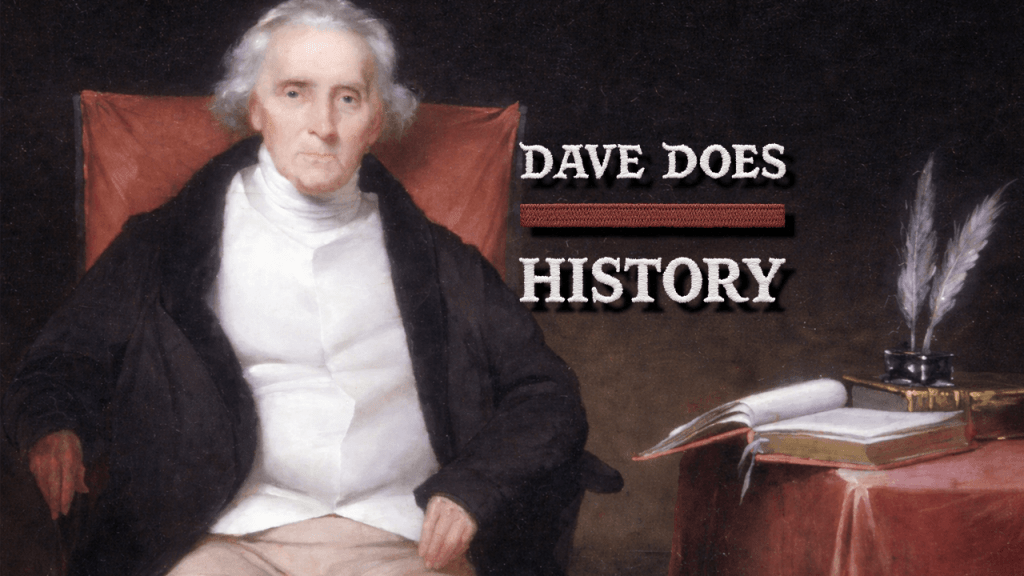
Jeremiah Sullivan Black, born on January 10, 1810, stands as a notable figure in the turbulent antebellum period of American history. Renowned for his sharp legal mind and unwavering commitment to justice, Black’s journey from a modest upbringing in Pennsylvania to the pinnacle of legal and political power in the United States is a testament to his tenacity and intellect. Serving with distinction as both the Attorney General and the Secretary of State under President James Buchanan, his contributions to American law and politics left an indelible mark.

Jeremiah Sullivan Black was born on January 10, 1810, in Stony Batter, Pennsylvania, a place that molded his modest roots into a firm foundation for his illustrious future. As the son of Henry Black, a successful farmer who later became a congressman, Jeremiah was immersed in an environment where hard work and perseverance were part of everyday life. His early years in the rural landscapes of Pennsylvania were marked by a burgeoning curiosity and a keen intellect, traits that would later define his career and legacy.
Despite the limited educational opportunities in the rural setting of his youth, Black’s early education was rigorous and well-rounded, thanks in part to his father’s insistence on quality learning. He was taught at home by private tutors who recognized and nurtured his sharp mind, laying the groundwork for his later legal acumen. His father’s position and interests in politics and law undoubtedly influenced Jeremiah, instilling in him a deep understanding of the societal and legal issues of the time.
As a young man, Black pursued formal education with a fierce determination. He attended local schools and eventually completed his legal studies under the tutelage of Chauncey Forward, a prominent lawyer in Somerset, Pennsylvania. This mentorship was crucial in shaping Black’s legal philosophy and approach, as Forward was not only a skilled lawyer but also an astute politician who served in various capacities, including in the United States Congress. Under Forward’s guidance, Black honed his skills in legal analysis and rhetoric, tools that would become indispensable throughout his career.
By the age of 21, Black’s preparation culminated in his admission to the Pennsylvania Bar in 1830, marking the beginning of his professional journey. His early legal career was characterized by a robust work ethic and a dedication to justice, quickly earning him a reputation as a formidable attorney. He embarked on his legal practice in Somerset, handling a wide array of cases that allowed him to demonstrate his legal prowess and commitment to serving justice.
The early life of Jeremiah S. Black, set against the backdrop of rural Pennsylvania, was a period of intellectual growth and character building. From the private tutoring sessions in his family’s farmhouse to the rigorous legal training under a seasoned mentor, each step in his journey contributed to the development of a man who would later influence the highest echelons of American law and politics. As we delve deeper into his life and career, it becomes evident that the seeds of his future accomplishments were sown in the fertile ground of his youth, nurtured by education, mentorship, and an unwavering spirit.
The early legal career of Jeremiah S. Black was both formative and indicative of the significant impact he would later have on American law and politics. After his admission to the Pennsylvania Bar in 1830, Black embarked on a path that was to lead him through a myriad of legal challenges, establishing his reputation as a brilliant attorney and a staunch advocate for justice.
In Somerset, Pennsylvania, Black quickly distinguished himself as a lawyer of considerable talent and integrity. He handled a wide variety of cases, ranging from land disputes to criminal defense, each case honing his legal skills and deepening his understanding of the law. His reputation for eloquence, rigorous legal analysis, and an unyielding commitment to his clients’ interests soon spread beyond the local community. Black’s ability to articulate complex legal arguments and his unwavering dedication to justice won him the respect of both colleagues and adversaries.
One of Black’s early notable cases involved a dispute over land titles in Pennsylvania, a common issue in a rapidly expanding and developing America. His adept handling of these cases demonstrated his meticulous attention to legal detail and his profound understanding of property law, earning him acclaim and a growing clientele. His success in these early cases laid the foundation for his reputation as a skilled lawyer and marked the beginning of a stellar legal career.
It wasn’t long before Black’s legal acumen caught the attention of political leaders in Pennsylvania. His reputation as a lawyer and his ability to sway juries and judges with his arguments made him an asset in the political arena. As his professional network expanded, so did his involvement in political matters, aligning him with influential figures and positioning him for public office.
Black’s transition into politics was a natural progression of his career, driven by his deepening involvement in legal issues that were central to the political discourse of the time. In 1842, his prominence as a lawyer and his connections in the political world led to his appointment as a Judge of the Supreme Court of Pennsylvania. This position catapulted him into the public eye and marked the beginning of a significant new phase in his career, blending law and politics.
As a judge, Black continued to demonstrate his legal prowess and commitment to justice. His decisions and opinions reflected a deep respect for the Constitution and the principles of justice, earning him the respect of his peers and further establishing his reputation as a principled and skilled jurist.
Black’s early legal career, characterized by his handling of notable cases and his reputation as a formidable attorney, was the catalyst for his entry into the political realm. His ability to navigate complex legal issues, coupled with his eloquence and dedication, made him an influential figure in legal and political circles. This blend of legal skill and political acumen set the stage for his later roles at the highest levels of government, where he would continue to influence American law and politics for years to come. His journey from a dedicated lawyer in rural Pennsylvania to a key figure in the national political landscape is a testament to his intellect, skill, and unwavering commitment to justice.
Jeremiah S. Black’s entry into politics was a natural extension of his distinguished legal career, marked by a seamless transition from the courtroom to the echelons of political power. His profound legal knowledge, coupled with a reputation for integrity and eloquence, made him an attractive candidate for political office. His foray into politics was not merely a shift in profession but an expansion of his lifelong commitment to justice and the principles of law.
Black’s political career took a significant turn when President James Buchanan appointed him as the Attorney General of the United States in 1857. This appointment was a testament to his legal acumen and his growing influence in political circles. As Attorney General, Black was responsible for representing the United States in all legal matters, providing counsel to the President and executive departments, and ensuring the enforcement of federal laws. His tenure in this role was marked by meticulous legal work and an unwavering dedication to upholding the Constitution.

In 1860, as the country teetered on the brink of civil war, Black’s political and legal journey reached new heights when he was appointed Secretary of State. This position placed him at the heart of the Buchanan administration’s efforts to navigate the increasingly divisive and explosive issues of secession and slavery. As Secretary of State, Black was instrumental in shaping the administration’s policies and strategies during one of the most tumultuous periods in American history.
Black’s major positions on secession and slavery were deeply influenced by his legal background and his staunch belief in the Constitution. He viewed secession as illegal and unconstitutional, a direct affront to the Union that the Founding Fathers had established. Black argued vehemently against the right of states to secede, believing that the Union was perpetual and that no state had the authority to unilaterally dissolve its bonds with the nation. His legal arguments against secession were grounded in a deep respect for the Constitution and the principles of federalism and unity that it embodied.
On the issue of slavery, Black’s views were complex and evolved over time. While he personally disliked the institution of slavery, he also believed in the importance of upholding the laws and constitutional provisions that protected it in the slaveholding states. His stance reflected the prevailing tensions of the time, as he sought to balance his personal convictions with his legal and constitutional responsibilities.
As the country edged closer to civil war, Black’s efforts to prevent secession intensified. He was a key figure in the Buchanan administration’s attempts to find a compromise that would preserve the Union and prevent the impending conflict. He worked tirelessly, engaging in negotiations and legal strategies aimed at reconciling the divergent interests of the North and South. Despite his efforts, the tide of secession could not be turned back, and the country descended into civil war shortly after Buchanan’s term ended.
Black’s entry into politics and his subsequent roles in the Buchanan administration were characterized by his legal expertise, his commitment to the Constitution, and his efforts to maintain the Union. His positions on secession and slavery, and his attempts to prevent the disintegration of the nation, reflected the complex and often contradictory forces at play during one of the most critical periods in American history. Black’s political and legal legacy remains a testament to his intellect, his principles, and his unwavering dedication to the country he served.
Black opposed to the Congressional plan for Reconstruction which reflected his deep-seated convictions about the Constitution, federal authority, and the nature of the Union. After the Civil War, the United States faced the daunting task of reconstructing the South and integrating millions of freed slaves into the social, political, and economic fabric of the nation. The Congressional plan for Reconstruction, led predominantly by Radical Republicans, sought to address these challenges through a series of measures that were stringent and punitive towards the former Confederate states.
Black opposed the Congressional plan for several reasons that were consistent with his legal philosophy and constitutional interpretation. Firstly, he believed that the plan imposed excessive and unjust penalties on the South, treating it more like a conquered territory than a group of states that were integral to the Union. He argued that the severe restrictions and requirements imposed by Congress infringed upon the rights and dignity of the southern states, delaying their rehabilitation and reintegration into the Union.
Furthermore, Black was deeply concerned about the implications of the Reconstruction plan for the balance of power between the states and the federal government. He feared that the aggressive measures adopted by Congress would lead to an unprecedented expansion of federal authority at the expense of states’ rights. This, he believed, would alter the fundamental nature of the Union and the constitutional framework that had governed the nation since its inception.
Black’s opposition to the Congressional plan for Reconstruction also stemmed from his views on race and equality. While he was personally against the institution of slavery, his vision for racial integration and civil rights was conservative compared to the more radical proposals put forth by Congressional leaders. He advocated for a more gradual and cautious approach to integrating freed slaves into American society, one that would not provoke excessive backlash or instability.
During this tumultuous period, Black’s relationship with President Andrew Johnson became particularly significant. Johnson, who assumed the presidency after the assassination of Abraham Lincoln, was also critical of the Congressional plan for Reconstruction. He vetoed several key pieces of Reconstruction legislation, leading to a bitter and protracted struggle with Congress. Black supported Johnson’s approach, viewing it as a more moderate and constitutionally sound alternative to the radical measures proposed by Congress.
Black’s support for Johnson eventually led him to play a crucial role in one of the most dramatic episodes of the era: the impeachment of Andrew Johnson. In 1868, Johnson was impeached by the House of Representatives on charges related to his opposition to Congressional Reconstruction and his alleged violation of the Tenure of Office Act. As the case moved to the Senate for trial, Black joined Johnson’s defense team, bringing his extensive legal expertise and constitutional knowledge to bear on the proceedings.
As part of the defense team, Black argued vigorously for Johnson’s acquittal. He challenged the legality and constitutionality of the charges against Johnson, asserting that the President had acted within his rights and duties in opposing the Congressional plan for Reconstruction. Black’s eloquence and legal acumen were on full display during the trial, and his arguments contributed to the eventual acquittal of Johnson by a single vote in the Senate.
Black’s opposition to the Congressional plan for Reconstruction and his involvement in the impeachment of Andrew Johnson were rooted in his deeply held beliefs about the Constitution, federalism, and the nature of the American Union. His stance reflected a conservative vision of Reconstruction, one that emphasized reconciliation and the restoration of states’ rights. Through his legal advocacy and political involvement, Black left a lasting imprint on one of the most critical and contentious periods in American history, reaffirming his status as a formidable legal thinker and a staunch defender of his principles.
Jeremiah S. Black’s major legal contributions and decisions are integral to understanding his profound impact on American law and his enduring legacy as one of the most influential legal figures of his time. Throughout his career, Black demonstrated a keen legal mind and a deep commitment to justice, which were reflected in his significant contributions to legal thought and jurisprudence.
One of Black’s most notable contributions was his advocacy for the sanctity of contracts and property rights. As a lawyer and later as a judge on the Supreme Court of Pennsylvania, he was involved in numerous cases that dealt with complex property and contract disputes. Black believed strongly in the inviolability of contracts as a cornerstone of civil society and economic stability. His decisions often reinforced the principle that contracts must be honored and protected from arbitrary or unjust government infringement, a stance that resonated with the burgeoning commercial and industrial interests of the time.
Black’s tenure as Attorney General of the United States further allowed him to shape the course of American law. In this role, he issued opinions that addressed a wide range of legal and constitutional issues, from states’ rights and federal authority to the legal status of international treaties. His writings and legal opinions during this time were marked by clear reasoning, thorough analysis, and a profound respect for the Constitution. They not only provided guidance on the legal matters at hand but also contributed to the broader discourse on constitutional law and governance.
As the country faced the existential threat of secession and civil war, Black’s legal philosophy was put to the test. He vehemently opposed the notion of secession, viewing it as legally unfounded and constitutionally impermissible. His legal memoranda and official correspondence from this period articulate a robust defense of the Union and the federal government’s authority to preserve it. These writings contributed significantly to the legal arguments against secession, reinforcing the idea that the United States was an indissoluble nation, bound together by the Constitution.
Black’s legal philosophy was grounded in a deep respect for the Constitution and the rule of law. He believed in the importance of a strong, yet limited, federal government, the sanctity of individual rights, and the crucial role of an independent judiciary in maintaining the balance of powers. His approach to legal issues was characterized by a meticulous examination of the facts, a careful weighing of legal precedents, and a profound understanding of constitutional principles.
Throughout his career, Black remained committed to the ideal of justice and the belief that law should serve the common good. His decisions and writings often reflect a concern for fairness, equity, and the moral underpinnings of legal principles. This commitment to justice not only shaped his legal contributions but also ensured that his impact on American law would be lasting.
Black’s major legal contributions and decisions reveal a legacy of profound intellectual rigor, unwavering commitment to constitutional principles, and a deep-seated belief in the rule of law. His legal philosophy, characterized by respect for the Constitution, the sanctity of contracts, and the importance of federal authority, has left an indelible mark on American jurisprudence. Through his work, Black not only shaped the legal landscape of his time but also provided future generations with a rich legacy of legal thought and principles that continue to influence the American legal system today.
The later life of Jeremiah S. Black, after his departure from public office, was marked by continued engagement in legal affairs and a persistent influence on the American legal community. Despite stepping away from the highest echelons of government, Black’s passion for the law and his commitment to justice did not diminish. Instead, he transitioned into a role that allowed him to shape legal thought and practice from beyond the walls of public office.
Upon leaving his position in the Buchanan administration, Black returned to private practice, where he continued to take on significant legal cases. His reputation as a formidable attorney and former statesman attracted a variety of high-profile clients. Black’s legal expertise remained in high demand, and he was often called upon to handle complex legal matters that required his deep understanding of constitutional law and his experienced legal reasoning.
One of Black’s most notable contributions during this period was his involvement in various legal disputes and cases that had far-reaching implications. He frequently appeared before the United States Supreme Court, advocating on behalf of his clients, and influencing the development of American law through his legal briefs and oral arguments. His continued presence in the courtroom and the legal community ensured that his insights and expertise were not lost to the annals of history but remained a vibrant and influential part of legal discourse.
Despite his return to private practice, Black remained a respected figure in political and legal circles. His opinions on legal and constitutional matters were sought after, and his writings continued to contribute to the intellectual landscape of the time. His legacy as a statesman and jurist afforded him a platform from which he could continue to impact the direction of American law and policy.
As Black advanced in age, he never lost his fervor for the law or his commitment to the principles that had guided his career. He remained active in the legal community, mentoring younger lawyers and engaging in the public discourse on legal and constitutional issues. His influence persisted not only through his direct involvement in legal matters but also through the many individuals he had mentored and inspired throughout his career.
Jeremiah S. Black passed away on August 19, 1883, leaving behind a legacy of legal excellence and public service. His death was widely mourned, and his contributions to American law and politics were celebrated by colleagues, friends, and admirers. Today, Black is remembered as a towering figure in American legal history, a man whose career was defined by his intellectual rigor, his unwavering integrity, and his profound impact on the law.
Black’s memory lives on in the decisions he influenced, the legal principles he championed, and the generations of lawyers and jurists he inspired. His writings and legal opinions continue to be cited, studied, and revered, serving as a testament to his enduring influence on American jurisprudence. The legacy of Jeremiah S. Black is that of a man deeply committed to justice, a steadfast defender of the Constitution, and a guiding light in the complex world of law and politics. His life and work continue to inspire and influence the pursuit of justice and the practice of law in America.





 DAVE DOES HISTORY
Leave a comment