
Nellie Tayloe Ross stands as a pivotal figure in both Wyoming and American history, having shattered the glass ceiling as the first woman governor in the United States. Born in St. Joseph, Missouri, in 1876, Ross’s journey led her from a childhood of modest beginnings to the forefront of political history. Her ascension to the governorship of Wyoming in 1925, following the untimely death of her husband, Governor William Bradford Ross, marked a significant milestone in the nation’s journey toward gender equality. Her leadership, marked by a commitment to fiscal conservatism and social welfare, not only shaped the course of Wyoming’s history but also inspired women across the country to seek public office. As we delve into her life, we explore the story of a trailblazer whose legacy continues to influence the American political landscape.
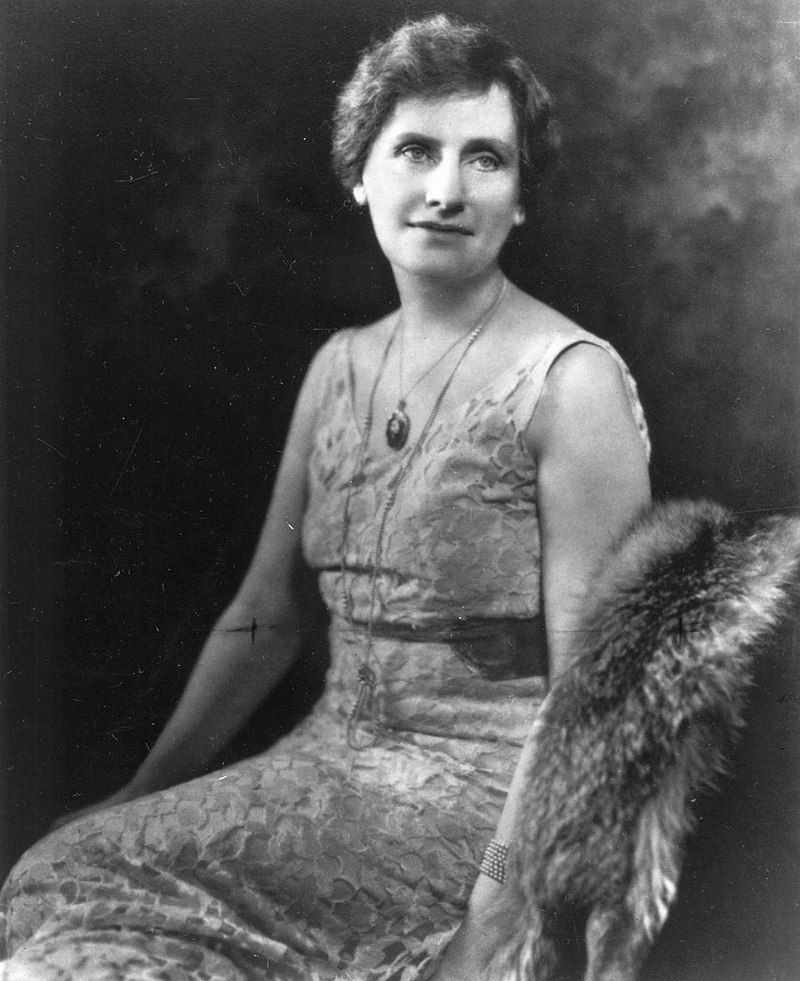
Nellie Tayloe Ross’s journey to becoming the first female governor in the United States is a story of modest beginnings, personal resilience, and an unwavering dedication to public service. Her early life laid the foundation for a legacy that continues to inspire.
Born on November 29, 1876, in St. Joseph, Missouri, Nellie Davis Tayloe was the sixth child of James Wynn Tayloe and Elizabeth Blair Green. Her family hailed from a lineage of early American settlers, with roots tracing back to prominent figures in colonial Virginia. The Tayloes were a family of modest means, and Nellie’s upbringing was shaped by the values of hard work and education.
Nellie’s pursuit of education reflected her family’s emphasis on the importance of learning. She attended local schools in St. Joseph and later, the female academy in Kansas City. Her educational journey was marked by a voracious appetite for knowledge and a keen understanding of societal issues, which would later inform her political ethos. Despite the constraints of the era on women’s higher education, Nellie’s academic and intellectual pursuits equipped her with the skills necessary for leadership.
In 1902, Nellie’s life took a significant turn when she married William Bradford Ross, a young lawyer with a burgeoning interest in politics. William was a progressive-minded individual, and his aspirations resonated deeply with Nellie’s own values. The couple settled in Cheyenne, Wyoming, where they started a family and became deeply involved in the community.
Nellie did not merely observe her husband’s political career; she was an integral part of it. As William embarked on his journey in politics, Nellie was his steadfast supporter, advisor, and confidante. She engaged in campaigning, organized events, and discussed policy issues, becoming a familiar figure in Wyoming’s political landscape. Her role in her husband’s career was not limited to the domestic sphere; she was his intellectual partner and a persuasive advocate for the causes they both championed.
Their partnership was one of mutual respect and shared ideals. When William was elected governor of Wyoming in 1922, Nellie’s role became even more prominent. She was deeply involved in the state’s social and political activities, championing education, children’s welfare, and women’s rights. Her influence was subtle yet significant, laying the groundwork for her eventual rise to the governorship.
Nellie Tayloe Ross’s ascension to the governorship of Wyoming in 1925 marked a watershed moment in American history, shattering the political glass ceiling as the first woman to hold such an office in the United States. Her rise was not a product of ambition alone but of circumstance, resolve, and the progressive spirit of Wyoming.
Ross’s path to the governor’s mansion began with personal tragedy. On October 2, 1924, William Bradford Ross, the 12th governor of Wyoming and Nellie’s husband, passed away unexpectedly, leaving the state in mourning and the office of the governor vacant. The couple’s deep partnership had prepared Nellie in ways no one could have anticipated. Her profound understanding of her late husband’s policies and her own political acumen positioned her as a natural successor to continue his legacy.
Encouraged by her husband’s supporters and driven by a sense of duty to complete his progressive agenda, Nellie made the decision to run for the governorship. This was no small feat; at the time, women had only recently won the right to vote nationally, and no woman had ever held such a high office. Her candidacy was both a tribute to her late husband and a bold step forward for women in politics.
Ross’s campaign was characterized by dignity and focus. She did not campaign in the traditional sense; instead, she relied on the respect and affection the people of Wyoming held for her late husband and the progressive policies they had advocated together. Her platform was one of continuity, pledging to carry forward the vision of economic and educational reform that had begun under her husband’s tenure. Her message resonated with the people of Wyoming, who were eager to see their state continue on a path of progress and modernity.
On November 4, 1924, Nellie Tayloe Ross was elected governor of Wyoming, making history as the first woman governor in the United States. Her victory was not just a personal achievement but a collective one, signaling a moment of transformative change in American politics. It was a testament to Wyoming’s progressive stance on women’s rights and the increasing recognition of women’s capabilities in leadership roles.
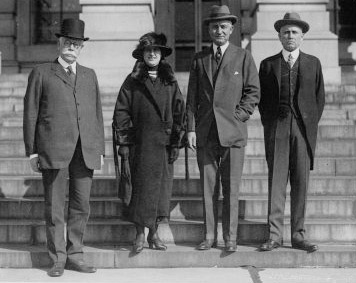
Ross was inaugurated on January 5, 1925. In her inaugural address, she emphasized continuity, welfare, and the efficient administration of the state. True to her word, her tenure was marked by a commitment to fiscal conservatism, social welfare programs, and educational improvements. She advocated for laws benefiting children, women, and the poor, and worked diligently to reduce state expenditures and streamline government operations.
Nellie Tayloe Ross’s tenure as Governor of Wyoming from 1925 to 1927 was a period marked by prudent governance, progressive policies, and the inherent challenges of being the first woman to occupy such a high office. Her term was characterized by a steadfast commitment to her late husband’s vision, while also imprinting her distinct leadership and perspectives on the state’s governance.
Governor Ross continued the progressive legacy of her husband, focusing on issues of education, child welfare, and public health. She advocated for the improvement of public schools and more accessible healthcare, understanding that these were the keystones to a prosperous and forward-moving society. Her administration worked towards bettering the lives of Wyoming’s children by supporting legislation that provided assistance to the needy, particularly widows and children, setting a precedent for the state’s future welfare programs.
One of the hallmarks of her governance was fiscal conservatism coupled with social welfare initiatives. She believed in careful budgetary management and sought to reduce the state’s debt while still investing in crucial areas of public welfare. This approach won her the respect of even those who were initially skeptical of a woman’s ability to handle state finances.
Despite her capabilities, Governor Ross faced significant challenges. Her gender was a novelty in American politics, and with that came inherent skepticism and resistance. She navigated a predominantly male political landscape, sometimes encountering opposition that was less about her policies and more about her gender. Additionally, the economic conditions of the time, particularly the beginning rumbles of what would become the Great Depression, posed significant challenges to implementing broad-reaching reforms.
The political climate was also a hurdle. As a Democrat in a state that was leaning more Republican during her re-election bid, she faced an uphill battle in maintaining her position. Despite these challenges, Ross’s administration was marked by a dignified, unwavering commitment to her duties, setting a standard for political conduct that was admired by many.
Governor Ross’s impact on Wyoming was multifaceted. She demonstrated that women could lead with as much capability and effectiveness as men, challenging long-standing gender norms and inspiring future generations of women to pursue public office. Her tenure also solidified the state’s progressive trajectory, particularly in the realms of welfare and education.
Perhaps one of her most enduring legacies was how she managed the state’s finances. Her fiscal policies left Wyoming in a better financial position, proving that careful, considerate financial management could coexist with progressive social policies. She left the governor’s office with a reputation as a dignified, strong, and competent leader.
The 1926 election in Wyoming was a significant political event, marking the end of Nellie Tayloe Ross’s tenure as the first female governor in the United States. The election was a reflection of the changing political climate of the era, the evolving role of women in politics, and the pressing issues facing Wyomingites during the 1920s.
The 1926 election unfolded against a backdrop of shifting political and economic landscapes. Nationally, the country was experiencing the Roaring Twenties, a period of significant economic growth, social change, and cultural dynamism. However, beneath the surface were the growing economic disparities and regional economic struggles that would later culminate in the Great Depression.
In Wyoming, the issues at the forefront of the campaign were largely reflective of Governor Ross’s tenure and the broader national context. Economic management was a key concern, with voters interested in how the state would continue to navigate post-World War I economic adjustments and the beginning tremors of what would later become the Great Depression. Education, child welfare, and public health, central to Ross’s administration, continued to be of significant interest.
Furthermore, as the first woman to serve as governor in the United States, Ross’s gender was an unavoidable topic. Her leadership had challenged long-standing gender norms, and her re-election bid was a litmus test for the acceptance of women in high political office.
Ross campaigned on her record as governor, emphasizing her administration’s achievements in education, welfare, and fiscal conservatism. She sought to continue the progressive policies initiated during her and her late husband’s terms, advocating for a government that balanced prudent economic management with necessary social welfare programs.
Despite her accomplishments and her appeal as a competent and dignified incumbent, Ross faced an uphill battle. The political climate was shifting, and Wyoming, which had been a stronghold for the Democratic Party during her husband’s term, was increasingly leaning Republican. Moreover, the novelty of her position as the first woman governor had waned, and the 1926 campaign was more intensely focused on the pressing economic and social issues facing the state.
The election was a closely watched affair, not just in Wyoming but across the nation, as it was seen as a referendum on women’s viability in high political office. The final result was a narrow defeat for Ross. She was defeated by Republican Frank Emerson, who won the governorship by a margin reflecting the shifting political sentiments of the time.
The 1926 election result was influenced by a complex interplay of factors, including the changing political affiliations of Wyoming voters, the economic concerns of the time, and the lingering questions about women’s roles in politics. While Ross’s defeat was a setback for those who hoped her election heralded a new era for women in politics, it did not diminish her accomplishments or the path she paved for future generations.
The 1926 Wyoming election was more than just a political contest; it was a reflection of the broader social, economic, and cultural changes of the time. It was an early indicator of the shifting political landscape of the United States, a commentary on the role of women in public life, and a discussion about the direction of state and national policies. While Nellie Tayloe Ross’s loss marked the end of her groundbreaking tenure, her campaign, and the issues it raised continued to resonate, shaping the political discourse of Wyoming and the nation for years to come. Her legacy as a trailblazer remains a testament to the progress and challenges of the era, reminding us of the enduring impact of leadership and the ever-evolving nature of American politics.
After leaving the governorship of Wyoming, Ross did not retreat from public service or the political arena. Instead, she redirected her experience and energy into other significant roles, most notably as the Director of the United States Mint, appointed by President Franklin D. Roosevelt in 1933. Ross was the first woman to hold this position, and she served with distinction for twenty years, overseeing the production of coinage and the implementation of various changes, including the introduction of the Roosevelt dime. Beyond her professional achievements, she remained active in Democratic politics, attending conventions and supporting the party’s initiatives. Her later years were marked by her engagement in writing, speaking engagements, and advocating for women’s rights and participation in politics. Ross continued to be a symbol of pioneering female leadership until her passing in 1977, leaving behind a legacy of resilience, determination, and commitment to public service that transcended her groundbreaking tenure as governor.
The legacy of Nellie Tayloe Ross is one of groundbreaking achievement and enduring influence in American political history. As the first female governor in the United States, she paved the way for women in leadership roles, challenging long-standing gender norms and inspiring future generations to pursue public office. Her tenure as governor was marked by a balance of fiscal prudence and commitment to social welfare, reflecting her belief in a government that serves its people responsibly and compassionately. Later, as the Director of the United States Mint, she continued to break barriers, showcasing her leadership skills and dedication to public service. Ross’s story is not merely one of personal success but a testament to the evolving role of women in American society and politics. Her legacy endures as a symbol of progress, a reminder of the potential for change, and an inspiration for all who strive to make a positive impact in their communities and their country.
Nellie Tayloe Ross died peacefully in Washington, D.C. on December 19,1977. At the time of her death, she was the oldest living former Governor in the country.


 DAVE DOES HISTORY
Leave a comment