
 For whatever it’s worth, Utah was my home for many years. I graduated from Ogden High School and joined the Navy there, so as far as the Navy was concerned, I was from Utah. I always wore that as something of a badge of honor, like I was a submarine version of Jake Holman.
Utah is a very beautiful place, but it wasn’t until I went to Israel in 1997 that I understood how similar it is to the Holy Land, at least geographically. Time and society have ravaged Utah, and now it’s what Colorado was thirty years ago. That said, I still love to visit there, and a couple of years ago we found ourselves spending the night in Tremonton on Pioneer Day. We had a ball and really enjoyed the whole atmosphere. To me, Utah was a version of “home” that I have always loved, but to which I really have no firm roots of connection.
But I love it there.

Before its admission as the 45th state of the Union in 1896, Utah had a varied history. Originally inhabited by Native American tribes, it was identified by Spanish explorers in the 1540s and later settled by Mormons in 1847 who were seeking a sanctuary for their religious beliefs.
The path to statehood began significantly with the Organic Act, enacted by Congress in 1850. This act was part of the Compromise of 1850, a series of laws attempting to balance slave and free states in the Union. The Utah Territory was formed through this act, which also ambiguously addressed the issue of slavery, allowing the practice under a popular sovereignty approach.
Significant friction existed between the federal government and the Latter-day Saints (LDS), primarily due to the church’s practice of polygamy and theocratic governance style. This tension led to the 1857-1858 Utah War, a standoff between Mormon settlers and the US military.
The Church of Jesus Christ of Latter-day Saints (LDS), also known as the Mormon Church, was founded by Joseph Smith in the early 19th century. A distinctive and controversial aspect of early LDS doctrine was the practice of polygamy or plural marriage, which significantly influenced the Church’s history and its relationship with wider American society.
Polygamy in the LDS Church began with Joseph Smith, who claimed to have received a revelation from God commanding the practice. Initially secretive, polygamy was publicly announced in 1852 by Brigham Young, the second president of the Church and the first governor of the Utah Territory. The practice was rooted in Old Testament examples and was considered a crucial component of salvation and exaltation.
Polygamy involved a man being married to multiple wives, and it was practiced by many early Church leaders and members. The exact number of plural marriages is unknown, but it was widespread among the Church’s leadership. Women in these plural marriages often experienced complex family dynamics, societal judgment, and legal challenges.
The practice of polygamy drew intense opposition from the U.S. government and the broader public, leading to legal battles and severe persecution of the Mormons. The Morrill Anti-Bigamy Act of 1862 was one of the first federal laws aimed at curbing the practice, but it was not effectively enforced until the Poland Act of 1874 and subsequent legislation.
In the face of mounting legal pressure and the threat of the Church’s destruction, LDS Church President Wilford Woodruff issued the 1890 Manifesto, officially advising against entering into any further plural marriages. This declaration was crucial in reducing the tension between the LDS Church and the American government, leading to the eventual statehood of Utah.
Despite the 1890 Manifesto, some plural marriages continued into the early 20th century, leading to the 1904 Second Manifesto, which reaffirmed the Church’s cessation of officially sanctioning new polygamous marriages. The Church began excommunicating those who continued the practice, firmly establishing monogamy as the only acceptable form of marriage within the LDS Church.
Today, the LDS Church strictly prohibits polygamy and distances itself from fundamentalist groups that continue the practice. The Church’s strong stance against polygamy reflects its evolution and the significant shifts in doctrine and policy over time. However, the legacy of polygamy continues to influence perceptions and discussions about the Church.
Polygamy in the LDS Church is a complex and often controversial topic, reflecting broader themes of religious freedom, legal authority, and societal norms. From its early secretive practice to its public announcement and eventual renouncement, polygamy has significantly shaped the LDS Church’s history and its relationship with the wider world. Today, the Church actively works to reconcile this aspect of its past with its present-day teachings and values.
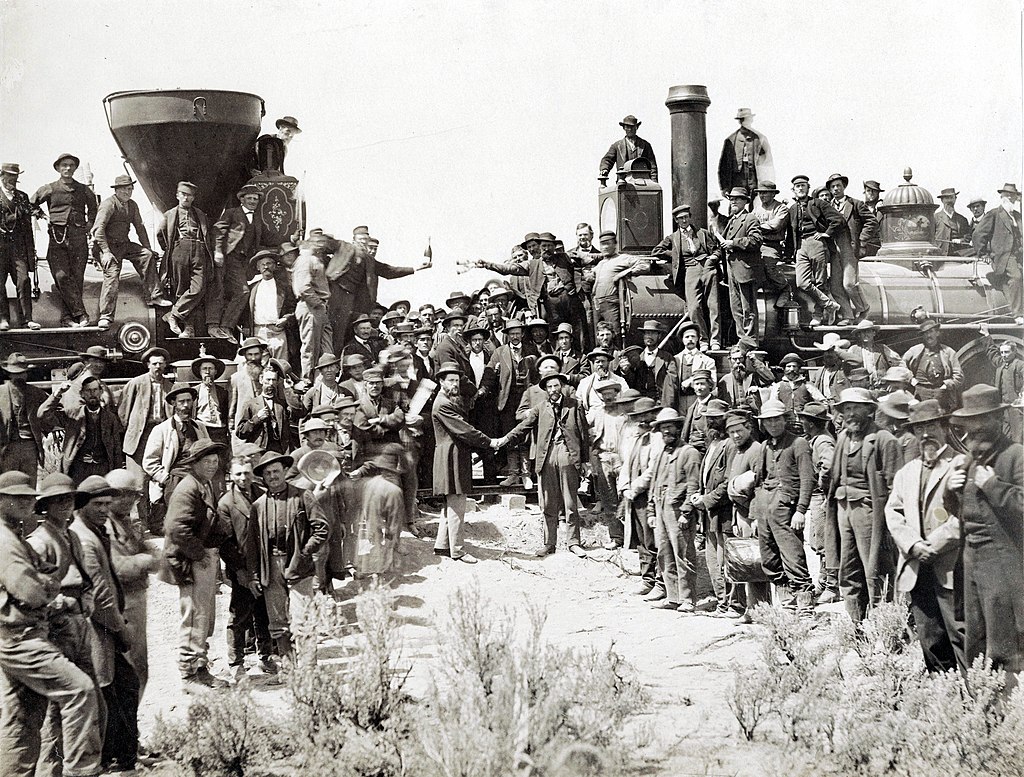
Utah’s role in the Civil War was relatively minimal due to its geographical isolation. However, in 1862, Fort Douglas was established near Salt Lake City to ensure Union allegiance and protect the overland mail and telegraph routes.
Residents of the Utah Territory had long aspired for statehood to gain sovereign control and representation in Congress. Multiple attempts were made to draft a constitution and apply for statehood, but these were initially rejected by Congress.
The primary barrier to statehood was the practice of polygamy by the LDS Church, which was vehemently opposed by the U.S. government and mainstream American society. Additionally, the theocratic governance and perceived lack of commitment to American values under Mormon leadership fueled distrust.
The bid for Utah’s statehood became a political tussle, with debates focusing on religious freedom, federal authority, and moral law. This prolonged the process, as each proposed constitution from Utah was met with skepticism or outright rejection due to the continued practice of polygamy.
A significant breakthrough occurred when the LDS Church officially renounced polygamy in 1890. This monumental shift, along with political and social reforms, realigned the Utah Territory more closely with American mainstream values and laws, paving the way for serious consideration for statehood.
Debates in Congress were intense and reflective of the broader national discourse on religious freedom, federalism, and morality. Finally, the Enabling Act was passed in 1894, allowing Utah to draft a new state constitution. This constitution explicitly banned polygamy and was the key to unlocking the path to statehood.
On January 4, 1896, Utah was officially admitted as the 45th state of the Union by President Grover Cleveland. This marked the end of a contentious and prolonged journey towards statehood, reflecting a significant compromise and evolution of both the LDS Church and American society.
The reception of Utah’s admittance into the Union was mixed. While it was a cause for celebration among Utah residents and marked a victory for those advocating for the expansion and development of the American West, skeptics remained concerned about the influence of the LDS Church and the precedent set for religious and cultural practices in new states.
Utah’s statehood stands as a testament to the complex interplay of religious freedom, federal authority, and societal values in the American narrative. Its journey from a remote territory to statehood encapsulates the tumultuous and evolving landscape of 19th-century America.



 DAVE DOES HISTORY
Leave a comment