

Henri Matisse, born on December 31, 1869, in Le Cateau-Cambrésis, France, is celebrated as one of the foremost artists of the 20th century, known for his vibrant use of color and original draughtsmanship. He was initially destined for a career in law, but an appendicitis attack led him to discover painting during his convalescence, changing his life’s direction. Matisse moved to Paris in 1891 to study art, despite his father’s disapproval, and was initially influenced by the works of the Old Masters.
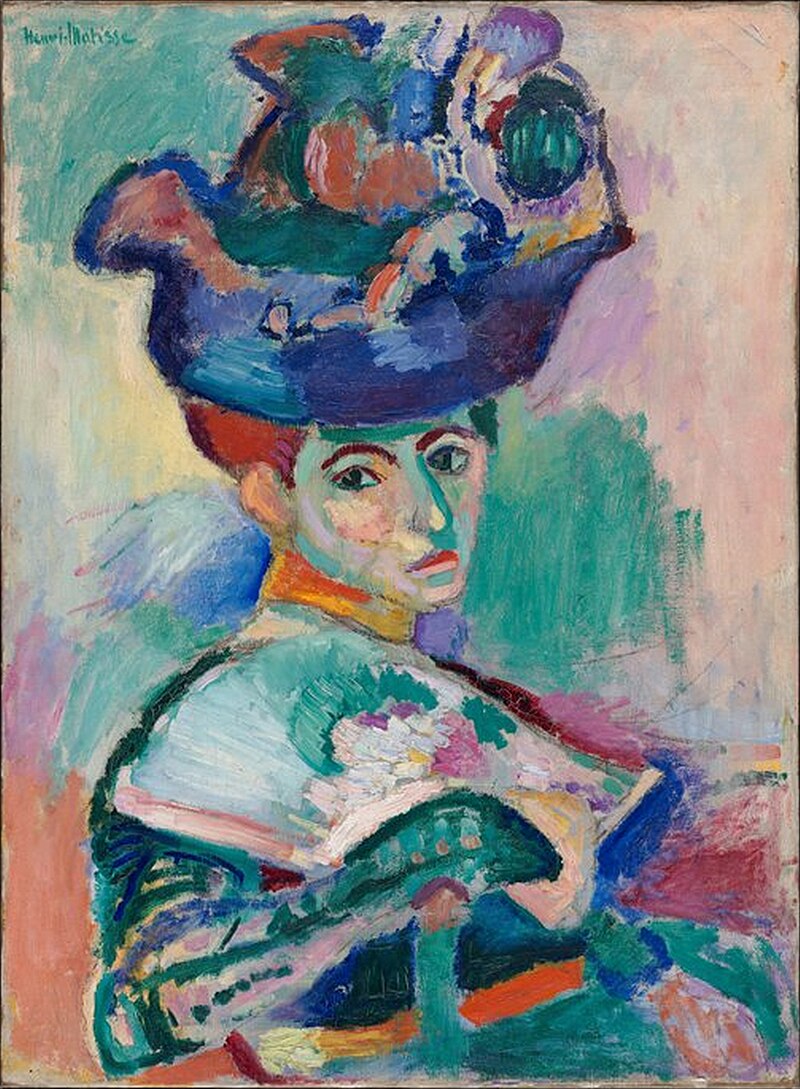
Matisse’s early works were traditional, but his style evolved after exposure to Post-Impressionism, and he became a leader of Fauvism around 1905. Fauvism celebrated bold, shocking color, and Matisse’s works from this period, like “Woman with a Hat” and “The Joy of Life,” are characterized by wild brush work and strident colors. These works were criticized but also celebrated for their radical departure from traditional aesthetics.
While he is best known for his paintings, Matisse also delved into sculpture, creating a series of bronzes. His sculptures were more restrained and naturalistic compared to his vibrant paintings, showing his versatility and deep understanding of form and anatomy.
After World War I, Matisse’s work became more refined and focused on the expressive potential of color. He lived and worked in Paris, which was the epicenter of the art world, and his reputation continued to grow. His works from this period, including “The Dance” and “Red Studio,” show a mastery of expressive color and simplified forms.
During World War II, Matisse chose to remain in France under the Vichy regime despite the danger and turmoil. His art became an escape and a symbol of endurance during this time. After a surgery in 1941, he began creating cut-outs, a new form of art made by cutting and arranging painted paper. This method was less physically demanding and allowed him to continue creating despite his health issues.
In his final years, Matisse’s innovation with cut-outs culminated in the design of the Chapelle du Rosaire de Vence, a project that occupied him until his death on November 3, 1954. This work was a testament to his continued artistic evolution and is considered one of his greatest achievements.
Matisse’s legacy is vast. He influenced numerous artists and movements with his use of color and form. His art continues to be celebrated in major museums worldwide, and his techniques and innovations, particularly in color theory and his later cut-out technique, continue to influence artists. His dedication to seeking new methods of expression and his role in shaping modern art have secured his place as a foundational figure in the art world.




 DAVE DOES HISTORY
Leave a comment