
Alfred Flatow was an emblematic figure whose life journey from an Olympic gymnast to a tragic end during the Holocaust reflects both the pinnacle of athletic achievement and the darkest facets of human history.
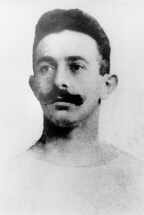 Born on October 3, 1869, in Danzig, Prussia (now Gdańsk, Poland), Alfred Flatow was introduced to gymnastics at a young age, a pursuit that would shape his life and legacy. His early life is largely defined by his commitment to this sport, reflecting the broader 19th-century German enthusiasm for physical fitness and gymnastics (Turnen) as part of a nationalistic fervor.
Flatow’s athletic prowess came to the fore during the first modern Olympic Games in Athens in 1896. Competing as a member of the German gymnastics team, he showcased an extraordinary talent, securing three gold medals in the parallel bars, horizontal bar team event, and parallel bars team event, as well as a silver in the horizontal bar. His performance not only brought him international acclaim but also helped cement gymnastics’ place in the Olympic tradition.
Aside from his Olympic achievements, Flatow was an active member of the Judische Turnerschaft, a Jewish gymnastics and sports club formed as a response to the antisemitism that barred Jews from joining German gymnastics clubs. His involvement signified not just a commitment to sports but also a stand against the growing tide of antisemitism in Europe.
The rise of the Nazi regime in Germany brought a catastrophic turn to Flatow’s life. In 1936, the Nazis enforced policies that excluded Jews from participating in all German sporting organizations. This edict forced Flatow, along with many others, into forced retirement, stripping away his life’s passion and work. In response to the increasing persecution, Flatow emigrated to the Netherlands, seeking refuge from the oppressive regime that had overtaken his homeland.
However, the relative safety he found in the Netherlands was short-lived. During World War II, the Nazis occupied the Netherlands, and in 1942, Flatow was deported to the Theresienstadt concentration camp. On December 28, 1942, Alfred Flatow died in the camp, a victim of the genocidal policies that claimed the lives of six million European Jews.
The legacy of Alfred Flatow is multifaceted. As an athlete, his achievements in the 1896 Olympics remain a proud moment in Olympic history, and his name is often cited among the greats in gymnastics. His life is a poignant reminder of the human cost of hate and bigotry, illustrating the abrupt shift from national hero to persecuted victim solely based on racial hatred. Posthumously, Flatow’s life and achievements have been commemorated in various ways, including memorials and the renaming of streets and sports facilities in his honor, ensuring that the memory of his contributions to sports and the tragic end he met are not forgotten. His story continues to inspire and serve as a somber reminder of the past, urging a commitment to tolerance and unity in the face of division and hate.




 DAVE DOES HISTORY
Leave a comment