
The impeachment of Supreme Court Justice Samuel Chase in 1804 stands as a significant event in American judicial history, marking the only time a United States Supreme Court Justice has been impeached. This episode is not only a reflection of the political tensions of the early Republic but also a defining moment in the establishment of the judiciary’s independence from the other branches of government.
Samuel Chase, appointed to the Supreme Court by President George Washington in 1796, was known for his fervent Federalist leanings and outspoken manner. His tenure on the bench was characterized by a strong adherence to Federalist principles, which often brought him into conflict with the rising Democratic-Republican Party led by Thomas Jefferson.
The primary catalyst for Chase’s impeachment was his conduct in several high-profile court cases. Notably, his handling of the trial of John Fries, accused of leading a tax rebellion, and his conduct in the trial of James Thompson Callender, a fierce critic of the Federalists, raised questions about his impartiality and judicial temperament. Chase’s actions in these trials, perceived as overtly partisan and heavy-handed, were seen as an abuse of his judicial powers and a threat to the principle of judicial independence.
In 1804, under the direction of President Jefferson, the House of Representatives, dominated by the Democratic-Republicans, voted to impeach Chase, citing instances of his alleged political bias and misconduct. The articles of impeachment focused on his supposed arbitrary and oppressive conduct of trials, along with his political speeches from the bench, which were seen as unbecoming of a Supreme Court Justice.
The trial in the Senate, presided over by Vice President Aaron Burr, commenced in early 1805. It quickly became a highly partisan affair, reflecting the deep political divisions of the time. Despite the political motivations behind the impeachment, Chase mounted a vigorous defense, arguing that his actions, while perhaps politically biased, did not constitute “high Crimes and Misdemeanors” as required for impeachment under the Constitution.
In the end, the Senate acquitted Chase on all counts, failing to achieve the two-thirds majority required for conviction. This outcome was significant for several reasons. Firstly, it established a high bar for the impeachment of federal judges, ensuring that such actions could not be used merely as a tool of political retribution. Secondly, it reinforced the principle of judicial independence, affirming that judges could not be removed from office simply for their political views or judicial philosophy.
The legacy of Chase’s impeachment has had a lasting impact on the American judicial system. It solidified the norm that the judiciary should remain separate from the political whims of the moment, a principle that has been upheld in subsequent judicial controversies. Moreover, it served as a cautionary tale about the dangers of politicizing the impeachment process, a lesson that continues to resonate in contemporary political discourse.
The impeachment of Samuel Chase was more than just a historical footnote; it was a pivotal moment that helped define the boundaries between the different branches of government and safeguarded the independence of the judiciary, a cornerstone of American democracy.

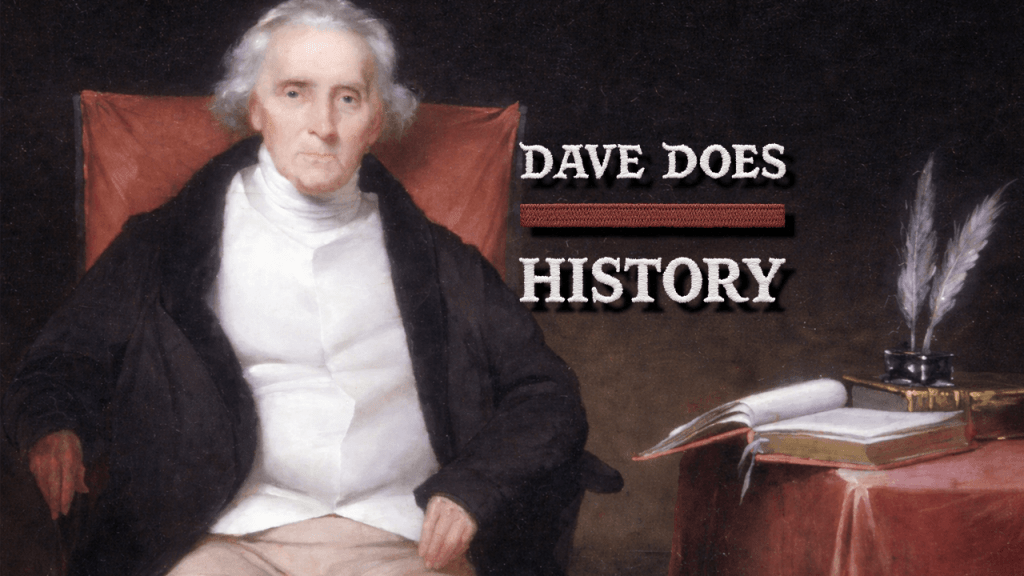


 DAVE DOES HISTORY
Leave a comment