
Gilbert Stuart, an American painter born on December 3, 1755, in Saunderstown, Rhode Island Colony, is renowned for his portraits of eminent personalities, particularly presidents and other key figures of early American society. His work is celebrated for capturing the essence of his subjects with remarkable finesse, making him one of the most prominent portraitists of his era.
Stuart’s journey into the world of art began under the tutelage of Scottish portraitist Cosmo Alexander, a visiting artist in America. This early exposure laid the foundation for Stuart’s enduring passion for portraiture. In 1775, seeking to refine his craft, Stuart moved to London where he became a protégé of American artist Benjamin West. His time in London was crucial in shaping his artistic style, which was characterized by a blend of realism and elegance.
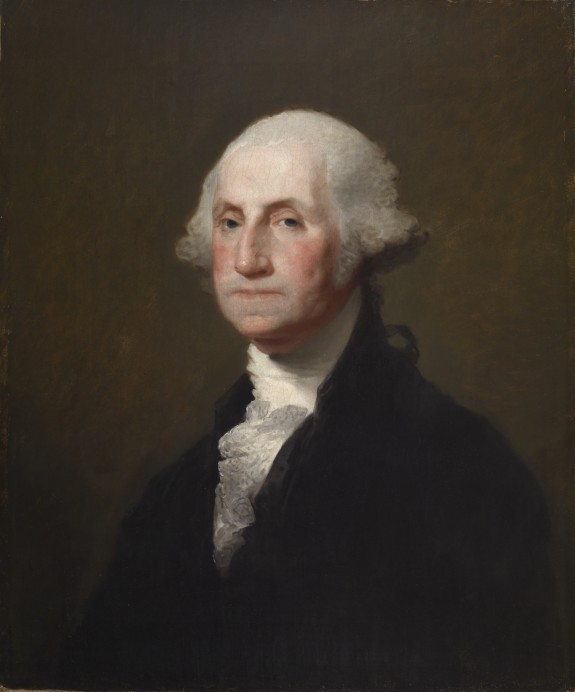
Among Stuart’s most famous works is the iconic portrait of George Washington, known as the “Athenaeum Portrait.” This unfinished piece, painted in 1796, became the basis for the depiction of Washington on the United States one-dollar bill. His prolific career included portraits of other notable figures such as Thomas Jefferson, John Adams, King George III, and Queen Charlotte. Through these portraits, Stuart’s ability to capture the psychological depth and personality of his subjects was clearly evident.
Stuart’s personal life, however, was marked by financial difficulties. Despite his success as an artist, he often struggled with debt, a predicament that haunted him throughout his career. This financial instability was partly due to his extravagant lifestyle and his tendency to procrastinate on commissions.
Stuart’s legacy in American art history is significant. He is remembered for his unique ability to blend European techniques with a distinctly American sensibility. His portraits offer an intimate glimpse into the faces of those who shaped early American history, providing a visual documentation of an emerging nation. Beyond his technical prowess, Stuart’s portraits are appreciated for their psychological depth, capturing not just the physical likeness of his subjects but also their character and spirit.
His influence extends beyond the art world; his portraits of George Washington, in particular, have become ingrained in American culture and identity. Stuart’s work is housed in major museums and galleries across the United States, including the Metropolitan Museum of Art, the National Gallery of Art, and the Museum of Fine Arts, Boston. His contribution to American portraiture and his ability to capture the essence of the nation’s early leaders have cemented his place as a key figure in the annals of American art history.


 DAVE DOES HISTORY
Leave a comment