
The sinking of HMS Barham on November 25, 1941, stands as a poignant reminder of the perils faced by the Royal Navy during World War II. This article delves into the service history of HMS Barham, the circumstances of its sinking, the impact on the war effort, and its enduring legacy.
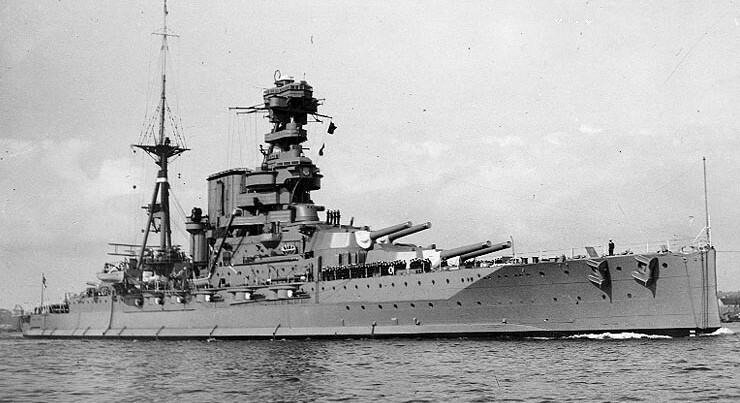
Launched in 1914, HMS Barham was a Queen Elizabeth-class battleship named after Admiral Charles Middleton, Lord Barham. She played a crucial role in both World Wars. In World War I, she participated in the Battle of Jutland in 1916, a pivotal naval battle between the British Royal Navy’s Grand Fleet and the Imperial German Navy’s High Seas Fleet.
During World War II, Barham was actively involved in multiple operations. She played a significant role in the Battle of Cape Matapan in March 1941, where British forces inflicted a significant defeat on the Italian Navy. Additionally, Barham was engaged in escorting convoys and patrolling the Atlantic and Mediterranean Seas, a testament to her versatility and endurance.
The fate of HMS Barham was sealed on November 25, 1941. While operating in the Mediterranean Sea as part of the British Mediterranean Fleet, she was struck by torpedoes from the German submarine U-331, commanded by Lieutenant Commander Hans-Diedrich Freiherr von Tiesenhausen.
The attack was devastating. Three torpedoes hit Barham, causing a massive explosion in her magazines. This explosion ultimately led to the ship capsizing and sinking within minutes. The rapidity of the sinking was a testament to the destructive power of the torpedoes and the vulnerability of even the mightiest warships.
The human cost of the sinking was staggering. Of the 1,184 crew aboard HMS Barham, 841 lost their lives. The loss was not just a statistical tragedy but a deeply personal one, with hundreds of families affected. The Royal Navy’s tight-knit community felt the impact profoundly.
The loss of HMS Barham was a significant blow to the Royal Navy. It underscored the effectiveness of German U-boat tactics and the ongoing threat they posed to Allied naval power. However, the sinking did not critically impair the British war effort in the Mediterranean. The Royal Navy, although shaken, continued to maintain a strong presence in the region, adapting tactics to counter the U-boat threat more effectively.
In the aftermath, there was an initial delay in announcing the loss of HMS Barham to safeguard morale and security. However, the news eventually broke, and the British public mourned the loss. The sinking was captured on film, a haunting visual record of the tragedy that underscored the stark realities of naval warfare.
The legacy of HMS Barham is multifaceted. It serves as a memorial to the bravery and sacrifice of those who served aboard her. The loss highlighted the evolving nature of naval warfare and the relentless hazards faced by the Royal Navy during World War II. It also reinforced the need for continual adaptation in military tactics and technology in the face of ever-changing threats.
In conclusion, the story of HMS Barham is not just a tale of a ship’s sinking but a narrative interwoven with heroism, tragedy, and the relentless progression of war. Her story continues to resonate, a poignant chapter in the annals of naval history.




 DAVE DOES HISTORY
Leave a comment