
The Confederate Army of Manhattan was a covert operation undertaken by a small group of Southern operatives during the American Civil War. Their most infamous act occurred on November 25, 1864, in New York City, a plot orchestrated by Jacob Thompson, a former U.S. Congressman. The operatives, infiltrating Union territory from Canada, attempted to burn down multiple locations in the city to overwhelm its firefighting resources.
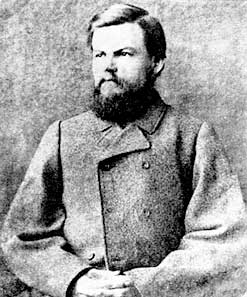
This group, comprising eight Confederate operatives including Robert Cobb Kennedy, aimed to simultaneously start fires in 19 hotels, a theater, and P. T. Barnum’s American Museum. The hotels targeted were the most prominent ones of the day, including Astor House and the St. Nicholas Hotel. Despite their intentions, most of the fires either failed to start or were quickly contained, leading to the eventual escape of all operatives except Kennedy, who was captured while trying to return to the Confederate capital, Richmond, Virginia.
The background of these operatives is particularly notable. Kennedy, a Louisiana native and Confederate officer, had escaped from Johnson’s Island Military Prison and joined other Confederate officers in Canada. These officers were dispatched by Confederate President Jefferson Davis to plan military raids that could be launched from Canada against the Union.
The attack on New York was part of a larger strategy by the Confederacy in 1864, which included creating a Northwest Confederacy from Indiana, Illinois, and Ohio. This strategy was based on the belief that there were substantial Southern sympathies in these states that could be leveraged against the Union. The Confederate Secret Service, established under Jacob Thompson, played a pivotal role in these plans, operating out of Toronto, Canada.
The group’s lack of experience and poor planning played a significant role in the failure of their mission. None of the operatives had visited New York before or had experience with incendiaries, relying on an unknown chemist for firebombs and practicing only briefly in Central Park. Their lack of familiarity with New York and its targets was a critical failure, as they missed more flammable targets like the Manhattan Gas Works.
The aftermath of the attack saw widespread outrage in New York City, with newspapers like The New York Herald and The New York Times reporting on the failed plot. The Confederate operatives narrowly avoided capture and managed to return to Canada. Kennedy’s trial began in January 1865, and despite only circumstantial evidence, he was found guilty and executed on March 25, 1865, marking the last execution of a Confederate operative by the United States government during the Civil War.
This event underscores the desperate measures taken by the Confederacy in the latter stages of the Civil War and serves as a notable example of Civil War espionage and sabotage attempts, albeit unsuccessful ones.

 DAVE DOES HISTORY
Leave a comment