
Queen Elizabeth I, one of the most iconic monarchs in British history, ascended to the throne in a time of religious and political turmoil. Her rise to power was not only a testament to her resilience but also a pivotal moment in shaping the course of English history.
Elizabeth was born on September 7, 1533, to King Henry VIII and his second wife, Anne Boleyn. Her early life was marked by the dramatic shifts in fortune that characterized her father’s reign. When Elizabeth was just two years old, her mother was executed, and she was declared illegitimate. This early experience of political intrigue and family betrayal would shape her character and her approach to the throne.
Her relationship with her half-sister, Mary I, was complex and often fraught with tension. Mary, a devout Catholic, viewed Elizabeth, a Protestant, with suspicion and fear. This tension was further fueled by the religious divide in England, with Mary attempting to restore Catholicism and Elizabeth leaning towards Protestantism. During Mary’s reign, Elizabeth was imprisoned for nearly a year on suspicion of supporting Protestant rebels, a period that undoubtedly influenced her understanding of the fragility of royal power and the importance of religious tolerance.
Another significant, though controversial, aspect of Elizabeth’s early life was her relationship with Thomas Seymour, the husband of her father’s widow, Catherine Parr. After Henry VIII’s death, Elizabeth lived in the household of Catherine Parr and Seymour. Seymour’s behavior towards the teenage Elizabeth was inappropriate and potentially abusive, leading to scandal and eventually his execution. This experience likely contributed to Elizabeth’s later reluctance to marry.
Elizabeth’s religious convictions played a crucial role in her reign. Raised in the Protestant faith, she navigated a middle path between the Catholic traditions and the growing Protestant movement in England. Her religious policy, known as the Elizabethan Religious Settlement, was a compromise that sought to establish a church that was Protestant in doctrine but retained many Catholic traditions. This approach was crucial in avoiding the religious wars that plagued much of Europe.
The death of Mary I on November 17, 1558 led to Elizabeth’s ascension to the throne. Her rise was greeted with widespread public approval. She inherited a kingdom divided by religious discord and financial troubles. However, Elizabeth’s pragmatic approach to governance, her skill in managing her council, and her ability to communicate with her subjects helped stabilize and strengthen the nation.
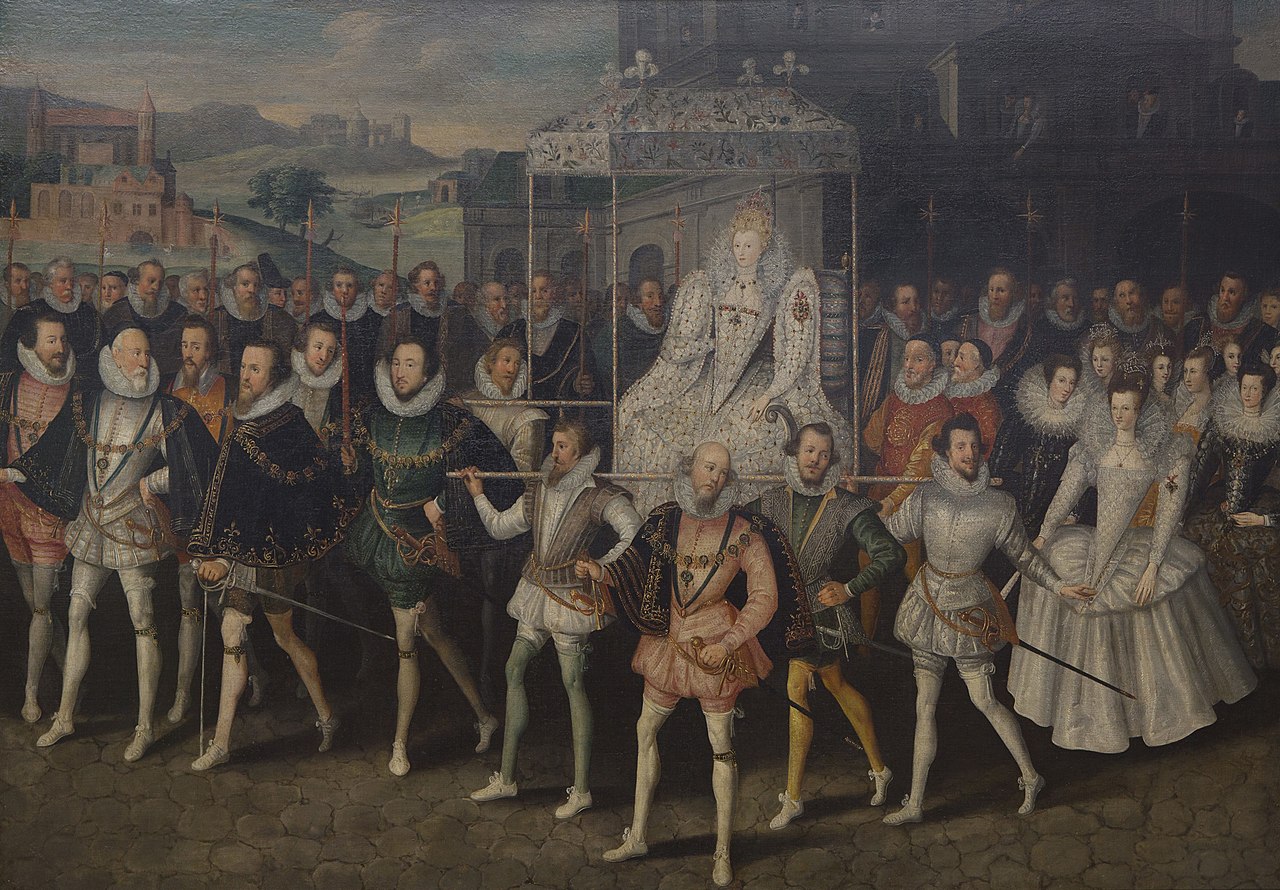
Elizabeth I’s legacy is vast and multifaceted. She is remembered for the Elizabethan era, a time of flourishing English drama, led by playwrights like William Shakespeare and Christopher Marlowe, and exploration, epitomized by figures like Sir Francis Drake. Her reign, often referred to as the Golden Age, saw England emerge as a major European power in politics, commerce, and the arts. Elizabeth’s skillful management of the complex issues of her time, her promotion of English nationalism, and her enduring image as the Virgin Queen have cemented her status as a legendary figure in British history.
Her death in 1603 marked the end of the Tudor dynasty, but her impact on English culture, national identity, and religious life continues to be felt centuries later. Elizabeth I’s reign was not just a chapter in English history; it was a turning point that defined the nation’s future path.



 DAVE DOES HISTORY
Leave a comment