
The Naval Battle of Guadalcanal, fought on November 15, 1942, was a pivotal moment in the Pacific Theater of World War II. This brutal engagement marked the climax of the Guadalcanal Campaign and had a profound impact on the strategic balance of power in the region. In this article, we will delve into the historical context, the battle’s planning and execution, the major players involved, the fierce combat that ensued, and the lasting consequences of this critical naval confrontation.
By November 1942, Guadalcanal had already witnessed several fierce clashes between American and Japanese forces. The United States had seized control of the airfield on the island, known as Henderson Field, in August 1942. This airfield was crucial for the defense of the surrounding area and the resupply of American forces. The Japanese, determined to recapture Guadalcanal and drive the Americans out of the Solomon Islands, had launched multiple offensives.
The situation on the island was dire for both sides. The Japanese were experiencing logistical difficulties, known as the “Tokyo Express,” in maintaining a supply line to their troops on Guadalcanal. The Americans, on the other hand, were desperately trying to reinforce and resupply their beleaguered garrison.
Admiral Isoroku Yamamoto, the commander-in-chief of the Combined Fleet, devised a bold plan to decisively defeat the American forces off Guadalcanal. His strategy involved sending a powerful task force, consisting of battleships, cruisers, and destroyers, to bombard Henderson Field, thereby crippling the American air capabilities. This would pave the way for a subsequent amphibious assault to retake Guadalcanal.
In response to Japanese intentions, Vice Admiral William Halsey Jr. ordered two American task forces, centered around the battleships USS Washington and USS South Dakota, to intercept and engage the Japanese fleet. The objective was to protect Henderson Field and prevent the Japanese from achieving their goals.
Order of Battle
Japanese:
– Battleships: Kirishima and Hiei
– Cruisers: Atago, Takao, and Nagara
– Destroyers: Multiple, including the renowned “Tokyo Express” destroyers.
Americans:
– Battleships: USS Washington and USS South Dakota
– Cruisers: USS San Francisco and USS Helena
– Destroyers: Multiple, forming protective screens around the battleships.
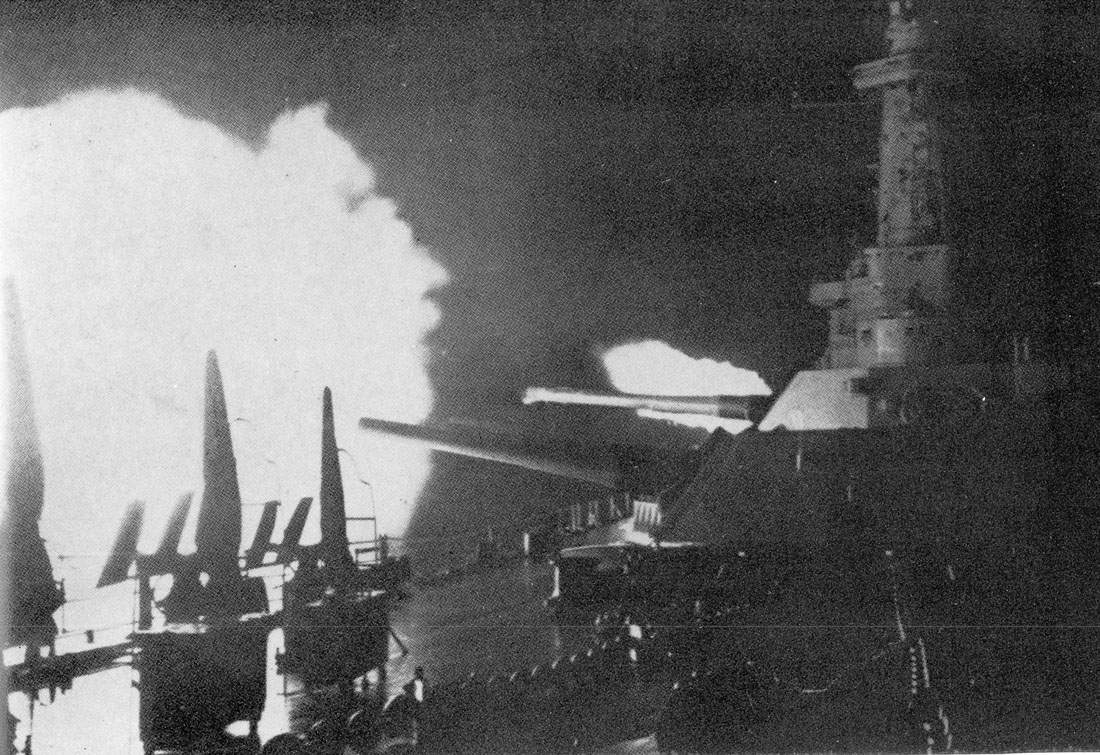
On the night of November 14-15, 1942, the two opposing fleets clashed off Guadalcanal in a fierce and chaotic engagement. The USS Washington, armed with radar and superior gunnery skills, quickly targeted the Japanese battleship Kirishima. In a devastating exchange, the USS Washington scored multiple hits on the Kirishima, causing it to sink.
The USS South Dakota was not as fortunate. It suffered extensive damage from Japanese gunfire and torpedoes, but its crew’s heroic efforts kept it afloat. The USS San Francisco also sustained significant damage, including the loss of her captain, but survived the battle.
Public Domain
The Japanese suffered a catastrophic defeat in the Battle of Guadalcanal. In addition to losing the battleship Kirishima, they suffered heavy damage to their other ships, including the battleship Hiei, which was eventually scuttled. Japanese morale was severely shaken, and they abandoned their plans to retake Guadalcanal.
The US Navy, while victorious, also paid a price. The USS South Dakota was heavily damaged, and the USS San Francisco suffered casualties. However, the American victory bolstered their confidence and control of Guadalcanal.
The Battle of Guadalcanal marked a turning point in the Guadalcanal Campaign. The Japanese, recognizing the futility of their efforts to recapture the island, began withdrawing their forces. Henderson Field remained in American hands, securing their position in the Solomon Islands and enabling further offensives in the Pacific.
Strategically, Guadalcanal became a symbol of American resolve in the Pacific War. It was a long and costly campaign, but the Battle of Guadalcanal was a significant step toward ultimate victory.
The legacy of the Battle of Guadalcanal endures as a testament to the determination and sacrifice of both American and Japanese forces during World War II. It marked the beginning of the end for Japanese expansion in the Pacific and paved the way for further Allied offensives. Guadalcanal remains hallowed ground, a place where the tides of war shifted decisively in favor of the United States, setting the stage for the eventual defeat of Japan in the Pacific theater.





 DAVE DOES HISTORY
Leave a comment