
The Alhambra Edict, also known as the Edict of Expulsion, was issued by the Catholic Monarchs of Spain, King Ferdinand II of Aragon and Queen Isabella I of Castile, on March 31, 1492. This edict ordered the expulsion of all Jews from the Kingdom of Spain, making it one of the most significant events in the history of the Spanish Jewish community.
Here’s what happened when the Alhambra Edict took effect in Spain in 1492:
1. Expulsion Deadline: The Alhambra Edict set a deadline of July 31, 1492, for all Jews to leave the country. This gave the Jewish community only a few months to make arrangements and decisions about their future.
2. Forced Conversions: Many Jews faced a difficult choice: either leave Spain and abandon their homes, possessions, and livelihoods or convert to Christianity. Some Jews chose to convert to Christianity to avoid expulsion, becoming known as conversos or New Christians. However, their conversions did not guarantee acceptance or safety, as suspicions and prejudices persisted.
3. Mass Departure: As the deadline approached, thousands of Jews opted to leave Spain rather than convert to Christianity. The expulsion affected tens of thousands of Jewish individuals and families, who had been an integral part of Spanish society for centuries.
4. Loss of Talents and Contributions: The expulsion of the Jewish community had a significant impact on Spanish culture, arts, sciences, and commerce. The Jewish population had made significant contributions to Spain’s intellectual and economic life, and their departure resulted in a loss of diverse perspectives and talents.
5. Diaspora: The expelled Jews scattered across various regions, including North Africa, the Ottoman Empire, Italy, and other parts of Europe. This widespread dispersal led to the formation of Sephardic Jewish communities with distinct cultural and religious characteristics.
6. End of the Reconquista: The year 1492 is often considered a pivotal moment in Spanish history. In the same year as the Alhambra Edict, the Catholic Monarchs completed the Reconquista by capturing the Emirate of Granada, marking the end of Muslim rule in Spain.
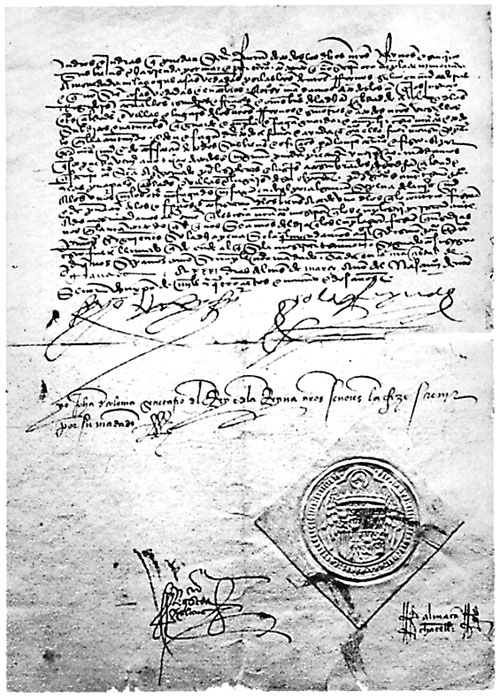
(Public Domain)
The Alhambra Edict and the expulsion of the Jews had long-lasting consequences for Spain and its Jewish community. It represented a significant shift in religious and social policies and resulted in a profound loss of cultural diversity and intellectual exchange within the country. The memory of this event continues to shape discussions on the historical treatment of religious minorities and the impact of intolerance on societies.




 DAVE DOES HISTORY
Leave a comment